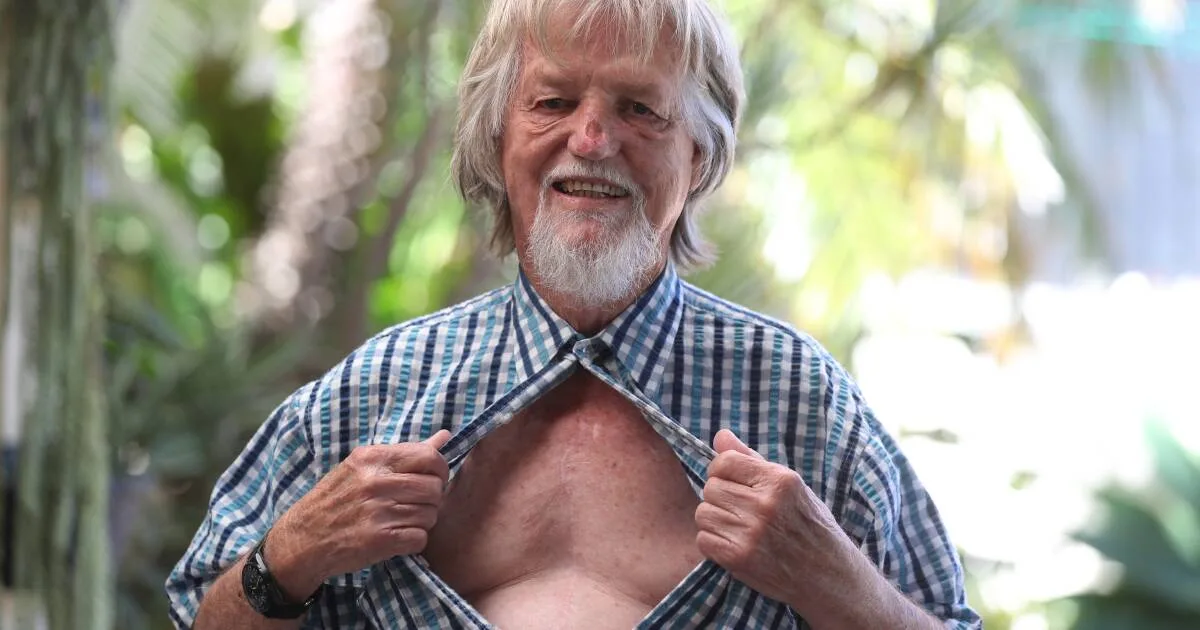
Noel Eagleton, a 76-year-old resident of Warilla, Australia, has defied the odds after receiving a heart transplant that has given him an extra 25 years of life. What he initially thought was a severe case of the flu turned out to be a heart attack, the first of several that would damage his heart to the point of requiring a transplant.
In late 2000, cardiologist Professor Peter Macdonald at St Vincent's Hospital recommended Mr Eagleton for a transplant. When Mr Eagleton asked when it would happen, the professor warned he would not survive until his daughter's wedding in April. On January 11, 2001, Mr Eagleton underwent the life-saving surgery and woke up with a new heart.
Since then, Mr Eagleton has witnessed his daughter Belinda Lee marry and have a daughter, Chloe, as well as his son Dale marry and have two sons, Cody and Braydan. He has also lived to see the birth of his great-granddaughter, Gracie Mae.

Professor Macdonald, former medical director of St Vincent's heart transplant program, noted that the average survival for heart transplant patients is 15 to 20 years, with 90% surviving the first year. He attributed improvements in survival to advances in donor heart preservation, including the use of machines that keep organs oxygenated during transport.
St Vincent's Hospital operates Australia's largest heart transplant program, performing 50 to 60 transplants annually, with up to 150 nationwide. Waiting times vary based on blood type, heart size, and severity of illness, with most patients waiting three to six months, though those with O blood type may wait six to 12 months.
Despite the success, Professor Macdonald emphasized that heart transplantation remains a limited option due to donor organ scarcity. Long-term side effects include increased cancer risk from anti-rejection drugs and accelerated coronary artery disease, but improvements in medication and prehabilitation are enhancing patient outcomes.