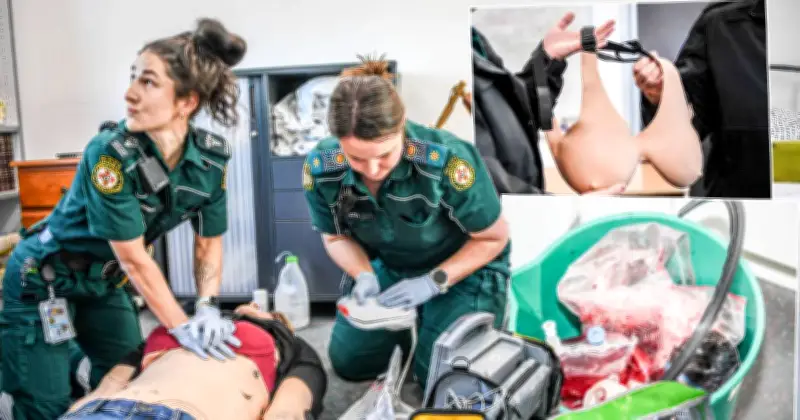
The ACT Ambulance Service has introduced innovative breast sleeves to enhance CPR training for women, aiming to overcome anatomical barriers and increase confidence in performing life-saving techniques. The new training aids are designed to simulate realistic chest anatomy, allowing female participants to practice compressions effectively without discomfort or self-consciousness.
Addressing a Gap in Training
Traditional CPR mannequins often lack female anatomical features, which can deter women from practicing compressions correctly. The breast sleeves, developed in collaboration with medical experts, provide a more inclusive training experience. Paramedics report that women who previously hesitated during training now engage more actively, improving their skills and readiness for real emergencies.
How the Sleeves Work
Made from soft, durable silicone, the sleeves fit over standard CPR mannequins. They include realistic breast tissue and a sternum marker to guide hand placement. The design ensures that users can practice compressions at the correct depth and rate, while also learning to adjust for different body types.

Positive Feedback
Early feedback from trainees has been overwhelmingly positive. Many women noted feeling more comfortable and confident, with one participant stating, "It made the training feel more relevant to me." The ACT Ambulance Service plans to roll out the sleeves across all training centers by mid-2025.
Impact on Emergency Response
Studies show that women are less likely to receive bystander CPR, partly due to fears of causing injury or inappropriate contact. By normalizing female anatomy in training, the service hopes to reduce these barriers and increase the number of women willing to perform CPR in emergencies. This initiative aligns with broader efforts to improve cardiac arrest survival rates, which currently stand at less than 10% in Australia.
The breast sleeves are part of a larger push for inclusive medical training. Similar devices are being explored for other procedures, such as first aid for choking or allergic reactions. The ACT Ambulance Service encourages other emergency services to adopt these tools to ensure equitable care for all patients.