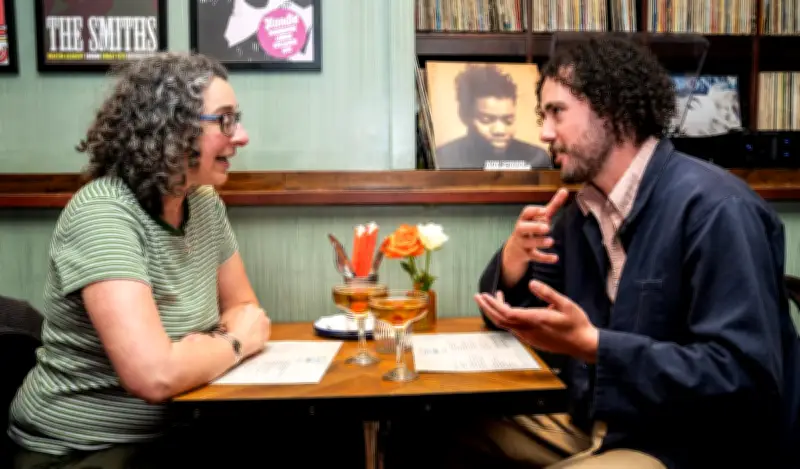
In a world increasingly divided by politics, culture, and ideology, one unlikely bridge builder is emerging: the dining table. Across Australia, initiatives that bring together people from different walks of life over shared meals are gaining traction, offering a simple yet powerful antidote to societal polarization.
Breaking Bread, Breaking Barriers
From community kitchens in Melbourne to pop-up dinners in Sydney, the concept of 'dining across the divide' is transforming how we interact with those who hold different views. These events intentionally seat strangers together, encouraging conversation that goes beyond small talk. The goal is not to change minds but to foster understanding and find common ground.
One such initiative is the 'Dinner Party Project,' founded by social entrepreneur BJ Toby. Toby believes that sharing a meal is one of the most fundamental human experiences. 'When you sit down to eat with someone, you see them as a person, not a label,' he says. 'It's hard to hate someone when you've shared a meal with them.'

The Power of Shared Meals
Research supports Toby's intuition. Studies have shown that eating together can reduce prejudice and increase empathy. The simple act of breaking bread triggers the release of oxytocin, the 'bonding hormone,' and creates a sense of trust and cooperation. In an era of echo chambers and online hostility, these face-to-face interactions are more important than ever.
Participants in these dinners report eye-opening experiences. 'I sat next to someone who I would never have talked to otherwise,' says Sarah, a Melbourne resident. 'We had completely different political views, but we found out we both love gardening and have kids the same age. It made me realize we have more in common than I thought.'
From Australia to the World
The movement is not limited to Australia. Similar initiatives have sprung up in the United States, Europe, and Asia. In the UK, 'The Cinnamon Club' hosts dinners that mix politicians, activists, and ordinary citizens. In Lebanon, 'Souk el Tayeb' brings together farmers and chefs from different religious backgrounds. The common thread is a belief in the transformative power of food.
Food writer and activist Michael Pollan has long argued that cooking and eating together are essential for community health. 'The shared meal is a kind of sacrament,' he writes. 'It's not just about nutrients; it's about connection.'
Challenges and Criticisms
Despite its promise, the concept is not without challenges. Critics argue that these events can be performative or superficial, avoiding deeper structural issues. Others point out that not everyone has the privilege of time or resources to participate. Toby acknowledges these concerns but remains optimistic. 'We're not trying to solve every problem with one dinner,' he says. 'But we are creating a space for dialogue. That's a start.'
Moreover, organizers are working to make events accessible, offering sliding scale pricing and free tickets for low-income participants. They also emphasize the importance of facilitation to ensure conversations remain respectful and productive.
The Future of Dining Across the Divide
As political and social divisions deepen, the need for connection becomes more urgent. Dining across the divide offers a tangible, hopeful way to bridge gaps. Toby and his team are expanding their project, planning dinners in regional areas and partnering with schools and workplaces. 'We want to make this a normal part of Australian life,' he says. 'Imagine if every week, people made an effort to share a meal with someone different from them. That could change everything.'
In a time of polarization, perhaps the answer is not more debate but more dinner tables. As one participant put it, 'I came for the food, but I stayed for the conversation. And I left with a new friend.'