From Prairie Fields to Wildland: A Radical Experiment
In the silent countryside south of Grantham, three vast steel barns rattled in the breeze. Gathered in a loose circle beside them were 15 landowners, land agents and a couple of young investors; all expensively dressed men, many with a sceptical mien. It was June 2022, and Sir Charles Raymond Burrell, 10th Baronet, was explaining how the purchase of 1,525 bleak acres (617 hectares) of prairie fields of wheat and beans could revolutionise farming and nature conservation, not just in South Lincolnshire but across Britain and beyond.
Burrell, known by everyone as Charlie, led the group on a walk from the barns beside the unlovable modern farmhouse, a red-brick behemoth with small windows like piggy eyes. We began by crossing a field of broad beans. Less than a century ago, it had been a patchwork of 10 fields. As we walked over the hard, cracked ground, we encountered not a single insect. Later, by a verge, a couple of butterflies flew. As for humans, we didn't meet a single other person in our two-and-a-half-hour stroll across a range of footpaths and field edges. “This is a ruined landscape,” said one of the guests, the architectural historian Matthew Rice. “Not because of the soils. Because there are no people here. I'm sorry there are not enough stoats but I'd like there to be some children here, too.”
The Business Case for Rewilding
What is a farm? Most of us still picture a storybook image from childhood: cows, pigs, wheat, a pond, a farmer, a family. The farm that had, until recently, operated on this site was more typical of today's “hard-arsed” farming, as Burrell put it. Boothby Lodge Farm had been a business owned by an absentee landlord. No one lived off the land, or on it. Tenants rented the farmhouse and worked elsewhere. More than 92% of the land was ploughed field. A contract farmer simply drove in with big machines several days each year to produce wheat and beans in relatively poor clay soils. Pheasants were released on the 3% of the farm that was woodland. For a few days each winter, men would pay to shoot them.

Boothby Lodge Farm made £250,000 profit each year but half of this came through the “basic payment”, a simple and generous subsidy for land owned that the government planned to halt by 2027. Beyond that date, thanks to reforms introduced by Michael Gove during his stint as environment secretary, farmers would only receive “public money for public goods” – that is, if their land provided clean water, or healthy soils, or wildlife-rich hedgerows, none of which Boothby appeared to be doing.
Hard-arsed farming has been the main driver of Britain's contribution to the global extinction crisis. Over the past century, England and Wales have lost 98% of wildflower meadows. We have also destroyed half of Britain's ancient woodland, half of lowland ponds, 90% of freshwater wetlands and 62% of all “farmland” wild birds.
Nattergal's Vision: Nature as an Investable Asset
As we walked, Burrell explained how we might reverse this, on this farm at least. In late 2021, the company he co-founded, Nattergal, had bought the farm for £13.8m. It intended to ditch 6,000 years of farming history on this land. No crops would be sown. No fertilisers or pesticides would be added to the fields. They planned to smash up the drains that had been painstakingly installed by generations of farmers to remove rainwater from their fields. The soils would spring up with weeds. Boothby Lodge Farm was to become Boothby Wildland.

The landowners listened intently to a prospectus that would horrify most farmers. They did so because Burrell, with his relaxed charm, sturdy good health and strong hands, looked and sounded like the pragmatic farmer he had once trained to be. This deceptively radical aristocrat also had a great success behind him. On his 3,500-acre estate of Knepp in West Sussex, he and his wife, Isabella Tree, had reversed farming history in 2000. Having been derided by neighbours for a decade and a half, the couple now presided over the poster child for British rewilding, a farm that had become a hotspot for rare nightingales, turtle doves, white storks and purple emperor butterflies; a hugely popular ecotourism destination that still produced free-range meat and vegetables and employed dozens more people than standard farms. Most pertinent to today's audience, by rewilding his estate, Burrell had turned a loss-making business into a highly profitable one.
Emboldened by this transformation, Burrell hoped to expand the Knepp model. He intended to show that we could farm wildlife, and make a profit from doing so. Our environmental crises could not be tackled by governments or grassroots action alone. We must, he said, show financial markets that restoring nature is good for business. We must make nature profitable, because it is only by attracting vast investment from the private sector that we can reverse the catastrophic decline of the planet's other species.
Financial Mechanisms: BNG and Carbon Credits
Burrell's project in Lincolnshire was his pioneering attempt, and one of the largest and most dramatic examples of reversing conventional land management in the country. Abandoning farming in a county known as the bread basket of Britain was almost provocative. It was hard to imagine restoring nature in a landscape so devoid of life. But that is what Burrell set about doing. And so, for the past four years, I have followed what has unfolded in and around Boothby Wildland, to see whether it really could deliver on Burrell's ambition and his unusual blend of idealism and business-minded realism. And over that time, some answers have hoved into view.
Instead of flogging wheat for a modest profit, Boothby Wildland's business model revolved around selling Biodiversity Net Gain (BNG) units. From 2024, the government would oblige housebuilders and infrastructure projects to create 10% more nature than was on their site before the development. If developers were unable to add nature to their building sites, they could buy credits that would guarantee that nature was restored elsewhere. Boothby would also sell carbon credits, for the carbon sequestered by stopping ploughing and allowing scrub and trees to regenerate. Like all farmers, Burrell still hoped to harvest some government subsidies but this time the grants would be for environmentally friendly land management, including payments for ecosystem services such as reducing flood risk by better managing the small river that ran through the farm. In the long term, his pitch was that the returning nature would create a sustainable ecotourism business, just as it had at Knepp.
“What about land decreasing in value when it's rewilded?” asked one landowner. “The old model of land value being linked to what you can grow on it is completely gone,” answered Burrell. “Why not set aside 50 acres for a housing estate?” suggested another. “Not interested,” said Burrell, firmly. “So you're not going to work the asset at all?” “No.” “Why would you do that?” The value of land is not important when you aim to hold it in perpetuity, argued Burrell. “There is no ‘in perpetuity’,” scoffed another landowner. Burrell had endured two decades of hostility from his landowner fraternity over Knepp. “The principle is, this is about the recovery of nature to this land,” he said. “Then everything else follows.”
Local Reactions and Community Engagement
One lesson he had learned, he said, was to involve local people. Boothby appeared to be empty land but it was surrounded by three pretty villages, Boothby Pagnell, Ingoldsby and Bitchfield, and Burrell and Nattergal's head of natural capital, Ivan de Klee, had wisely hosted village hall meetings before they revealed the purchase to the media. Compared with the bafflement that met his “rewilding” project in 2000, by 2022 there was enthusiasm for the idea, galvanised in Britain by writers such as George Monbiot, and Isabella Tree's book and documentary, Wilding, which told the story of the Knepp revolution. “Everyone said: ‘Don't say rewilding. People in Lincolnshire hate it.’ I'm calling it rewilding,” said de Klee, a tall young man who shared Burrell's knack of remaining unflustered when challenged. De Klee had attended the first village hall gathering with Burrell. “In the opening half hour there were two very loud, very angry people, talking about the loss of food production,” he said. “Then someone from the farming community stood up and said: ‘We might not all rewild but farming is going to change and we need innovation’ and half the room applauded quietly and it became much more of a conversation.”
It felt like there was an element of bloody-mindedness in Nattergal's purchase of Boothby. The land appeared to be completely emptied of wildlife, and yet so many locals were deeply attached to the intensive farming that had made it so. If Nattergal could make an ecological and financial success of rewilding here, it really could happen anywhere.
A few months later, the barns were still rattling when I joined an autumnal walk around Boothby to which locals had been invited. Thirty mostly retired people turned up, a good turnout for a sparsely populated area. The wildland had scored an early success, winning a bid to become one of the government's first 22 Landscape Recovery Schemes in England, a new subsidy supporting nature restoration in prime wildlife areas, and Boothby had its first employee based at the farm, Lizzie Lemon, site and community coordinator, a friendly local woman who had once worked for the RSPB. Lemon was spending much of her time trying to alleviate local suspicion that Nattergal was a front for a solar farm. “Local people see these hedgefund guys coming in and think it's all going to go wrong and then they will carpet it with solar panels,” she said. Locals viewed fields of solar as the unwelcome industrialisation of their landscape.
Beavers, Biodiversity, and Business Milestones
The beavers did not arrive in 2025. Consultations dragged on, expensive fencing was slow to be installed, and I wondered if Nattergal had lost their nerve, or funding. Meanwhile, the wildland's first glamping offer had not been a success. “A field of thistles in Lincolnshire had limited appeal,” grimaced de Klee. Nattergal promised it would relaunch the ecotourism once there was more wildlife to see.
That summer, I decided to test the experience in an August heatwave, and turned up with my son, Ted, and our tent for a wild camp on Boothby's glowing fields of thistles. Thistledown lay like a spilt duvet on the dry ground, which was riddled with cracks as if we might be swallowed up. Locals were still complaining about the spread of weed seed from Boothby's spectacular crop of thistledown, but this was just the ugly duckling phase of a rewilding site. “It's the Marmite phase. People either love it or hate it,” said Park. He was in the former camp. But it was only a phase, he said. When pigs are introduced, they will rootle up thistle roots. Trees and scrub will soon shade the thistles and ragwort into insignificance.
Fortunately, Boothby had scored some financial successes in recent months. Nattergal had signed a major deal with engineering consultancy Arup, which agreed to purchase £1m of high-quality carbon removal credits over the coming three decades at Boothby. This price was around three times the market rate for such credits, because the wildland would also deliver biodiversity, flood retention and community engagement. After many delays by the authorities, Nattergal had finally signed a BNG agreement with the local council to offer 338 BNG units. It later added another 1,075 units. BNG prices vary depending on habitats lost, but typically a 20-house development might only require 1.5 units, for which the developer might pay £25,000 a unit. At that price, Boothby's 1,413 BNG units could be worth more than £35m. With major infrastructure planned for Lincolnshire – including pylons and battery storage as well as housing – BNG was likely to provide a steady income over the next 20 years.
On a sunny day in February, a family of four arrived at Boothby in a white van driven from Scotland, keen to explore their new home. “It's an exciting day,” said de Klee, who now looked like a young colonial explorer with his impressive new moustache. “It doesn't get better than releasing beavers into this landscape.” Lemon put out a “quiet” Facebook post seeking beaver volunteers. “It went crazy.” It was amazing, said de Klee, how that B-word “can supercharge interest”. As a very young man, he'd worked on an Indian tiger reserve. “Your job was the prevention of destruction,” he said. His work now was so different: “Enabling recovery. That psychological shift is so wonderful and powerful.” That said, the fencing contractors had churned up the ground during the sodden winter, and there were local complaints about the ugliness of the fencing and the virtually impassable footpaths. On the other hand, this section of the West Glen valley was full of water again, for the first time in a century or more, glinting silver in the sunlight. Volunteers had planted scores of willow whips, which would give the beavers something to eat in the future. Otters had already returned.
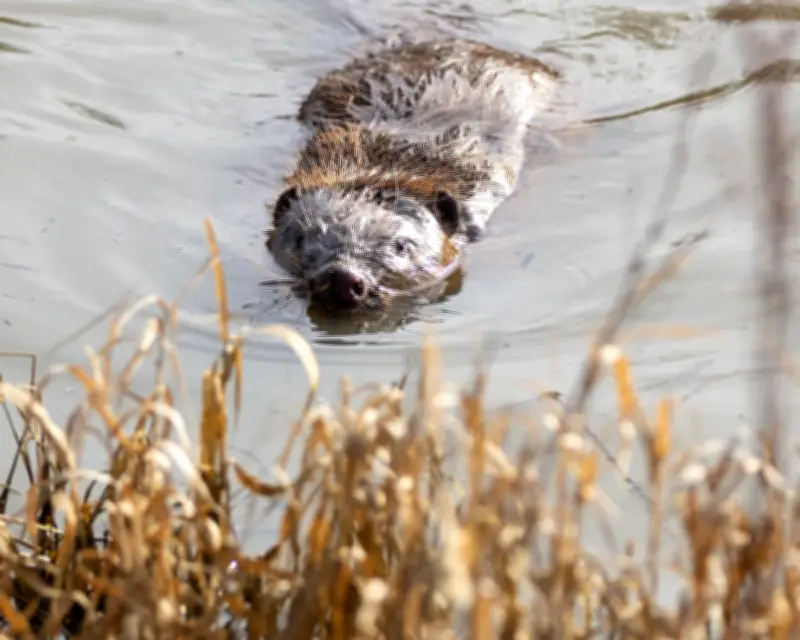
Four volunteers had their names picked out of a hat to help release the beavers. Covered crates were heaved to a spot beside a brown pond surrounded by bulrushes and trees. Metal hatches were opened, and the family of beavers padded out and slipped into the water. They looked instantly at home. The Boothby team hugged. Some looked close to tears. The beavers would deliver wildlife but they were also delivering money. Boothby had created 12 “watercourse” BNG units for developers building beside rivers elsewhere. These units were rare, in high demand and the beavers were generating a third of them. “It's the beaver-created ones that I'm most proud of,” said de Klee. BNG sales had picked up recently. “The last quarter of last year was anxious and slow,” said de Klee. “This year there's a bit of confidence and certainty.”
Ongoing Tensions and Ecological Transformation
Last month, I returned to Boothby to see how the beavers were faring. Amanda Dixon was worried. “Is there enough water for them?” she wondered. “These streams down there don't run all the time.” When I'd met her in previous years, Dixon had sounded as if she was adapting, and perhaps even learning to love Boothby Wildland. But that had changed. “Feelings are running very high,” she said. It was the weeds – she pointed to the weeds between Boothby's deer fence and her sheep pasture – and the fencing. “We've been lied to and lied to about what they were going to do and everybody is getting very angry. They told us we were going to have cattle, which is fine. I know they have them at Knepp. I learned the other day they weren't going to buy any cattle.” Instead, graziers will bring in cattle on a temporary basis, she said, and there's currently not enough grass for them to graze because there are so many weeds. For Dixon, the return of livestock to the land was a form of farming again; that it wasn't happening as originally billed looked like a profound disappointment for her. (When I spoke to Burrell, he said that they'd always been clear that it might take as long as seven years before livestock such as cattle could be permanently introduced.) “Do you know what really makes me sick?” said Dixon. “They've been cultivating that land for 1,000 years. We're surrounded by three churches. Bitchfield has Saxon foundations. They couldn't have raised those churches if they hadn't been farming that land. One thousand years of hard labour by generations of people has gone in four years, and they are never going to get it back. Charlie Burrell said: ‘Think of the purple emperors!’ You can't eat butterflies.”
I spoke again to Paddy Turner who, like Dixon, had been initially cautious about the wildland. Four years on, he seemed largely convinced. “It's been an absolute pleasure seeing it evolve and change,” he said. “Some people might argue it's not the most attractive view at the moment but I don't see that. There's a lot of docks and thistles, but look at what else is sat on them.” For all that, Turner said he was still “an avid sprayer” of weedkiller in his garden, particularly if the wind is blowing the weed seeds on to his land. “But that's a first-world problem, it really is. I can't wait to see the next stage.”
A few minutes later, I found Park at the farmhouse, almost jumping for joy about the ring ouzel – an extremely rare thrush – that had been spotted bathing in a beaver pool. That, and gorse and birch bursting out all over one field. “It makes your heart sing! – seeing a little spiny gorse bush in a once-wheat field,” he said. And local complaints? “You've got to be thick-skinned. I'm a rewilding rhino,” he joked, saying his approach was to “kill them with kindness”. When a neighbour complained about the ragwort the other day, the Boothby team offered to send over their volunteers to pull up all the offending “weeds”.
Charlie Burrell was at Boothby farmhouse too, attending a board meeting in the old dining room. Inside, it was all talk of the shortcomings of carbon credits and investor confidence. Outside he sat in the sunshine on a bench and grinned when I asked if he was surprised by what's happened here since 2022. “It all looks exactly how I thought it was going to look. I spent every spare hour at Knepp studying the transition. It all looks so familiar to me. I love it when the staff are surprised – when hen harriers are seen – that excitement.” He remembered his conversation with Dixon about nightingales. “They haven't bloody come, have they?” he said. “I reckon they'll arrive in another four years. If they haven't disappeared from England altogether.” He admitted he had been taken aback by the slowness of the financial deals required for their business model. “Everything takes much longer than I thought,” he said. Over the past four years, the political landscape had also been transformed, and Burrell thought it no longer looked so rosy for rewilding. When they raised the initial funds to buy Boothby in 2022, he said, every City of London CEO seemed to be saying: “I have children, I worry about the future and the climate and what biodiversity we had left.” They talked about their responsibilities and working out “the real cost of using the environment in our lives”. These days, he said, the typical corporate line was: “We'll just wait until others are doing this.” There is so much uncertainty about the future, and Burrell noted the backlash against the kind of environment-oriented businesses he championed. But, he said, “it will come good because it will have to, as the true bite of climate change hits.”
On paper, Boothby's numbers looked impressive. Nattergal's 2026 “impact report” mentioned the 1,413 BNG units added to the national register; 138,000 tonnes of carbon to be sequestered over the next 50 years; a 58% agreed increase in public rights of way; an 108% increase in overall biodiversity and many more figures besides. But how did that actually translate on the land? I went for a wander with Park down to the river. The sun broke through and, suddenly, there was a bewildering tumult of life in every direction. I've experienced these moments before, but only in special, protected nature reserves – often such tiny fragments of land that they represent simulacra of abundance. Here, however, we were standing on a large slab of ordinary countryside that until three years ago had been an arable field. Now it was a wetland, roiling with life. There was the flap of a grey heron and a grey wagtail calling. A black-tailed skimmer dragonfly whizzed over the water. A great spotted woodpecker landed on a dead sycamore. The rank grass and thistles bounced with meadow grasshoppers and jinked with dozens of butterflies. It was overwhelming; movement everywhere, surround-sound buzzing, chirping, calling. To say the land was singing might be fanciful but something was happening here. Something very alive.