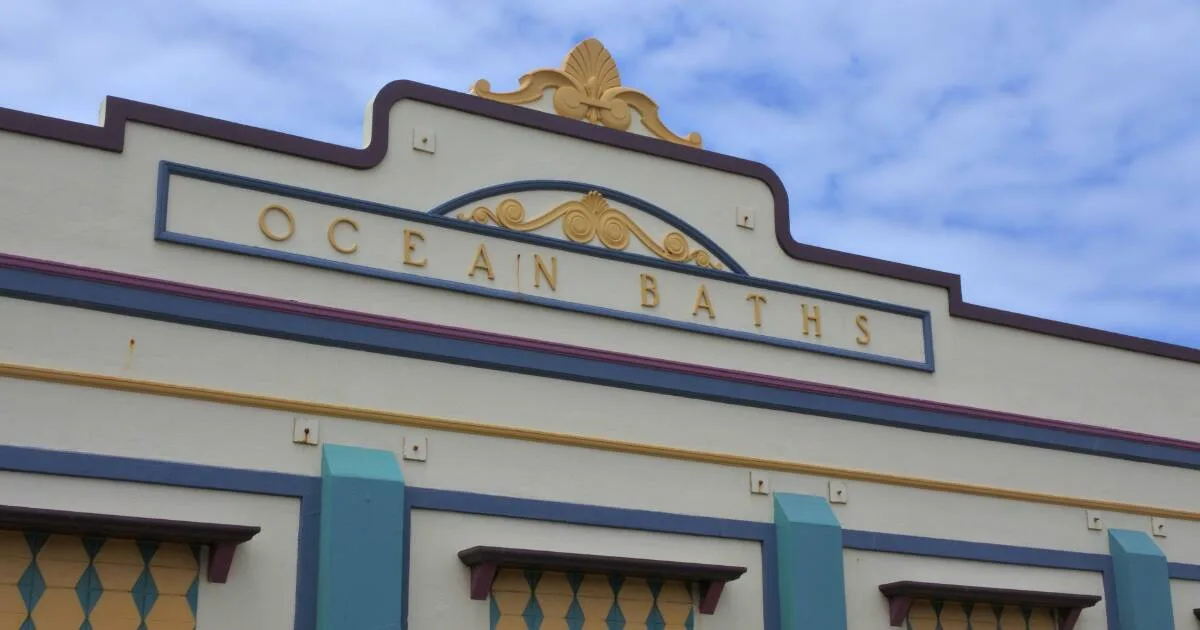
Newcastle is on the verge of losing one of its most authentic public places, with the City of Newcastle's Stage 2 redevelopment plan for the ocean baths threatening to erase the open-air experience that defines the site's cultural heritage. The proposal to roof and enclose the change rooms replaces salt air and sunlight with mechanical ventilation, shutting out the very qualities that make the baths part of Newcastle's identity.
The ocean baths are a social landscape, a place where people swim, chat, rest in the sun, and share a coffee or snack at the modest kiosk. It is an environment of easy camaraderie and quiet ritual, where you can arrive alone and still feel that you belong. Sociologist Ray Oldenburg called such spaces 'third places' – the informal public settings between home and work where community life thrives through casual connection.
The City of Newcastle is moving to adopt a heritage policy that pledges to 'do as much as necessary to care for the place … but otherwise change it as little as possible so that its heritage significance is retained'. However, this stands in direct contradiction to the council's plan for the baths. Enclosing the pavilions and installing mechanical systems is precisely the kind of over-intervention the Burra Charter warns against.

The heritage listing of the Newcastle Ocean Baths was not initiated by the council. The nomination was prepared and lodged by Friends of Newcastle Ocean Baths and the National Trust (Hunter branch), with 646 public submissions lodged in support of the listing. While claiming to 'restore' a heritage site, the council refuses to disclose the cost of this restoration. After a formal GIPA and an appeal, the Concept Design Budget Estimate prepared by APLAS Group in July 2024 remains almost completely redacted under 'commercial-in-confidence'.
The council's design brief anticipates a new cafe capable of obtaining an alcohol licence, but specifies it will be built only as a 'cold shell', with the full fit-out to be undertaken later by a commercial tenant. Those costs are excluded from the project estimate, leaving open questions about financial viability. The baths need care, but that care should reinforce what already works: the open-air change rooms, the coastal character, and the small-scale social life that binds the community together.
When the development application is exhibited, it will be the community's one opportunity to speak. The question is whether Newcastle's leaders will follow their own heritage policy and protect the living heritage they are sworn to uphold, or spend millions to build over it. Because once the salt, sand and sky are gone, no policy can bring them back.