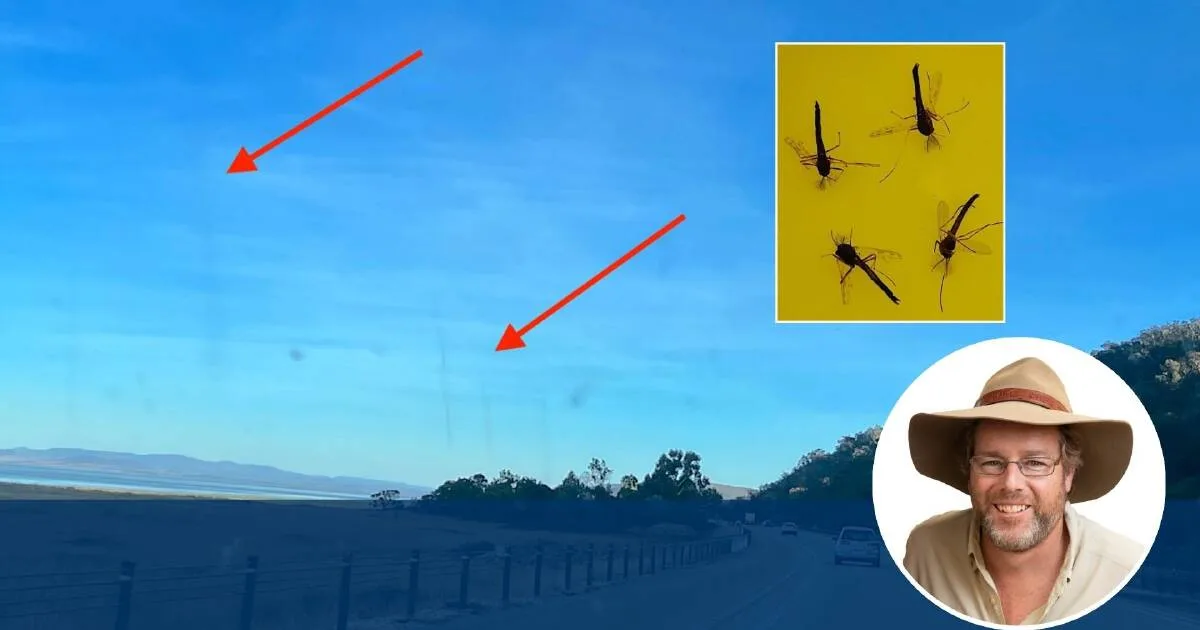
Mysterious smoke-like columns rising from Lake George have been identified as massive swarms of non-biting midges, according to a world-renowned expert. Motorists along the Federal Highway reported seeing dozens of eerie columns at dusk, initially mistaken for smoke but later revealed to be clouds of insects.
Professor Peter Cranston, a midge specialist, collected specimens from the lake's shoreline after being alerted to the phenomenon. He identified the likely culprit as Polypedilum nubifer, a native Australian midge species described 140 years ago. The insects are known for rapid larval development in warm, nutrient-rich standing water, leading to synchronized adult emergence in immense numbers.
While the species is widespread in Australia, it has rarely been reported in such large numbers at Lake George. Professor Cranston noted that conditions over recent years have been conducive to its presence, yet the phenomenon had not been observed there before. Overseas, particularly in Singapore, Polypedilum nubifer has gained a nuisance reputation for swarming around urban water reservoirs.

Meanwhile, Lake George's water levels have dropped significantly. Professor Brad Pillans of the Australian National University, who monitors the lake every two weeks, reported a maximum depth of 1.6 metres, down 1.5 metres from the November 2022 peak of 3.1 metres. He attributed the decline to insufficient runoff over the past three years and warned that further drops are likely if the predicted El Niño event brings dry conditions.
The deepest point of the lake is on the far eastern side near Rocky Point, meaning the lake may appear dry from the Federal Highway while still holding water out of sight. Professor Pillans noted that winter evaporation is low, but a lack of spring rain could lead to noticeable declines later in the year.