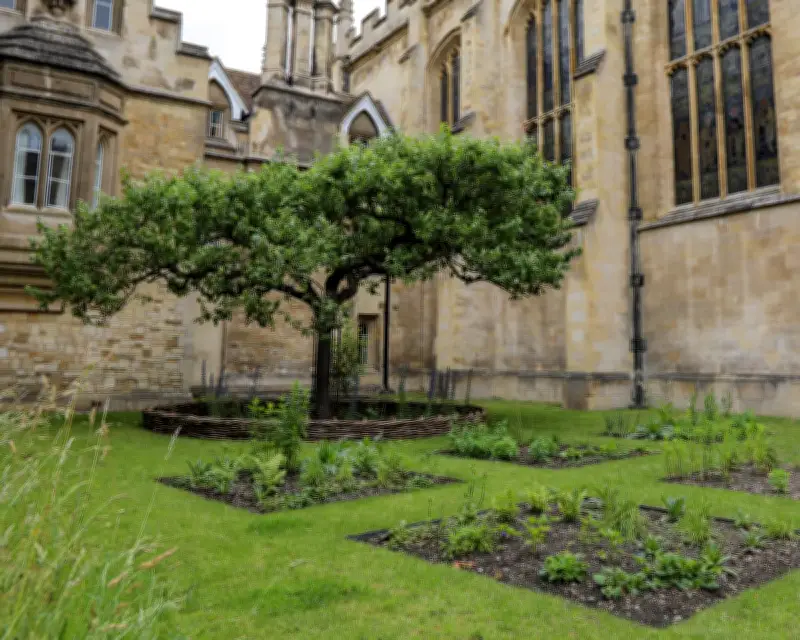
Gardeners at Trinity College, Cambridge have dug up their front lawn to reimagine the historic garden planted by John Ray, the 17th-century botanist who coined the terms petal and pollen. The garden commemorates the 400th anniversary of his birth next year.
Recreating History
Using clues from a 1690 engraving, the garden was created in the exact location Ray used, in front of a descendant of the apple tree that inspired Isaac Newton. Head gardener Karen Wells translated Ray's Latin text, Catalogue of Plants Growing Around Cambridge, to determine what plants he grew.
Plant Selection
Wells focused on drought-tolerant and pollinator-friendly plants like wood avens, betony, golden rod, pasqueflower, and white-flowered moth mullein. She also planted Good King Henry, a medieval herb, as a nod to King Henry VIII, who founded Trinity College in 1546.

Scientific Significance
The site is believed to be the location of Isaac Newton's private laboratory. Prof. Richard Serjeantson of Trinity called it "the most scientifically important spot of land in the 17th century."
John Ray's Legacy
Ray, the son of a blacksmith, arrived at Cambridge on a scholarship at age 16. His work revolutionized botany by encouraging naturalists to systematically document local plants. His preface describes how his interest in nature began after illness forced him to take walks.