A new book titled Jazz: Best of the Apollo, Village Vanguard, and Riverside Sessions showcases previously unseen photographs by Steve Schapiro, capturing the golden age of jazz in New York during the 1960s. The collection features iconic figures such as Dizzy Gillespie, Bill Evans, Elvin Jones, and Sonny Rollins, who also contributed a foreword before his passing.
Schapiro's Legacy in Jazz
Steve Schapiro, known for documenting pivotal moments of the 20th century including the civil rights movement and Muhammad Ali, turned his lens to the jazz scene with empathy and mastery. His images, now compiled in this volume, offer an intimate look at the musicians who defined an era.
Sonny Rollins reflected on the photos: “These pictures are very emotional for me. They take me back to a time when everything was, you could say, ‘copasetic.’ Elvin Jones is smiling. All these guys: Ron Carter, Miles, Red Garland. I mean, these pictures take me back into a time which will never be like that again. Everybody was working. Everybody was contributing. Everybody was being appreciated. Jazz was appreciated. Of course, many of these guys aren’t here any more, and that’s emotional for me, too.”

Iconic Moments Captured
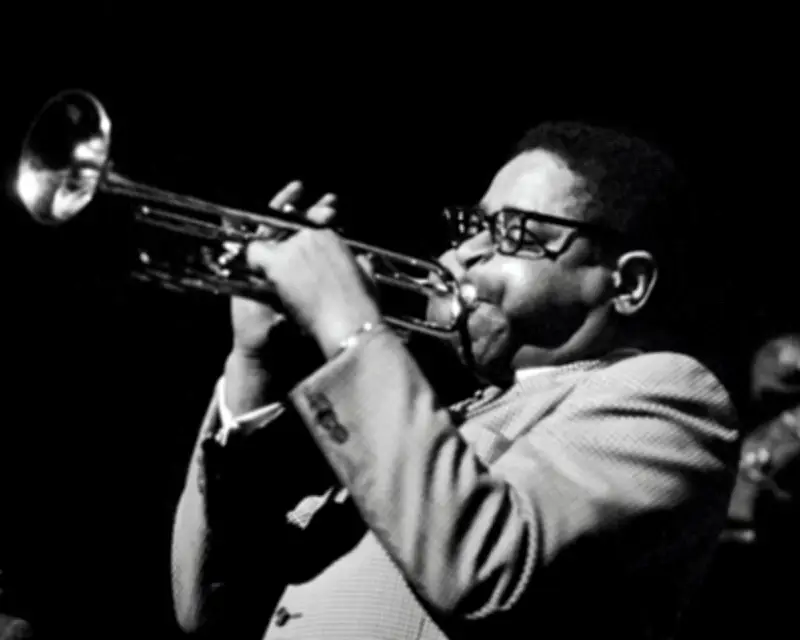
Among the standout images is Dizzy Gillespie performing at the Apollo Theatre in 1962, his cheeks puffed out as he plays the trumpet. Another shows Bill Evans at the piano in 1961, deeply absorbed in his music. The book also includes a shot of Ron Carter wheeling his double-bass along a New York sidewalk, a testament to his towering presence both physically and musically.
Jazz journalist Richard Scheinin, who helped select the images, notes: “For jazz fans, for anyone, this master musician is hard to miss as he wheels his double-bass along the sidewalk. At 6ft 4in he’s tall enough to play guard in the NBA. He’s also stylishly dressed, dignified, confident, relaxed. The forward motion of Carter’s bass lines and his uncanny way of re-harmonising tunes in a flash have made him, in the opinion of many, the foremost jazz bassist of the past 60 years.”
Behind the Scenes of Jazz History
The book also sheds light on lesser-known moments, such as pianist Bobby Timmons during an Easy Does It session for Riverside Records in March 1961. Scheinin describes the image: “Head cocked, leaning away from the piano with a quietly ecstatic look on his face, that’s Timmons. We don’t know if he is tuning into the bass player in the background (Sam Jones) or just fooling around at the keyboard during a break, stumbling on chords that speak to him, that transport him. Whatever it is, Schapiro has captured this moment in the interior life of an artist.”
Another image features Elvin Jones, the legendary drummer who revolutionized swing with John Coltrane. Scheinin remarks: “Elvin Jones had a beautiful smile and a forbidding glare. Among the greatest drummers of the 20th century, Jones revolutionised the notion of swing. His most important collaboration was with saxophonist John Coltrane, with whom he played for five years in the early 60s. The classic Coltrane band’s albums – including My Favourite Things, Impressions, Crescent and A Love Supreme – can be viewed as a soundtrack to the era.”
A Time When Jazz Was the People's Music
Schapiro’s photos also capture the broader cultural context. Dizzy Gillespie at the Apollo in 1962 represents a time when jazz was both sophisticated and popular. Scheinin notes: “When Schapiro took these photos, the Beatles were just a year or two away. Popular culture would change. But for now, jazz was in the air. It was sophisticated and it was the people’s music. In the 1940s and 1950s, Black neighbourhoods in US cities were hotbeds for jazz. Clubs were on every corner. Great musicians emerged in waves.”

The book also includes portraits of Dorothy Ashby, a pioneering jazz harpist from Detroit. Scheinin recounts: “From Detroit, Ashby began her career as a jazz pianist. Yet by her early 20s she was playing the harp, sporadically, in the city’s clubs while running into sceptical listeners. ‘The audiences I was trying to reach were not interested in harp, period – classical or otherwise – and they were certainly not interested in seeing a Black woman playing the harp,’ she once said. Thus began a singular career that saw Ashby, in the course of a decade, push through the harp’s perceived limitations and take it into the nether-reaches of jazz, popular and experimental music.”
After Schapiro’s death in 2022, his wife and son sifted through 20,000 images to select the 300 that appear in this book. Scheinin, who helped refine the selection, calls them “the best of the best.” The result is a vivid tribute to a bygone era, preserved through the lens of a master photographer.