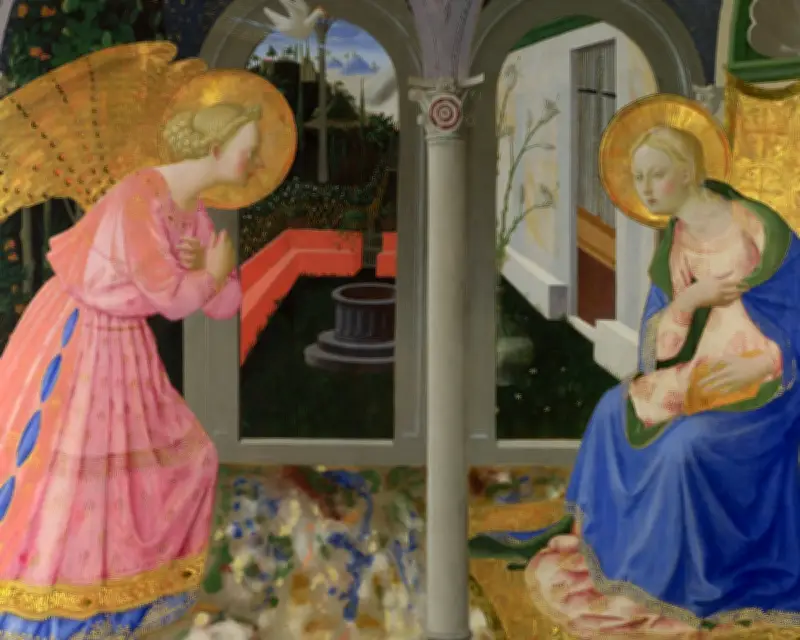
Medieval artists often depicted marble in their paintings not merely as a decorative element but as a conduit for magical and mystical meanings, according to a new exhibition that sheds light on this overlooked aspect of art history.
The Hidden Symbolism of Marble in Medieval Art
The exhibition, titled "Game of Stones," brings together over 50 works from the 12th to the 15th centuries, showcasing how marble was used to represent divine power, supernatural forces, and the boundary between the earthly and the celestial. Curators argue that these paintings reveal a world where stones were believed to possess inherent spiritual properties.
"Marble in medieval art was never just a material; it was a symbol of permanence, purity, and the divine order," said Dr. Eleanor Hart, the exhibition's lead curator. "Artists used it to evoke the unshakeable foundation of faith and the mystery of creation."

From Religious Icons to Secular Wonders
The exhibition includes works ranging from illuminated manuscripts to altarpieces, where marble appears in architectural settings, thrones, and even as a stand-in for the body of Christ. In one striking example, a 14th-century Italian painting depicts the Virgin Mary seated on a marble throne, with veins of the stone forming a halo-like pattern around her head.
"The artists were not just copying nature; they were imbuing the stone with symbolic meaning," Hart explained. "The patterns in marble were seen as traces of God's handiwork, a kind of divine calligraphy."
Magical Properties of Stones
Medieval bestiaries and lapidaries—texts on the properties of stones—often attributed magical qualities to marble, such as the ability to ward off evil or heal ailments. These beliefs influenced how artists portrayed marble in their work. For instance, green marble was associated with fertility and rebirth, while red marble symbolized martyrdom and sacrifice.
"The exhibition reveals a fascinating intersection of art, science, and superstition," said co-curator Dr. James Whitfield. "It shows how medieval people saw the world as a web of correspondences, where every stone had a story and a power."
A Window into Medieval Worldview
The exhibition also explores the technical aspects of how artists achieved the illusion of marble, using techniques like veining and layering to mimic the stone's natural patterns. This required not only skill but also a deep understanding of the material's symbolic weight.
"Painting marble was a way of capturing the sublime," Hart said. "It was a challenge that artists took on to demonstrate their mastery and to convey the ineffable."
The exhibition runs from July 1 to October 15 at the National Gallery. It is accompanied by a catalog that includes essays on the history and symbolism of marble in medieval art.