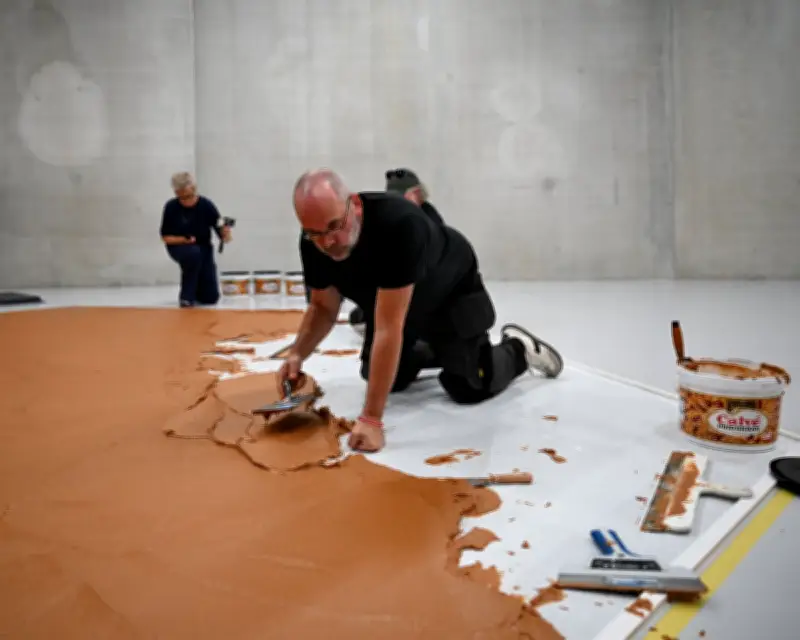
A gallery in the Netherlands has transformed its exhibition space by covering the entire floor with 800 kilograms of peanut butter, paying homage to the late conceptual artist Wim Schippers. The installation, which opened on July 10, 2026, at the Kunsthal in Rotterdam, recreates Schippers' seminal 1962 work titled "Peanut Butter Floor."
Recreating a Controversial Masterpiece
The original piece, first presented at the Stedelijk Museum in Amsterdam, consisted of a layer of peanut butter spread across the gallery floor. It sparked debate about the boundaries of art and the role of everyday materials. The new version uses the same recipe of smooth peanut butter, applied to a thickness of about two centimeters across a 100-square-meter area.
According to the Kunsthal's director, Emily van der Heijden, the recreation is a faithful tribute. "We sourced the peanut butter from the same brand Schippers used in 1962, and we followed his original instructions to the letter," she said. The gallery has installed barriers to prevent visitors from walking on the artwork, but the pungent aroma of peanuts fills the room.

Schippers' Legacy in Conceptual Art
Wim Schippers, who died in 2024 at the age of 82, was a leading figure in the Dutch conceptual art movement. His work often challenged traditional notions of art by using unconventional materials and everyday objects. "Peanut Butter Floor" remains one of his most iconic pieces, symbolizing the ephemeral and sensory nature of art.
The exhibition also includes other works by Schippers, such as a series of painted eggshells and a room filled with helium balloons. The peanut butter installation is expected to remain in place until September 2026, after which the gallery plans to recycle the peanut butter into animal feed.
Public Reaction and Practical Considerations
Visitors have responded with a mix of curiosity and bemusement. "It smells like a giant sandwich in here," said one attendee, Mark de Vries. The gallery has taken precautions to ensure the peanut butter does not attract pests, including installing airtight seals and using dehumidifiers to keep the surface dry.
The recreation has also reignited discussions about the preservation of ephemeral art. Unlike traditional paintings, Schippers' work is inherently temporary, and the gallery has documented the installation extensively for archival purposes.