There is a fine line between romantic comedy and creepy thriller, and while redefining the genre's lovelorn leads as often incredibly oddball stalkers is nothing new (see the Sleepless in Seattle trailer recut as a horror movie 20 years ago), an online deluge of memes and thinkpieces have elevated post-movie bar jokes to commonly accepted theory. Some film-makers have slowly tried to catch up and capitalise – last year's dark comedy I Love You Forever showed how epic acts of romance can be rooted in manipulation while a great deal of what makes current box office record-breaker Obsession so effective is its horror movie perversion of the day-to-day realities of all-consuming true love.
A Premise That Straddles Creepy and Cute
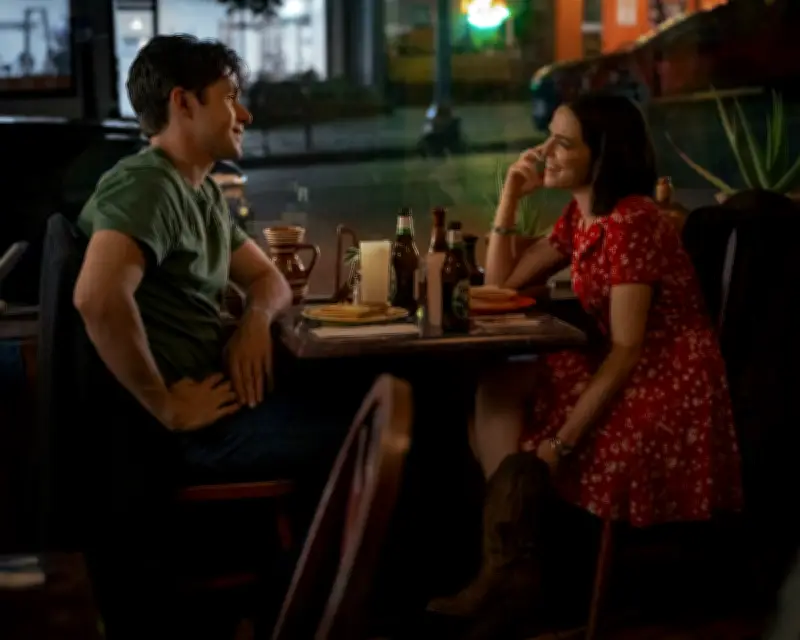
Netflix's latest romcom Voicemails for Isabelle is made with some awareness of how unsettling its premise is, as if it was originally written in the 2000s and then dusted off and tweaked for the 2020s (the film was originally set to star Hailee Steinfeld back in the 2010s). It is the story of Jill (Zoey Deutch) who, in the throes of grief for her late sister, starts leaving voicemails on her old phone as a way to feel like she is still a part of her life. But the number now belongs to a stranger, Wes (Nick Robinson), who decides to not only listen to them but to use the information to track Jill down and insert himself into her life, eventually winning her heart while refusing to be honest about why they have met.
Writer-director Leah McKendrick enjoys winking at us, as if we are all on the same team, using her characters (and herself playing one of them) to call her leading man a “creeper” and to refer to the situation as “a sick reboot of You've Got Mail”. But, instead of leaning into what is essentially the set-up for a stalker-thriller, McKendrick tries to have it both ways, poking fun at the weirdness of her meet-cute while also expecting us to bask in the basic, hot chocolate pleasures of it. There are two Taylor Swift songs (surely thanks to her friend Este Haim on soundtrack duty), scenes of our leading lady (who wants to be a pastry chef!) eating Breyers ice-cream with the tub neatly positioned toward the camera, a running in the rain climax and enough overly curated outfit changes to warrant a specially created H&M collection.

Glossy but Charmless
McKendrick wants to transport us back to a time when a film such as this would have been a theatrical wide release while also bringing a modern, poppy sensibility: dating buzzwords like gaslit, secure attachment and love bombing are all scattered in the dialogue. While her film does feel glossy (as one of Sony's films with the streamer, it looks slicker than the usual), it just does not have the required charm to it and merely pointing out the uneasiness of Wes's behaviour does not magically make it any less uneasy.
Rather than reminding us of You've Got Mail, as McKendrick would very much like to, it is more reminiscent of 2023's rubbishy one-star romcom Love Again, which saw Priyanka Chopra Jonas's grieving caterpillar illustrator (who has a love of placing packets of tropical Skittles in front of the camera) text her dead husband's phone only to find the messages received and misused by a similarly creepy stranger. That film was at least genuinely hysterically awful whereas Voicemails for Isabelle is too middle of the road to count as a five-wines-in hoot.
Self-Referential but Uninspired
There is also something a little smug about the self-referential tone, the many nods toward specific romcoms and the genre at large (“This is the scene where you run,” someone tells a character at the end) showing, sure, an extensive awareness of the tropes, but also a total inability to do anything interesting with them. Should not a film made by someone with such clear affection for and such deep knowledge of the genre be a great deal smarter than this?

I have found Deutch to be an engaging romcom lead in Amazon's Christmas trifle Something at Tiffany's, a very game buffoon in the scattershot spoof Gail Daughtry and the Celebrity Sex Pass and, most recently, an expert chatshow guest of five star viral moments, but she struggles to find any centre here with a character that is affected, self-conscious quirk over relatable character detail. There is also really no believable process of why her character would fall so intensely, McKendrick relying on a lazy montage to do a lot of the early stage heavy-lifting. A production line Robinson is far too indistinctive to convince us or realistically her, a character telling him he is “no Tom Hanks” proving to be one of the film's truest observations.
At an unacceptable length of almost two hours, the film tries to both downplay the need for romance (“I don't need a man!” Jill says near the end, echoing a Pussycat Doll circa 2005) and pretend we are watching a woman reach self-actualisation through her career (imagine!) while then also resorting to exactly the hackneyed and unearned “of course” ending we expect. In trying to scratch our itch for the old while also recognising the new, McKendrick settles for something stale.
Voicemails for Isabelle is now available on Netflix.