The Center for Photography at Woodstock, located in Kingston, New York, has inaugurated the first-ever New York Upstate Photography Biennial. This landmark exhibition showcases the work of 39 artists who live and work across the Hudson valley and beyond. Co-curated by Marina Chao and Adam Giles Ryan, the biennial highlights the diverse photographic practices emerging from the upstate region. The images will remain on view until 6 September 2026.
Lesbian Rebels and Domestic Scenes
Morgan Gwenwald's series The Revolution Will Not Be Televised dates back to 1974. In the early 1970s, when Patty Hearst was kidnapped by the Symbionese Liberation Army, Gwenwald taught and photographed members of a lesbian feminist collective shooting rifles in nearby woods. This project, originally her BFA thesis, led her to document the lesbian and queer rights movements after she left Florida State University.
Allison DeBritz challenges mainstream media's objectification of women's bodies through her collages, as seen in her 2025 work I Feel Everything.

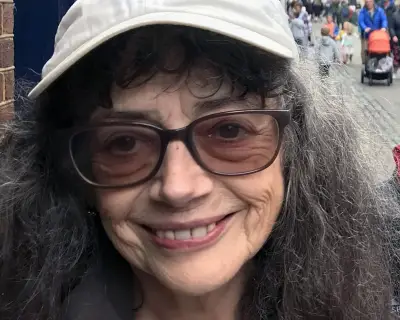
Robert Kalman's portraits stem from an ongoing project where he photographs a person and asks a single question: 'What's it like for you to be an American?' He pairs each image with a handwritten response from the subject, as in Beth Davison (2022).
Rethinking Domestic Spaces
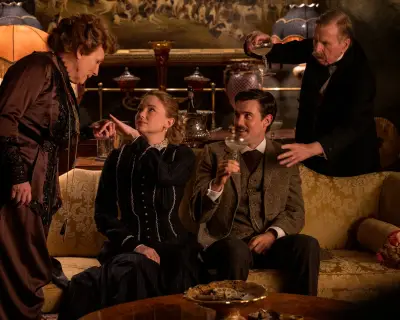
Elizabeth Pedinotti Haynes reimagines everyday kitchen objects in her family table series. Infestation (2024) rethinks the home as a performance space shaped by expectations.
Kevin Williamson captures the Hudson valley, his birthplace, as an ever-changing region caught between urban and rural, past and present. His 2025 image Dan and Paul by the River reflects this fluid narrative.
Resistance and Memory
Viktorsha Uliyanova's series Quieter than Water, Lower than Grass confronts forced obedience in Russia. Nina (2024) uses recycled textiles printed with Soviet panel buildings and family archive photos, serving as personal resistance and counter-propaganda.
Allie Tsubota's Dead Letter Room (2022) combines her own images with fictional letters from Tamiki Hara recounting the bombing of Hiroshima, reflecting on time, memory, and loss.
Ann Burke Daly and Marion Belanger collaborated on Night Studio: Temporal Dislocations – 365 Days; January 2025. They digitized glass plate negatives from Harvard College Observatory originally produced by women 'computers' to catalog the night sky. Their work layers past and present through hand-annotated prints.
Fractured Realities and Archives
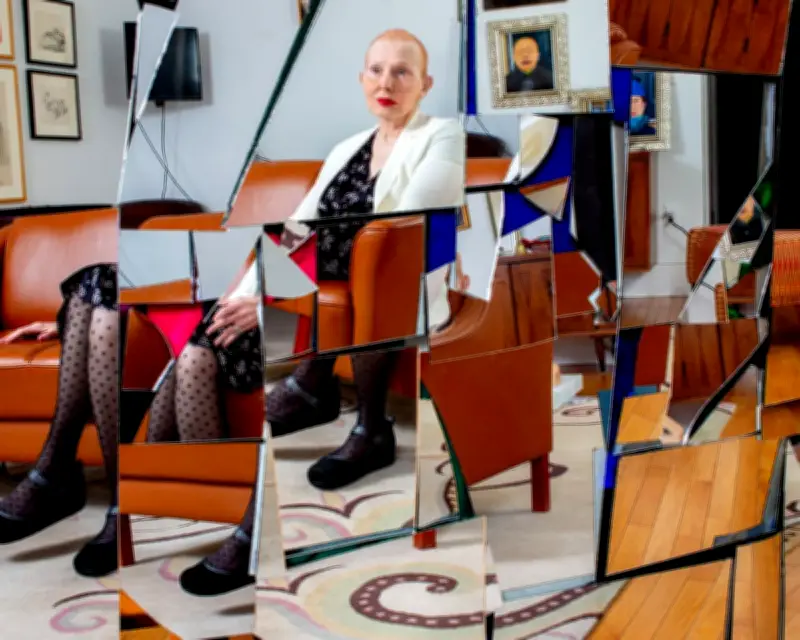
Seth David Rubin constructs visually fractured realities using mirrors. His Portrait of Laura (2024) from the series Placements argues that such images more accurately represent human perception, which is often incomplete and haphazard.
Lyle Ashton Harris's Ektachrome Archive includes Untitled (Lyle and Robert, Bronx, New York, circa mid-1980s) (2022). Recently rediscovered images from his pre-college and graduate years feature self-portraits, friends, and lovers from the late 1980s through 2000.
Luis Manuel Diaz's ongoing series Canta y No Llores encompasses decades of images from his family homes in rural Michoacán, Mexico, and suburban New York. Untitled (Self Portrait with the Family Tree) (2024) explores migration and what people carry—or leave behind—when starting anew.
Nightlife and Community
Meryl Meisler photographs the behind-the-scenes moments of nightlife she has been part of for decades. Six Rox Republic Legs on The Bar, Le Bain, New York, NY, June 2025 offers a first-person account of her community, grounded in familiarity and trust.
The biennial presents a rich tapestry of perspectives, from queer activism and domesticity to memory and migration, cementing the Hudson valley as a vibrant hub for photographic art.