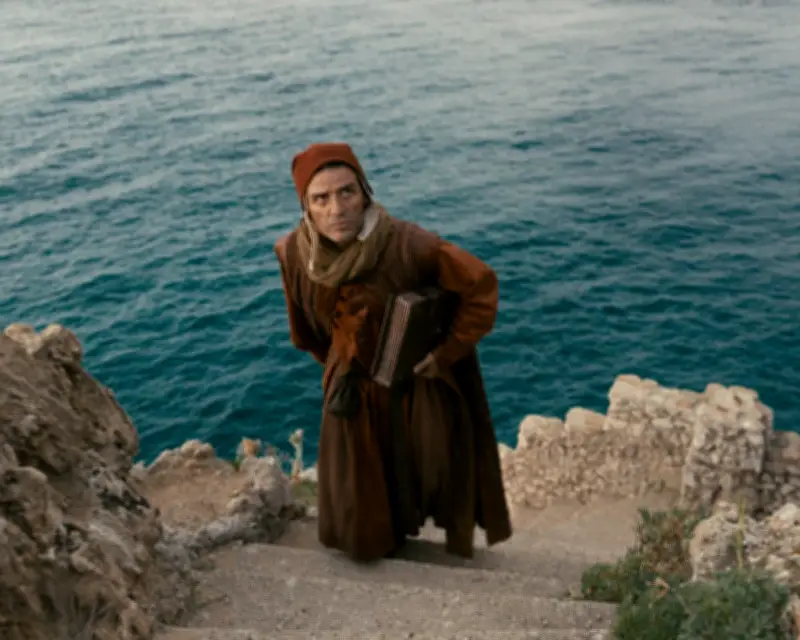
In the Hand of Dante, the latest film from acclaimed director Julian Schnabel, assembles a staggering cast including Gerard Butler, Martin Scorsese, and Al Pacino. Yet for all its star power, the film is a sprawling, often tedious epic that never quite finds its footing. Based on Nick Tosches' novel, the movie shuttles between the 14th century and the present day, following a rare manuscript of Dante's Divine Comedy. Butler plays a modern-day rare book dealer, while Schnabel himself takes on the role of Dante Alighieri. Scorsese appears as a sinister collector, and Pacino portrays a Vatican librarian. The film is visually stunning, with Schnabel's signature painterly compositions, but the narrative is convoluted and the pacing leaden. The performances are committed, but the script gives them little to work with. In the Hand of Dante is a noble failure, a film that reaches for the heavens but remains earthbound.
Plot and Performances
The story intertwines two timelines: in the 1300s, Dante (Schnabel) struggles to complete his masterpiece while navigating political intrigue in Florence. In the present, Nick (Butler) is a cynical dealer who stumbles upon a lost canto of the Divine Comedy. His quest to authenticate the manuscript brings him into conflict with a shadowy collector (Scorsese) and a scholarly priest (Pacino). Butler brings a weary charm to his role, but his character is underwritten. Schnabel's Dante is passionate but one-note. Scorsese relishes his villainous turn, but his screen time is limited. Pacino delivers a typically intense performance, but his subplot feels disconnected.
Direction and Visuals
Schnabel, known for Basquiat and The Diving Bell and the Butterfly, brings a painter's eye to every frame. The film is lush with color and texture, from the sun-drenched hills of Tuscany to the dimly lit corridors of the Vatican. However, the visual beauty cannot compensate for the muddled storytelling. The film jumps between eras without clear transitions, leaving the audience disoriented. The running time of over two and a half hours feels excessive, with several scenes that could have been trimmed.

Conclusion
In the Hand of Dante is a passion project that ultimately feels self-indulgent. It has moments of brilliance, but they are too few and far between. For die-hard fans of Schnabel or the cast, it may be worth a watch, but most viewers will find it a frustrating experience. The film is a reminder that even a galaxy of stars cannot guarantee a compelling story.