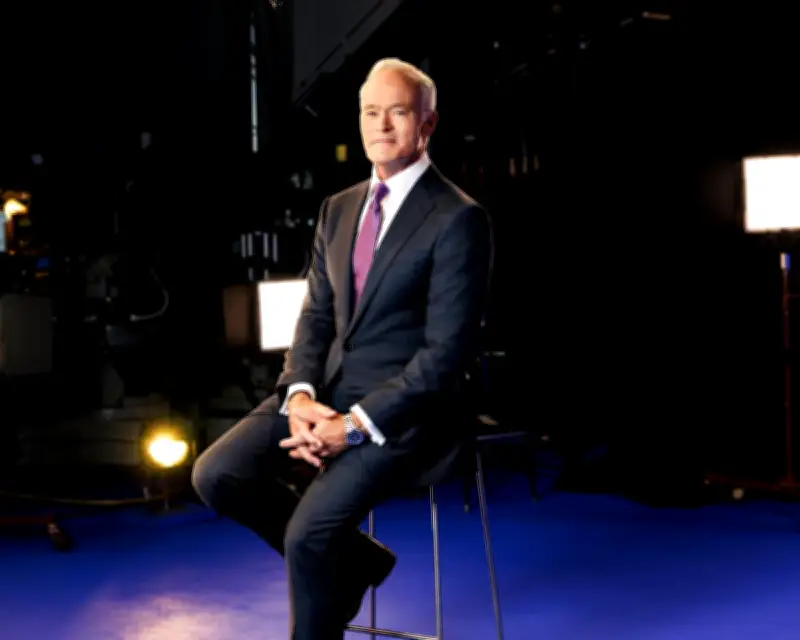
Scott Pelley, a longtime star correspondent for CBS's 60 Minutes, has been fired after speaking out against his bosses during a staff meeting. The incident has sent shockwaves through the news industry and raised serious questions about the future of the iconic program.
Pelley's Stand for Integrity
In a staff meeting on Monday, Pelley reportedly told CBS executives that new editor Bari Weiss was 'murdering 60 Minutes' and that she 'does not love this place.' He accused management of instructing him to 'inject falsehoods and bias into a politically sensitive story.' The staff applauded his remarks, but the next day he was terminated 'for cause.'
Pelley, 68, had been with CBS for more than three decades and was widely regarded as the public face and moral compass of 60 Minutes. His firing underscores a growing tension between traditional journalistic values and the corporate agenda of CBS's parent company, led by tech mogul David Ellison.

The Role of Bari Weiss
Since Weiss was appointed editor of CBS News last fall, she has been a controversial figure. With no broadcast TV experience, she was brought in to modernize the network, but critics say she has instead dismantled its editorial independence. Several respected journalists, including Sharyn Alfonsi and Cecilia Vega, have left the network, and Anderson Cooper declined to renew his contract.
Weiss has been accused of interfering with stories for political reasons. In one notable incident, she pulled an investigation into conditions at an El Salvador prison where Venezuelan migrants were being held, allegedly due to corporate pressure. The piece eventually aired with minor changes, but the damage to the program's reputation was done.
The Fallout at 60 Minutes
Pelley's firing is the latest blow to a program that has long been a pillar of American journalism. Colleagues describe a toxic atmosphere where creative autonomy is stifled and fear prevails. 'New management has instructed me to inject falsehoods and bias into a politically sensitive story,' Pelley said in recent days, according to sources.
The departure of Pelley, along with other key talent, leaves 60 Minutes in a precarious position. The show's ratings may hold for a time, but its credibility has been severely damaged. As one insider put it, 'It took a long time to build that institution and well under a year to inflict this body blow.'
A Beacon of Integrity
While his bosses may be remembered as 'bumblers, cowards, or corporate tools,' Pelley is likely to be celebrated as a hero of journalism. His willingness to speak truth to power, even at the cost of his job, echoes the legacy of great journalists like Walter Cronkite and the reporters who uncovered Watergate.
Margaret Sullivan, a media columnist for The Guardian, wrote: 'Pelley will be remembered as a beacon of integrity and a symbol of righteous indignation – somebody willing to lose his job in order to speak truth to power.'
The question now is whether 60 Minutes can recover its former glory, or whether Pelley's departure marks the end of an era. For now, the program faces an uncertain future, and the journalism community watches with bated breath.