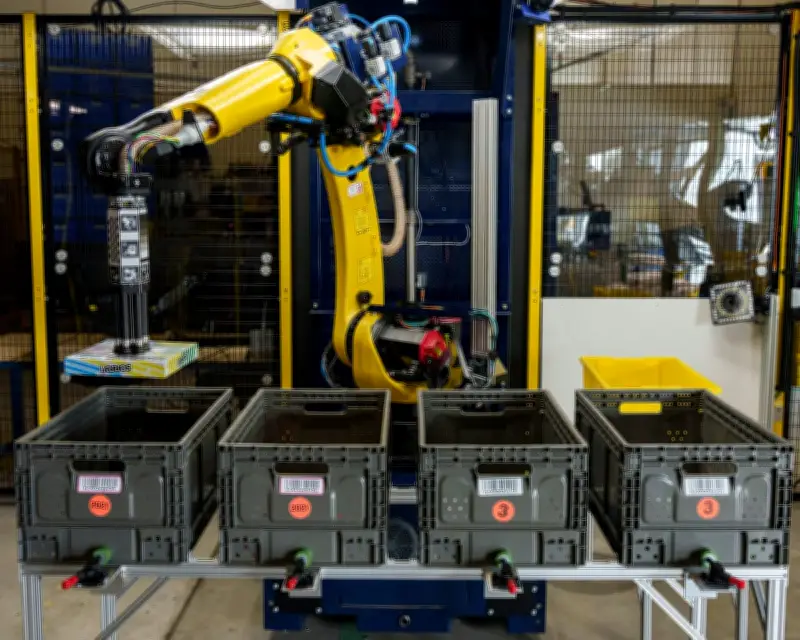
In her new book, We Are Not Machines, journalist Sarah O'Connor tackles one of the most pressing questions of our time: can dignity at work survive the tech revolution? The book, published this week, combines in-depth reporting with personal narratives to explore how technology is reshaping the workplace and what that means for workers' sense of worth.
The central argument
O'Connor, a former Financial Times journalist, argues that while technology has brought efficiency and convenience, it has also eroded the fundamental dignity that comes from meaningful work. She contends that the rise of algorithms, surveillance, and gig economy platforms has turned many jobs into dehumanizing experiences where workers are treated as interchangeable cogs. The book draws on interviews with warehouse workers, Uber drivers, and office employees to illustrate how technology can strip away autonomy and respect.
Key examples and data
One striking statistic cited in the book: nearly 60% of workers in the United States report feeling that their jobs lack meaning, according to a Gallup survey referenced by O'Connor. She also highlights the case of Amazon warehouse workers, who are monitored by algorithms that track their every move, leading to high injury rates and burnout. O'Connor quotes a former Amazon employee saying, 'You're just a number. They don't care if you're in pain as long as the packages go out.'

Policy solutions and hope
Despite the grim picture, O'Connor offers hope. She advocates for policies that prioritize worker dignity, such as stronger labor protections, transparency in algorithmic management, and a universal basic income. She also points to successful experiments in cooperative ownership and worker-led tech design. The book's final chapter calls for a 'new social contract' that balances technological progress with human well-being.
Critical reception
We Are Not Machines has received praise for its accessible prose and rigorous research. The Guardian review notes that O'Connor 'avoids both techno-utopianism and Luddite nostalgia, offering a nuanced and urgent analysis.' The book is being hailed as essential reading for policymakers, business leaders, and anyone concerned about the future of work.
Conclusion
O'Connor's work is a timely reminder that technology should serve people, not the other way around. As the debate over AI and automation intensifies, We Are Not Machines provides a roadmap for ensuring that dignity remains at the heart of work.