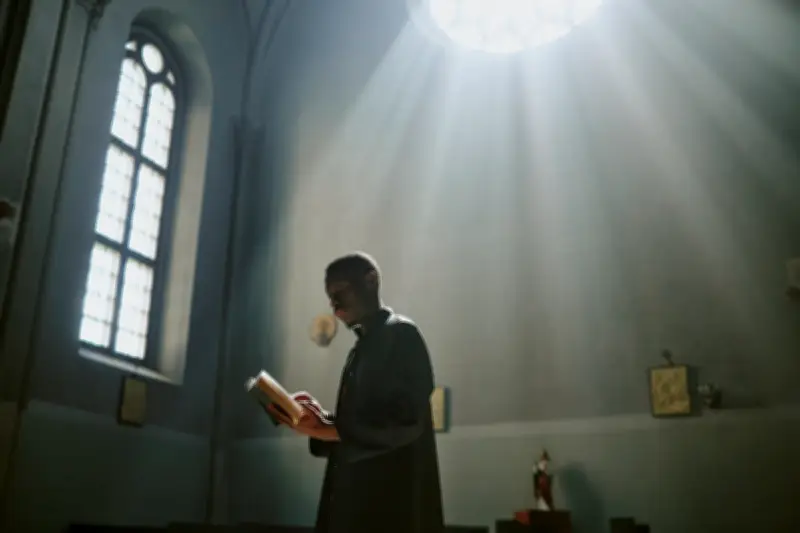
In Addie E Citchens' formidable debut novel Dominion, shortlisted for the Women's Prize, the horrors of male entitlement are laid bare through the charismatic son of a Mississippi pastor. The story is set in the fictional town of Dominion, Mississippi, at the turn of the millennium, and follows the Winfrey family, a prominent Black church household whose outward grandeur masks deep hereditary decay.
The Winfrey Family
Rev Sabre Winfrey Jr leads the largest congregation in the state from the pulpit of Seven Seals Baptist Church. He dispenses wisdom through sermons and local radio broadcasts, exuding an oily confidence that God speaks exclusively through him. His long-suffering wife, Priscilla, writes those sermons, raises their five sons, and silently maintains the machinery of his authority without ever receiving credit. Their youngest child, Emanuel—known universally as Wonderboy—is beautiful, gifted, and terrifying. He is a prodigious athlete with the voice of an angel, moving through Dominion with the dangerous ease afforded to beautiful boys who have never faced consequences.
The Central Drama
The action unfolds through the alternating perspectives of Priscilla and Diamond, Wonderboy's teenage girlfriend. Diamond is vulnerable and poor, carrying the psychic bruises of childhood abandonment. Loving Wonderboy offers her the illusion of belonging. Both women become tragically bound to the same young man: Priscilla has helped create, excuse, and enable him; Diamond experiences the sharp edge of cruelties that flourish under such indulgence. The novel's central drama turns on the gradual surfacing of Wonderboy's true nature. A transgressive sexual encounter with another man leads to a fatal outburst of violence, taking the story in a darker, more urgent direction.

Themes of Power and Hypocrisy
Citchens astutely interrogates how religious performance can become a theatre for power. Sabre, a philandering patriarch whose very being is a lie, embodies the grotesque hypocrisy of public holiness masking private cruelty. He excuses his son's predation as 'boys being boys' and insists scripture smooth over disaster. When confronted with evidence of Wonderboy's violence, he demands of his wife: 'Find me a scripture, Cilla! Type me something good up.'
Priscilla's Struggle
Priscilla is the novel's emotional centre: witty, exhausted, kept from the brink by an addiction to pills and liquor. She becomes a case study in the false seductions of female martyrdom, where women are taught to confuse endurance with love. In one moving moment, she tells Diamond: 'Never, ever, ever will you try to lose or find yourself in somebody else because you'll be lost in the desert if you do.'
Humor and Atmosphere
Despite its macabre subject matter, Dominion is gloriously funny. Citchens' prose crackles with southern Black humour and idiom. A poorly dressed woman is described as 'looking like the last slave freed'; oppressive heat becomes 'boil-a-nigga hot'. When Priscilla decides she has had enough of her husband, she laments that 'normally, a Black woman could depend on something like diabetes or colon or prostate cancer to put rest to a problem husband'. The textures of semi-rural Mississippi life are rendered in Technicolor—the food, gossip, church politics, and family histories.
Conclusion
By the end, Dominion reveals itself as a tale about inheritance: inherited scripts of masculinity, inherited submission of women, and inherited sadness built atop generations of grief. Citchens has written a bruising, funny, and deeply intelligent novel about how women's lives are warped by the whims and cruelty of men, and about what becomes possible when they finally imagine lives larger than those who diminish them.