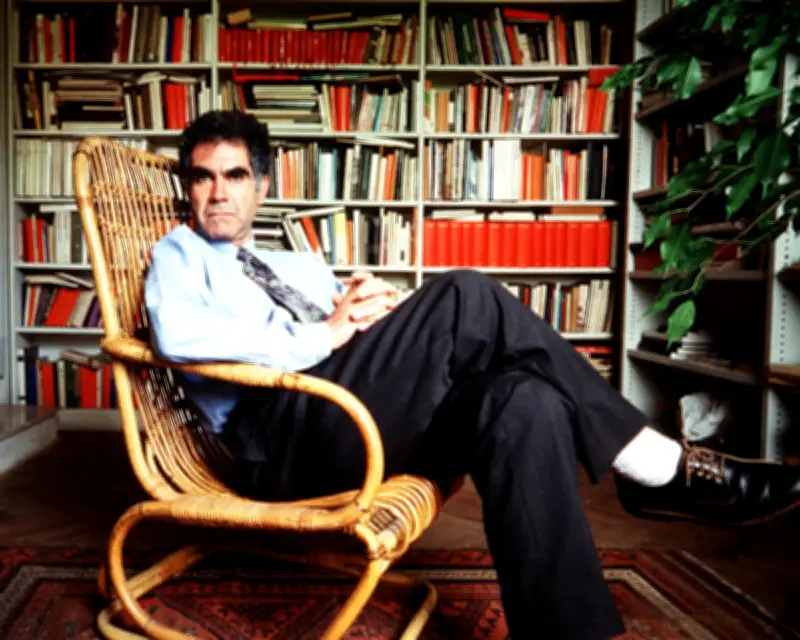
Carlo Ginzburg, the Italian historian whose groundbreaking work in microhistory reshaped the discipline, has died at the age of 87. His most famous book, 'The Cheese and the Worms: The Cosmos of a Sixteenth-Century Miller,' published in 1976, became an international bestseller and introduced a new way of understanding the past by focusing on the lives of ordinary people.
A New Approach to History
Ginzburg's microhistory approach examined small, seemingly insignificant events or individuals to reveal broader historical currents. In 'The Cheese and the Worms,' he analyzed the trial of Menocchio, a miller from Friuli who was executed by the Inquisition for his unorthodox beliefs about the creation of the universe. Through this single case, Ginzburg illuminated the clash between popular culture and official religion in early modern Europe.
The book sold over 100,000 copies worldwide and was translated into more than 20 languages. According to the Guardian, it "became a landmark in the field of cultural history." Ginzburg's work inspired a generation of historians to look beyond the elite and explore the experiences of marginalized groups.

Academic Career and Influence
Born in Turin in 1939, Ginzburg studied at the University of Pisa and the Scuola Normale Superiore. He later taught at the University of Bologna, the University of California, Los Angeles, and the Scuola Normale Superiore. His other notable works include 'The Night Battles: Witchcraft and Agrarian Cults in the Sixteenth and Seventeenth Centuries' (1966) and 'Clues, Myths, and the Historical Method' (1986).
Ginzburg's influence extended beyond history to anthropology, literary theory, and art history. He was known for his rigorous methodology and his insistence on the importance of evidence and interpretation. In a 2010 interview, he said, "History is not a science; it is a form of knowledge that requires imagination and empathy."
Legacy and Tributes
News of Ginzburg's death prompted an outpouring of tributes from scholars around the world. Harvard historian Jill Lepore called him "a giant of historical thought." Italian President Sergio Mattarella praised his "extraordinary contribution to culture." Ginzburg is survived by his wife, two children, and four grandchildren.
His work remains essential reading for historians and students alike. The University of Bologna plans to establish a research center in his name dedicated to the study of microhistory.