British filmmaker Ben Rivers has taken on the formidable task of adapting the work of celebrated American novelist Don DeLillo into a new film, a project that promises to cut through the tangled 'mares' nest' of contemporary life. The film, which has been generating buzz in literary and cinematic circles, aims to capture the essence of DeLillo's distinctive voice—a blend of paranoia, wit, and profound insight into the human condition.
Rivers' Vision for DeLillo's World
Ben Rivers, known for his experimental and visually arresting documentaries, brings a unique sensibility to the adaptation. Rather than tackling a single novel, Rivers has woven together elements from several of DeLillo's works, including 'White Noise', 'Underworld', and 'The Body Artist'. The result is a film that is less a straightforward narrative and more a meditation on themes that have preoccupied DeLillo throughout his career: the impact of technology, the fragility of identity, and the search for meaning in a world saturated with images and noise.
Rivers describes the project as a 'mares' nest'—a term that suggests a tangled, confusing situation. But for Rivers, this complexity is precisely the point. 'DeLillo's work is full of these beautiful, messy entanglements,' Rivers said in an interview. 'We're trying to honor that by creating a film that doesn't offer easy answers but instead invites the audience to sit with the discomfort and wonder.'

A Collaborative Process
The film is a collaborative effort, with Rivers working closely with a small team of artists and writers. The screenplay, credited to Rivers and writer Daisy Hildyard, distills DeLillo's dense prose into a series of vignettes. The cast includes both professional actors and non-professionals, chosen for their ability to embody the ordinary yet extraordinary characters that populate DeLillo's world.
Cinematographer James L. Smith, known for his work on 'The Souvenir' and 'First Cow', brings a muted, naturalistic palette that contrasts with the often surreal events on screen. The score, composed by British musician and producer Actress, blends electronic and acoustic elements, creating an unsettling but beautiful soundscape.
DeLillo's Legacy and the Film's Place
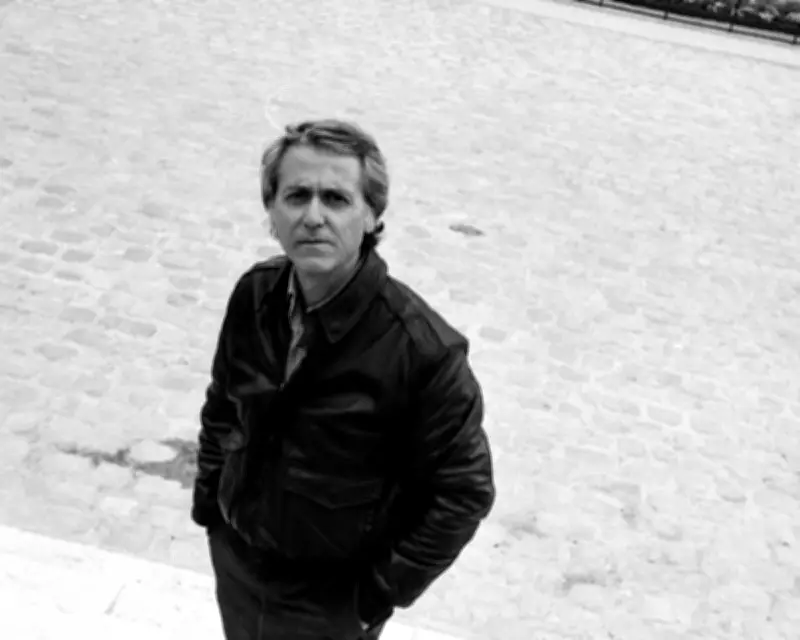
Don DeLillo, now 89, has been a towering figure in American literature since the publication of 'White Noise' in 1985. His work has been adapted for film before, most notably in the 2012 film 'Cosmopolis' directed by David Cronenberg. However, Rivers' approach is markedly different. Where Cronenberg's adaptation was faithful to the novel's plot, Rivers' film is more impressionistic, aiming to capture the mood and ideas rather than the story.
Early reviews have been mixed but intrigued. Critics have praised the film's ambition and visual beauty, though some have found it inaccessible. 'It's a film that demands a lot from its audience,' wrote one critic. 'But for those willing to engage, it offers a rich, rewarding experience.'
The film is set to premiere at the Venice Film Festival later this year, followed by a limited theatrical release. Rivers hopes that the film will introduce DeLillo's work to a new generation. 'DeLillo's writing is more relevant than ever,' Rivers said. 'We're living in a world that feels like one of his novels—full of noise, conspiracy, and fleeting moments of grace. I hope our film captures some of that.'