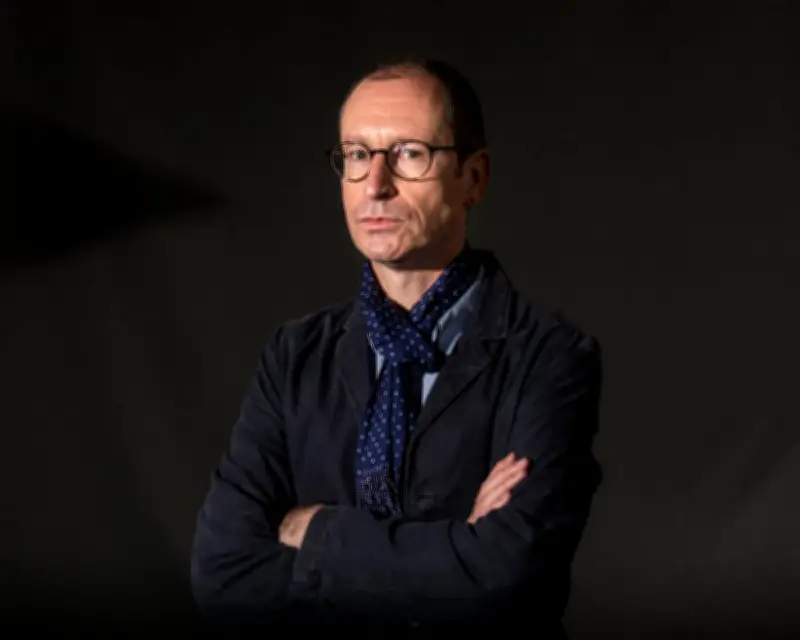
Brian Dillon's memoir 'Ambivalence' is a portrait of determination to go against the grain and pursue a life in words and ideas. Dillon lost his parents early, his mother when he was 16, his father at 21. He writes of them in passing here, as he did in his first book, 'In the Dark Room', but with little overt display of grief. Narrated in the third person, with young Dillon a removed 'he' rather than an emotionally manipulative 'I', this isn't a weepy orphanhood memoir. It describes instead his awkward Dublin education, as he struggles to carve out an identity for himself and to accommodate his passion for avant-garde music and literature within academe.
Early Influences and Education
He grows up surrounded by the books acquired by his father, who left school early and went to university late. He reads them avidly and adds to them with library borrowings and purchases of his own. But, to begin with, his greater attachment is to music magazines and to David Bowie, whose excitingly ambivalent sexuality echoes his own. His father speaks of duty – to homework, weekly mass and getting a decent job. But his commitment is to jouissance, if only he can find it.
His recall of his teens and early 20s is astonishing. Without a diary or notebook to draw on, only memory and 'an anxious rereading of my MA and PhD theses', he documents the books he read, the records he bought, the gurus who inspired him, Virginia Woolf, Roland Barthes and Walter Benjamin chief among them. At 17 he's reading Jean Genet, Michel Foucault and Tristan Tzara. By 24 he seems to have read everything. Could he love anyone who doesn't like Derrida? No.

Struggles and Identity
He worries about being called a poseur, and owns up to preferring any writer, musician or philosopher dismissed as a charlatan. His teachers and parents have called him bright, and in his own fashion he's learning how books written by outlaws can 'solve everything', or at least shape a life. But he has done little schoolwork since his mother's death, spending hours in a state of indolence and reverie. His confidence is shaky. And he resents how teachers treat education not as a matter of learning but of obedience.
During a year at a college for disappointed university candidates he moves on, developing an aesthetic that celebrates androgyny and 'undecidability'. And at University College Dublin he finds a cohort of like-minded subversives as well as an inspiring tutor, Thomas Doherty. Even his father's sudden death doesn't throw him off track; on the contrary, he's bequeathed a sum of £8,000 even before he and his two brothers sell the family home, enough to keep him going for several years, he decides with foolish optimism. His exam results are good, too, even if he feels 'as if he has been rewarded for sensibility rather than study'.
The Darker Side
Not everything is quite so upbeat, though. Away from university, and sometimes marring his performance there, his life is 'furtive, shameful, horrific'. He has violent fights with one of his brothers, P (out of discretion many of the book's personnel are identified by capital letters; even he is a mere B). He botches potential relationships, suffers from tremors, drinks too much and is haunted by the 'imperious demands of his loneliness'. Though he has found his niche intellectually, by embracing critical theory, which to him has more glamour than poetry or fiction ('B's unquestioned mantra: Always theorize!'), it dawns on him that his scholarly writing is a form of autobiography. To friends he denies the trauma of losing his parents: it's all in the past, he tells them, these days he feels next to nothing. But when he writes, in reference to Ruskin, of 'a weakened subjectivity … caused by a particular kind of grief which unhinges the mind', he's writing of himself.

Conclusion
On the face of it a book about 10 years spent in academic study has limited appeal. But when he's not merely reeling off reading lists in a 'library-bound stupor', Brian Dillon is a stimulating intellectual companion, quietly heroic in his determination 'to pursue a life in words and ideas', yet by his own harsh estimate slothful and unfocused. The book ends with him organising a conference, getting work on RTÉ radio and moving to Canterbury to continue his PhD. A success story, you think, but, ruefully self-denigrating as always, he sees it differently, working out that his unfinished thesis has cost him a pound a word.