On 15 June 1926, the Lyric theatre in Hammersmith hosted A Tragedy of Fashion, an engaging little ballet that marked the beginning of a dance company still thriving 100 years later. Marie Rambert, a Polish émigré who performed with Diaghilev's Ballets Russes, founded the company that has evolved into today's Rambert, Britain's oldest dance company.
Marie Rambert was a force of nature—an inspired talent spotter and legendary bully with wit, taste, and a sharp instinct for trends. She nurtured talents like Frederick Ashton and Antony Tudor. 'This woman was a pioneer, really ahead of her time,' says current artistic director Benoit Swan Pouffer. However, Marie Rambert would not recognise the company today, housed in a sleek building on London's South Bank.
Reinventing a Century-Old Institution
Rambert has reinvented itself multiple times: from ballet to contemporary dance in the 1960s, and renaming to Rambert Dance Company in 1987 (now simply Rambert). For its centenary, rather than revisiting classics, Rambert is touring an edgy lineup of current dance. 'It's in keeping with our DNA—pushing boundaries, democratising dance, giving space to new voices, taking risks, and not being scared to move forward,' says Pouffer.

The centenary tour features work from French collective (La)Horde inspired by lindy hop and rave culture, Bobbi Jene Smith and Or Schraiber reimagining Fugue in Crimson, and up-and-coming Dutch choreographer Emma Evelein.
A Frenchman's Vision for British Dance
When Pouffer arrived in 2018 after running Cedar Lake Contemporary Ballet in New York, he ruffled feathers by declaring the institution needed renovating. He implemented changes in staffing, dancers, and culture. 'You have to have spies all over the world, ears and eyes. I collect information,' he says. 'The landscape has changed tremendously.'
Pouffer references Marie Rambert's fearlessness: 'She was fearless and very adamant, and expected the audience to go with her.' He sees a new wave in dance, exemplified by Rambert's four-day takeover of London's Southbank Centre last September. We Should Never Have Walked on the Moon, a collaboration with (La)Horde, featured 80 dancers throughout the building and outside, with audiences roaming and filming. 'It felt exciting, a real event,' says Pouffer.
Blurring Boundaries and Embracing Pop Culture
Boundaries between classical and contemporary, theatrical and commercial, stage and screen have collapsed. Dance is everywhere online. 'For some good and some bad,' notes Pouffer. 'Choreographing a two-minute TikTok sequence—does that make you a choreographer? For me, choreography is a sense of time, space, audience journey, raising questions, poetry. It's not just steps.'
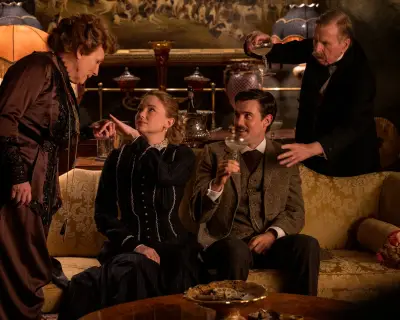
Under Pouffer, Rambert has shifted towards more commercial productions. First, a dance version of Peaky Blinders, which just returned from touring China. 'We had superfans following us from city to city,' he says. Next is a show based on Russell T Davies's It's a Sin, about friends living through the AIDS crisis in the 1980s, with Pet Shop Boys as executive producers.
Pouffer insists these are not gimmicks. It's a Sin connects directly to Rambert's history—some dancers were lost to AIDS. 'In our sector, it was an abomination. We lost great talents. I wonder what they would have done.'
Attracting New Audiences
When asked if using TV properties suggests dance is not strong enough alone, Pouffer responds honestly: 'After a couple of years, changes had been made, but we had people in the theatre, not that many. I decided to do something bold.' Peaky Blinders has been seen by 250,000 people—65% new to Rambert, 21% new to dance. 'I truly believe someone who has never seen dance has as valid an opinion as me.'
Touring is expensive and often loses money. 'But it's part of our mission,' says Pouffer. 'Classical ballet companies do The Nutcracker for three months. Peaky Blinders is our Nutcracker.'

Timothée Chalamet and the Future
Regarding Timothée Chalamet's infamous comment that nobody cares about ballet, Pouffer shakes his head: 'I'm hoping he didn't mean it as perceived.' He agrees that dance occupies a small slice of the entertainment pie. 'My ultimate goal is that Rambert is a brand,' he says, encompassing stage, digital, commercial, populist, and experimental work.
Looking ahead, AI poses questions. 'With AI, everything I'm watching I doubt. Is that real? The only way to be sure is to see it live. Maybe that's our moment—the entertainment that doesn't lie.' He envisions different ways of experiencing dance, like the Southbank event where audiences are active.
Pouffer would like to revive Rambert2, a graduate company, but needs funding. 'Maybe Timothée Chalamet can help,' he laughs. 'What he should do is perform a dance piece. Then he can shut this thing down!'
This Is Rambert is at Sadler's Wells, London, 10-13 June, touring to 16 September.