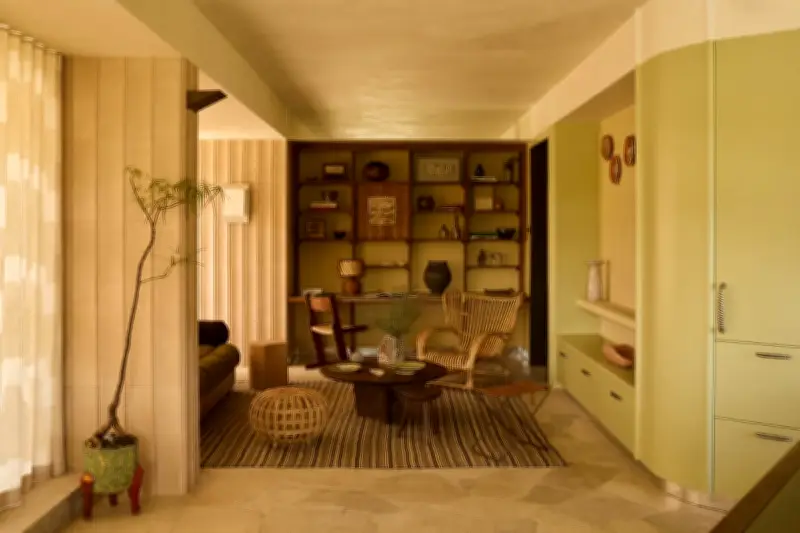
The 2026 Houses Awards shortlist has been unveiled, showcasing Australia's most 'intelligent, dynamic and visually compelling homes'. In the apartment category, jury chair Alexa Kempton noted that judges looked for 'density done well'. 'Building is high-cost and comes with environmental consequences, and the jury observed architects rising to the challenge,' she said. Designing something that will 'last well into the future and adapt to the changing needs of the occupants is essential'.
Newport Apartment by Mima Architects
An existing Sydney northern beaches penthouse with a small internal floor area was reconfigured into a grander space after extensive council negotiations. A 'central storage spine' enhanced functionality. Durable materials that can be easily refinished were prioritised, with the interior's palette inspired by the owners' yacht.
Brunswick Apartment by Neometro
In this two-bedroom, two-bathroom Melbourne apartment, custom joinery replaces walls to create distinct zones. The built-ins stop short of the ceiling, allowing light and air to flow. Neometro reconfigured what was originally two units into a single family-sized apartment within the existing structure.

Apartment on the Loop by Billy Maynard Architects
Located on the top floor of a 1930s Sydney building, this redesign reintroduced art deco elements compromised by a 1980s renovation. New windows improved thermal performance while staying true to the original design. The refresh minimised demolition and reused existing materials, such as repurposing old wall framings for floorboards.
Darling Point Apartment by Corben Architects
This outdated Sydney apartment was renovated to maximise light and airflow, reducing reliance on air conditioning and artificial light. Timber veneer panelling matches full-height cabinetry for functional storage. Hardwearing natural stone and engineered timber were used alongside locally made sanitary ware chosen for durability.
Egan Compact by Kieran McInerney Architect
Kieran McInerney converted his warehouse studio in Sydney's inner west into a family home as 'an affordable way to stay in our apartment building'. The 27 sq metre footprint fits 65 sq metres of floorspace, giving the children their own bedrooms. The home packs two floors into the existing shell, using prior knowledge of sunlight, noise and views.
The Esplanade: a Place to Pause by Duo Architects
An art deco apartment's interior was reworked into a flexible space utilising high ceilings, heritage features and existing flooring. Integrated joinery conceals a laundry, appliances and even a bed for efficient multi-purpose use.
Existenzminimum by Espinosa Studio
A 30 sq metre art deco studio in Sydney was renovated with clever custom joinery to increase functionality. A bed niche allows the living area to serve for sleep or entertaining, while a restrained palette of white and natural woods keeps the unit calm. The project drew from the modernist concept of Existenzminimum—minimum space for a dignified life—and believes better use of existing housing stock reduces carbon-intensive rebuilds.
Hide and Seek House by Tim Bennetton Architects
This renovation of a small beachside Sunshine Coast apartment was tailored to occupants' current and future needs. A 'hide and seek' wall across the apartment allows owners to retreat or come together, improving thermal performance via cross ventilation. The internal fitout used the existing footprint, allowing owners to stay without altering the building's fabric.
Northcote Townhouses by Birthisel Wittingslow Architects, Studio Esteta and Carr
Three industry couples redeveloped an under-utilised lot with a single family home into three separate dwellings, sensitively increasing density. The all-electric homes are designed around passive performance, with planted voids for daylight and shared/private gardens.
North Melbourne Apartment by Card
This renovated brick walk-up prioritised reuse over expensive reconstruction. The kitchen was reconfigured with a window that opened sight lines while concealing mess.

Norton Street by Plus Minus Design
This Sydney project replaced a single 'higgledy-piggledy' three-bedroom house with two four-bedroom houses and two studio apartments. The construction reused materials, including leftover marble from kitchen benches as stair risers. The project was developed on a modest budget, prioritising layout and proportion over luxury materials.
Park Avenue Towers by Nic Morgante
A late-modernist Melbourne apartment was completely renovated to rework closed-off interiors and centre the kitchen. Double-glazed windows improve thermal performance, and reconfiguration enhances natural light. Integrated joinery improves storage, functionality, light control and privacy.
Patchwork Elizabeth Bay by Other Architects
This one-bedroom art deco Sydney apartment underwent a 'restrained' renovation to update worn flooring and dated kitchen and bathroom. Sustainable materials include salvaged off-cut marble pulled from a bin, reassembled into inlaid floors, borders and shelves. Lighting updates used face-fixed track lighting without embedding wiring, and design layers are intended for disassembly to divert future renovation waste.
Rose Terraces by Luigi Rosselli Architects
Four terrace homes in Sydney's east were prefabricated from cross-laminated timber, with bricks from the previous one-storey building repurposed into brise-soleil screens and paving. Built in just six months, this self-funded, architect-led project is extensively documented as a replicable case study for build-to-rent housing.
The PentHouse by Austin Maynard Architects
A double-storey apartment with an 'inefficient' layout was redesigned to allow owners to age in place. The unit is configured in a doughnut around a central block containing stairs, elevator, storage and service rooms. With a generous budget, the firm focused on design enhancing wellbeing.
Ruby by Brad Swartz Architects
Redesigned for a downsizing couple, this Sydney apartment can be reconfigured into a large one-bedroom or a three-bedroom unit for visiting children and grandchildren using sliding panels. A large foyer and under-utilised hallways were reclaimed into usable space, including a relocated ensuite.
Studio8 by Partners Hill
Located in the basement of a heritage-listed building in inner Melbourne, this project converted a former laundry into usable living space. The interiors defer to original architect Roy Grounds and make extensive use of custom joinery.
Torbreck 2.0 by Kin Architects
No existing walls were demolished in this Queensland apartment's reconfiguration. Functionality was improved with additions like custom cabinetry. The building's blue exterior palette was brought indoors, including a remodelled kitchen with durable Corian bench tops. Recycled and recyclable materials were prioritised.
Torbreck Apartment by Amok Studio
Also in Brisbane's Torbreck building, this complete renovation of a 58 sq metre unit retained original proportions. Custom joinery significantly enhanced storage and functionality. A natural palette gives softness while drawing on the building's mid-century heritage.