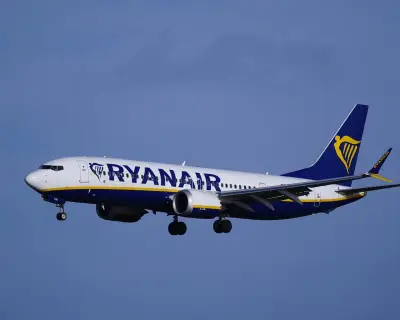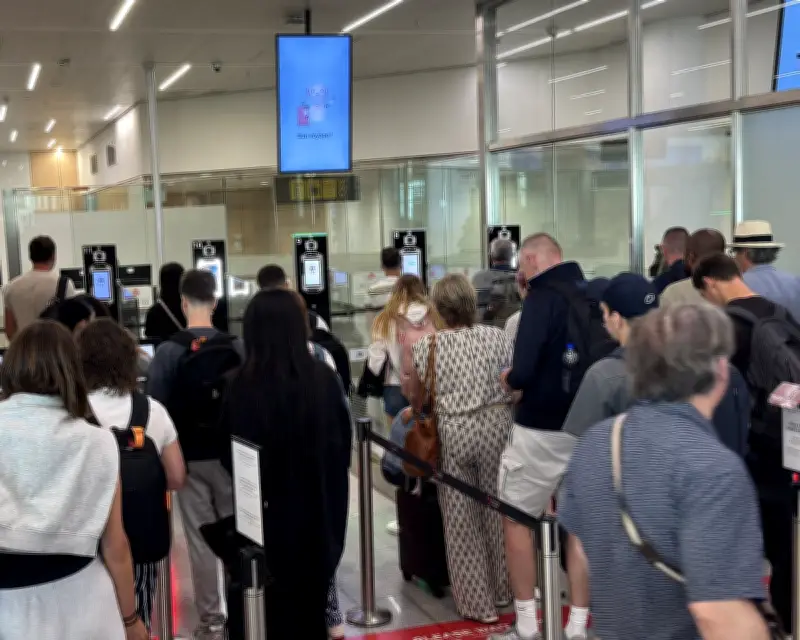
Travel industry leaders are urging the European Union to suspend its new border entry and exit system during the peak summer holiday period to prevent widespread airport queues and travel disruption. The call comes as airports across Europe brace for record passenger numbers in July and August.
Industry Warnings of Travel Chaos
The European Travel Retail Confederation (ETRC) and the Airports Council International (ACI) Europe have jointly written to the European Commission, warning that the Entry/Exit System (EES) could cause significant delays if implemented as planned in October 2025. The system requires non-EU travellers to register biometric data, including fingerprints and facial scans, upon entry and exit.
According to ACI Europe, more than 400 million passengers are expected to travel through EU airports during the peak summer months, and the new system could add up to 30 seconds per passenger at border checks. For a busy airport like London Heathrow, this could translate into hours of additional waiting time.

“The timing couldn’t be worse,” said Olivier Jankovec, director general of ACI Europe. “We are facing a perfect storm of record passenger numbers and a new, untested border system. Suspending the EES until after the summer would avoid unnecessary chaos and give airports and airlines time to prepare properly.”
Calls for Phased Implementation
The industry bodies are not asking for the system to be scrapped, but rather for a phased rollout that avoids the busiest travel periods. They propose a pilot programme at a few airports first, followed by a gradual expansion. The European Commission has not yet responded to the request, but sources indicate that discussions are ongoing.
The EES is designed to strengthen border security and monitor overstays, but critics argue that it has been poorly planned and could lead to long queues, especially at land borders and smaller airports. The system was originally scheduled to launch in 2022 but has been delayed multiple times due to technical issues and the pandemic.
“We fully support the objectives of the EES, but the implementation must be done in a way that does not disrupt travel,” said Julie Lassaigne, secretary general of the ETRC. “A suspension during peak periods is a sensible and pragmatic solution.”
Impact on Travellers and Airlines
If the EES goes live in October 2025, travellers from non-EU countries such as the UK, the US, and Australia will need to provide biometric data at the border. This could significantly increase processing times, particularly at busy airports like Paris Charles de Gaulle, Frankfurt, and Amsterdam Schiphol. Airlines have also expressed concern, warning that delays at border control could cause missed flights and knock-on disruptions.
“The travel industry is still recovering from the pandemic, and we cannot afford another blow,” said a spokesperson for the International Air Transport Association (IATA). “We urge the EU to listen to the experts and delay the implementation until the system is fully tested and ready.”
The European Commission has defended the EES, stating that it will enhance security and streamline travel in the long run. However, it has not ruled out adjustments to the timeline. A decision is expected in the coming weeks.