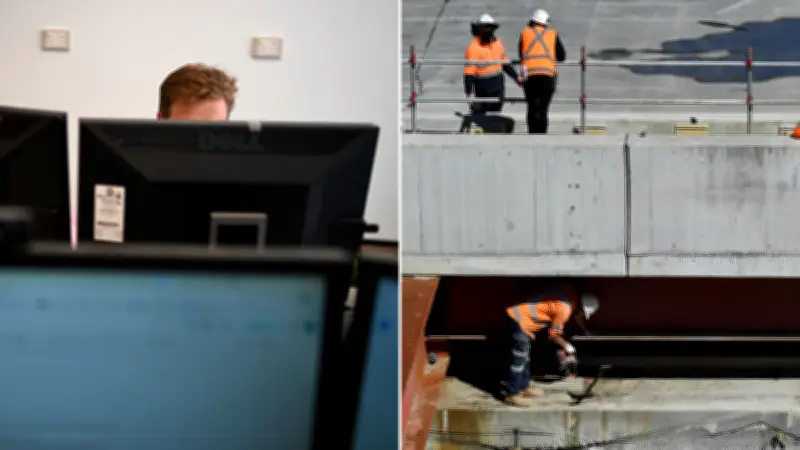
A groundbreaking federal government report has identified the jobs most and least vulnerable to artificial intelligence, with hands-on roles such as plumbers, electricians, and care workers emerging as the safest amid the AI revolution.
First Comprehensive Analysis of AI's Impact on Jobs
For the first time, the Australian government has delved into employment data to assess the effects of AI over the four years since generative tools like ChatGPT entered widespread use in 2022. The report, authored by chief economist Matt Cowgill, found no significant impact on overall employment growth or major shifts in job types. However, it highlighted specific occupations that may face disruption.
“We find that employment has continued to grow, it’s continued to grow for young people as well who are thought to be most exposed and we’re overall seeing ongoing resilience in the Australian jobs market,” Cowgill said.

Tradies and Care Workers Least Exposed
Workers in hands-on professions are on solid ground. The least exposed jobs include plumbers, electricians, child care workers, and aged care workers. These roles require physical presence and manual skills that are difficult for AI to replicate.
In contrast, desk jobs such as accountants, receptionists, and marketing professionals are more at risk. The report also found that workers in highly exposed roles are more likely to be women and university graduates. Men constitute 70 per cent of workers in safer jobs, and fewer of them hold tertiary qualifications.
Employment Growth Slower in High-Exposure Roles
While the overall jobs market remains resilient, there has been a softening in employment growth for roles deemed most exposed to AI. These jobs grew by 5.6 per cent compared to 9.5 per cent growth for the least exposed roles between November 2022 and February 2026. However, some highly exposed occupations bucked the trend; software developer employment surged by 25 per cent over the same period.
Cowgill dismissed the notion that Australia's resilience is due to slow AI adoption. “Australia is actually one of the world’s biggest users of AI,” he said. “And the second reason to doubt this is just because of slow adoption is even in the US, which is the frontier of this issue, they’re still seeing their overall jobs market fair reasonably well.”
Government Plans Ongoing Monitoring
Federal Employment Minister Amanda Rishworth described the findings as encouraging and announced plans to use the report as a baseline for future monitoring. “The good news is, we’re not seeing a big shift or disruption,” Rishworth said. “Now we’ve established this baseline framework, we certainly want to do ongoing reporting on this.”
The report marks a first step in understanding AI's evolving impact on Australia's workforce, with policymakers aiming to track changes and adapt strategies as technology advances.