Millions of Australians will get a pay rise starting July 1, but it could come at the cost of further interest rate pain. Australian mortgage holders will be whacked twice in 2026, as an above-inflation lift to the minimum wage adds to the country’s inflation woes.
Fair Work Commission Announces 4.75% Increase
On Tuesday the Fair Work Commission announced a 4.75 per cent increase in the minimum award. The change will affect 2.8 million people whose pay is set by a modern award, or about 20 per cent of the workforce. Following the announcement the minimum wage will rise to $26.44 per hour (from $24.95), or $1004.90 per week (from $948). This applies to workers not covered by a modern award or an enterprise agreement. The changes will come into effect on July 1.
Economists Warn of Inflationary Pressures
AMP economist My Bui warns while it is understandable for the Fair Work Commission to avoid negative real wage growth for employees, due to the sheer volume of Australians impacted it could lift inflation. “Tuesday’s decision is only expected to add less than 0.6 percentage points to annual wages growth next year, the risk is that wage pressures spill over into other parts of the private sector,” she said. “Wage pressures will add to already sticky services inflation, as businesses pass on higher labour and input costs, which have remained elevated amid rising goods prices.”

Ms Bui says as a result AMP now forecasts further rate pain for households. “As a result, we are now forecasting another rate hike in November, taking the peak cash rate to 4.85 per cent for this cycle. There is also a risk that the upcoming hike comes sooner, in June rather than August,” she said. Prior to Tuesday’s announcement AMP predicted one more interest rate hike by August 2026. AMP is now also calling inflation will rise further over the June quarter.
Business Impact and Sector Vulnerabilities
CreditorWatch chief economist Ivan Colhoun says the larger-than-expected rise will add cost pressure to businesses, particularly in labour-intensive sectors. “While the larger than expected minimum wage increase will be welcome for the lowest paid, many businesses and the RBA are unlikely to be as happy,” he said. “The rise will add to business costs at a time of already elevated inflation, higher interest rates and at least a temporary surge in fuel costs. Four sectors account for over two thirds of this employment: Retail, Hospitality, Healthcare and Social Assistance, Administrative and Support Services.”
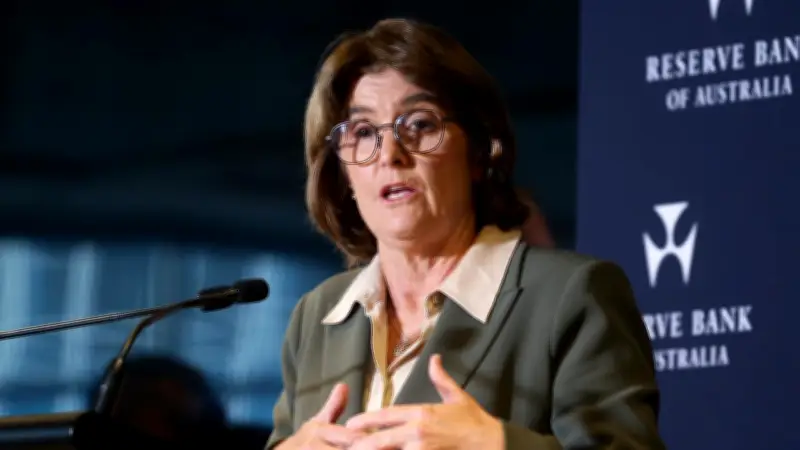
Mr Colhoun also said it would be a “little harder” for the RBA to get inflation back to 2.5 per cent. AMP forecasts inflation will now likely rise to 4.8 per cent over the June quarter, before it declines back to 4.1 per cent by the end of the year. This is above the Reserve Bank’s target rate of between 2-3 per cent.
Context and Government Response
The rise in minimum wage came in to compensate Australians for rising costs. Prior to Tuesday’s announcement the unions called for a 6 per cent bump in the minimum wage, while business groups said 3.5 per cent was more reasonable. Australian Bureau of Statistics show yearly headline inflation fell from 4.6 per cent in March to 4.2 per cent in April. This was due to the Australian government temporarily halving the fuel excise and giving back the GST, which in part eased some of the inflationary pressures.
But the all important trimmed mean inflation rate – which the RBA watches because it strips out volatile and seasonal items – rose to 3.4 per cent for the 12 months to April, showing underlying price pressures are still in the Australian economy. Treasurer Jim Chalmers hailed the decision as the pay rise millions of Australian workers need and deserve. “This is the sustainable real wage increase that we called for in our submission to the Fair Work Commission,” he said.