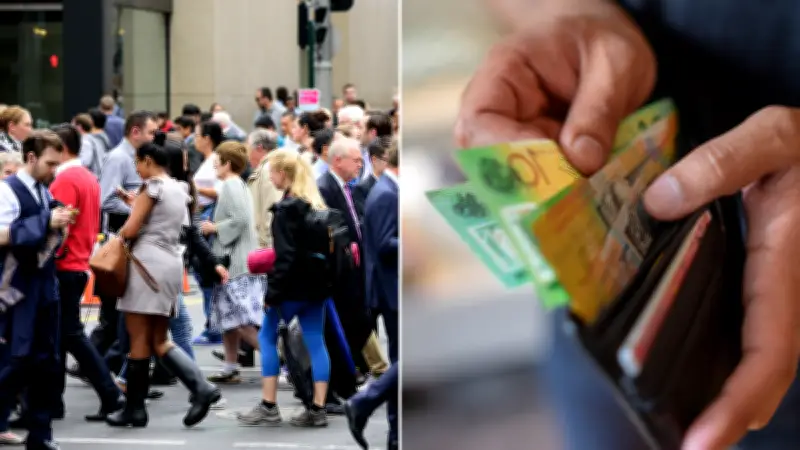
Almost three million Australian workers are set to receive a 4.75 per cent pay increase following the industrial umpire's annual minimum and award wage review. The Fair Work Commission’s decision on Tuesday lifts the minimum wage to $26.44 per hour (up from $24.95) or $1004.90 per week (up from $948). This move follows the federal government’s call for a sustainable real wage rise.
The decision comes amid ongoing uncertainty surrounding the Middle East conflict and the duration of the Strait of Hormuz closure, which continues to exert upward pressure on inflation. According to Australian Bureau of Statistics figures, headline inflation was 4.2 per cent in the year to April, but the Reserve Bank has forecast inflation to rise to 4.8 per cent by the end of June.
Fair Work Commission president Adam Hatcher stated that it was not practical or responsible to award a pay rise above five per cent, which would be necessary to close the real wage gap that has opened since the COVID-19 pandemic. However, he noted that the commission aimed to ensure that modern award-reliant employees are not worse off in real terms compared to July 1, 2025. The commission also made a structural adjustment to the lowest pay classifications to effectively raise the minimum wage relative to the rest of the system.

The decision fell between the ranges suggested by unions and business groups. The Australian Council of Trade Unions (ACTU) had called for a 6 per cent increase, arguing that workers are still behind in real terms following the post-COVID inflation spike. In contrast, the employer body Australian Industry Group advocated for a lower rise of 3.9 per cent, claiming that the union body’s demand would stoke inflation.
While the federal government did not nominate an exact figure, Treasurer Jim Chalmers expressed that workers deserve a decent real wage increase. “We want to see it go up further today, and that’s because we recognise that higher wages and lower taxes are the best way to help working people with the cost of living,” he told ABC TV ahead of the decision.
The pay rise covers approximately one in five employees, but because they tend to be lower paid, it amounts to only 11.2 per cent of the national wages bill, according to commission estimates. However, economists say the decision influences pay rise claims across the economy, resulting in broader flow-on effects. The pay rise will take effect from July 1.
Unions welcome wage increase
Australian Unions have welcomed the Fair Work Commission’s decision. “It means relief is on the way for lower paid workers to help keep up with price pressures and avoid the need to cut back on essentials like food or seeing a doctor,” said ACTU Secretary Sally McManus. “This is a positive real wage increase, and it will provide some buffer against the worst impacts of the Trump war, providing it doesn’t drag on throughout the year.
“It is encouraging to see that even higher wage rises of 6 per cent, matching our full claim, have been awarded to around 100,000 workers on the very lowest pay rates because they simply could not afford to wait. The lowest paid need to spend almost all of what they earn to survive, and this wage increase will be vital to them while generating income for local businesses that also need a boost.”