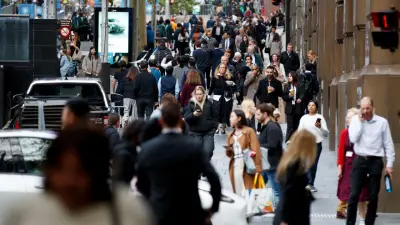
Millions of Australian workers are set for a wage increase after a major decision by the Fair Work Commission (FWC), which experts warn could add to inflation. The FWC has announced a 4.75 per cent wage rise for about 2.8 million Australians on awards, effective from July 1, 2026. The National Minimum Wage will increase to $1,004.90 per week, or $26.44 per hour.
The increase comes after inflation hit 4.2 per cent in April. Sky News business editor Ross Greenwood said the move would not help the government's inflation fight amid fears of a wage-price spiral. "The thing that the Reserve Bank has talked about for a long time is you don't want a prices wages spiral," Greenwood said. "In other words, one chases another, and so as a result you end up not being able to defeat inflation. This is certainly not going to be defeating inflation."
Government welcomes decision
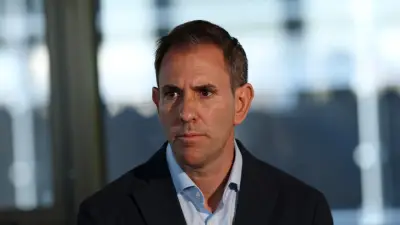
Treasurer Jim Chalmers welcomed the FWC's decision, calling it a sustainable real wage increase. "This is the pay rise that Australian workers need and deserve. This is the sustainable real wage increase that the government has called for, and we're pleased to see it delivered in today's decision," he said. "This means that the minimum wage is up more than $12,000 a year since we came to office four years ago. It's about a 30 per cent increase in the minimum wage, which is a very good thing."

Chalmers added, "When it comes to these cost of living pressures that Australians are confronting right now, we see decent pay as part of the solution, not part of the problem, so we're pleased to see those cost of living pressures recognised by the commission in this very welcome decision."
FWC's rationale
The FWC said it would "not be practicable" to award a real wage increase high enough to "close the real wage gap entirely". FWC president Justice Adam Hatcher said a key consideration was to ensure modern award employees were not worse off in real terms than last year, while protecting lower-paid workers. "We consider that we should at least ensure that modern award employees, generally, are not worse off in real terms than they were as at July 1, 2025," Hatcher said. "And that we should also take additional measures to protect the position of the very lowest paid workers under modern awards. Therefore, the decision we have made is that modern award wage rates will be increased by 4.75 per cent effective from July 1, 2026."
Last year, the FWC lifted the minimum wage by 3.5 per cent when inflation was about three per cent.
Reactions from unions and business
The Australian Council of Trade Unions (ACTU) had called for a six per cent minimum wage hike, significantly higher than what many business bodies suggested. The Australian Chamber of Commerce and Industry argued for a 3.5 per cent increase, while the Australian Industry Group sought a 3.9 per cent bump. The ACTU said a six per cent pay rise would shield low-paid workers from high inflation while lifting the minimum wage to $26.45 per hour.
Liberal Senator James Paterson accepted the justification for wage increases but urged the government to control inflation. "I'll never begrudge a pay rise for Australian workers, and I understand why, in Labor's high inflation environment, this is necessary to stop Australian workers going even further backwards than they already have over the last four years," Paterson said. "This is just about treading water, keeping them at the level they've been at in recent years. But the core of the problem is out-of-control inflation; we need to get that urgently under control because, over the long term, it is not sustainable to keep increasing wages at this kind of rate, because it's not sustainable to have inflation at this rate. That will ultimately lead to all Australians being poorer and probably higher unemployment."

Business concerns
Australian Retail Council chief legal and industrial relations officer Lindsay Carroll warned the decision would intensify business cost pressures. "Retailers support fair wages and recognise the contribution retail employees make every day, but this decision comes on top of a growing list of cost pressures that businesses are already struggling to absorb," she said. "Labour is one of the largest costs in running a retail business. Combined with rising energy, rent, insurance, freight, compliance and security costs, this decision will place additional strain on already thin margins across the sector. For some retailers, this decision will mean difficult choices about investment, hiring, operating hours and future growth plans."
Australian Restaurant and Cafe Association CEO Wes Lambert slammed the move as "falling dangerously short". "The hardest truth in hospitality is that restaurants do not print money - they create jobs," he said. "When minimum wages rise 4.75 per cent, but productivity, consumer spending and operating conditions do not rise alongside them, the result is fewer opportunities, fewer trading hours and fewer businesses able to survive the next financial year. If the annual wage review continues to operate without a meaningful assessment of business capacity to pay, business profitability or productivity growth, then it risks becoming less a wage-setting mechanism and more a job-destruction mechanism. That should concern workers and employers alike. Maybe it's time to rethink the entire process where the Commission tasked with judging is not also setting the rules."