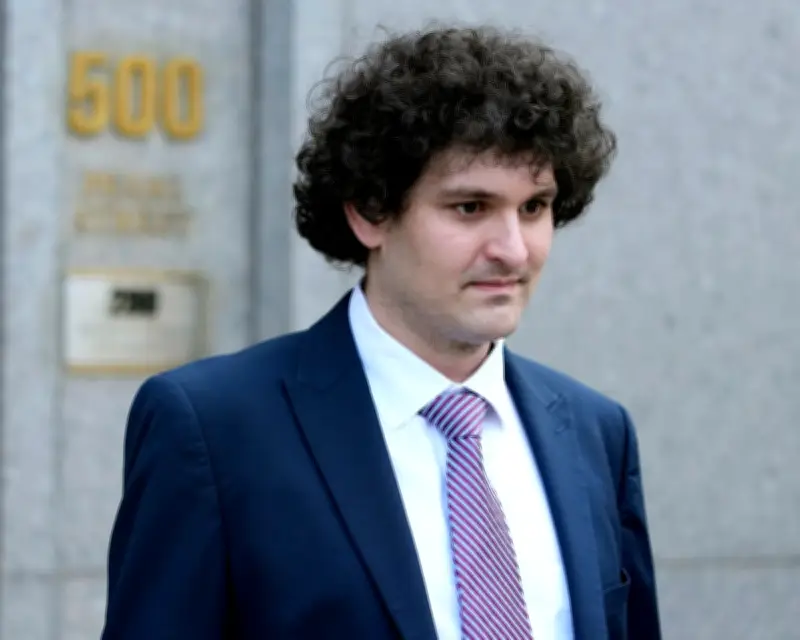
Sam Bankman-Fried, the disgraced founder of the cryptocurrency exchange FTX, has lost his appeal against his fraud conviction, with a federal appeals court upholding the verdict from his 2023 trial. The decision, handed down on Wednesday by the Second Circuit Court of Appeals in New York, rejected all seven grounds of appeal raised by Bankman-Fried's legal team, including claims of judicial bias and insufficient evidence.
Appeal Dismissed on All Counts
The three-judge panel ruled unanimously that the trial proceedings were fair and the evidence overwhelmingly supported the jury's guilty verdict on seven counts of fraud and conspiracy. Bankman-Fried was convicted in November 2023 for orchestrating a massive fraud that led to the collapse of FTX, once one of the world's largest cryptocurrency exchanges, and the misappropriation of billions of dollars in customer funds.
In their 78-page opinion, the judges stated that Bankman-Fried's arguments regarding the exclusion of certain expert testimony and the admission of evidence about his lavish lifestyle did not constitute reversible error. They also found no merit in his claim that the trial judge showed bias by allowing prosecutors to present evidence of FTX's marketing campaigns featuring celebrities like Tom Brady and Gisele Bündchen.

Legal Team's Arguments Rejected
Bankman-Fried's lawyers had argued that the trial was tainted by the judge's handling of the case and that the prosecution failed to prove that he intended to defraud customers. However, the appeals court emphasized that the jury heard extensive testimony from former FTX executives who described Bankman-Fried's direct involvement in the scheme to divert customer deposits to his hedge fund, Alameda Research.
The court also dismissed the argument that the judge improperly allowed testimony from three former FTX insiders who had pleaded guilty and cooperated with the government. The judges noted that such cooperating witnesses are common in white-collar crime cases and that their credibility was properly tested during cross-examination.
Sentencing and Prison Term
Bankman-Fried, 32, is currently serving a 25-year prison sentence at the Metropolitan Detention Center in Brooklyn, New York. The appeals court's decision means he will continue to serve his sentence, which was the result of a lengthy trial that captivated the financial world and exposed the risks of unregulated cryptocurrency markets.
Prosecutors had sought a sentence of 40 to 50 years, but Judge Lewis A. Kaplan imposed 25 years, citing Bankman-Fried's lack of remorse and the staggering scale of the fraud, which cost investors and customers an estimated $8 billion. The judge also ordered forfeiture of $11 billion in assets, including Bankman-Fried's stake in FTX and his luxury properties in the Bahamas.
Impact on Crypto Regulation
The case has been a landmark in the regulation of cryptocurrencies, with lawmakers and regulators citing the FTX collapse as a catalyst for stricter oversight. The Securities and Exchange Commission (SEC) and Commodity Futures Trading Commission (CFTC) have since pursued enforcement actions against numerous crypto firms, and Congress has debated legislation to bring digital assets under existing financial laws.
Bankman-Fried's appeal loss is seen as a vindication of the government's aggressive approach to prosecuting crypto fraud. Legal experts say the ruling reinforces the principle that cryptocurrency executives are not immune to traditional fraud laws and that the courts will not tolerate the use of digital assets as a shield for criminal conduct.
Reaction from Victims and Observers
Victims of the FTX collapse expressed relief at the appeals court decision. John Ray III, the CEO who oversaw FTX's bankruptcy proceedings, said the ruling "brings a measure of accountability for the massive harm inflicted on customers and creditors." He added that the bankruptcy estate has been working to recover funds, with many customers expected to receive full compensation from asset recoveries.
Legal analysts noted that the appeal loss likely ends Bankman-Fried's direct challenge to his conviction, though he could petition the Supreme Court for review. However, such petitions are rarely granted, and Bankman-Fried would need to demonstrate a significant legal error or a conflict among lower courts.

Future Legal Options
Bankman-Fried's legal team has not yet indicated whether they will seek Supreme Court review. In a statement, his lead attorney, Mark Cohen, said they were "disappointed by the decision and are considering all options." The appeals court also rejected a separate challenge to Bankman-Fried's sentence, which he had argued was excessively harsh given his lack of prior criminal record and his history of philanthropic work.
The case remains a cautionary tale about the dangers of unchecked ambition in the crypto industry. Bankman-Fried, once hailed as a visionary and a generous donor to political causes, saw his empire crumble in a matter of days in November 2022 after a CoinDesk report revealed the close ties between FTX and Alameda Research. The subsequent run on deposits and bankruptcy filing exposed a web of financial mismanagement and alleged fraud that shocked the financial world.
As Bankman-Fried faces the prospect of spending decades in prison, the legal and regulatory landscape for cryptocurrencies continues to evolve. The SEC has proposed new rules for crypto exchanges and custodians, while the CFTC has sought to expand its authority over digital asset markets. The FTX case, with its high-profile defendant and massive losses, is likely to remain a reference point for future enforcement actions and regulatory reforms.