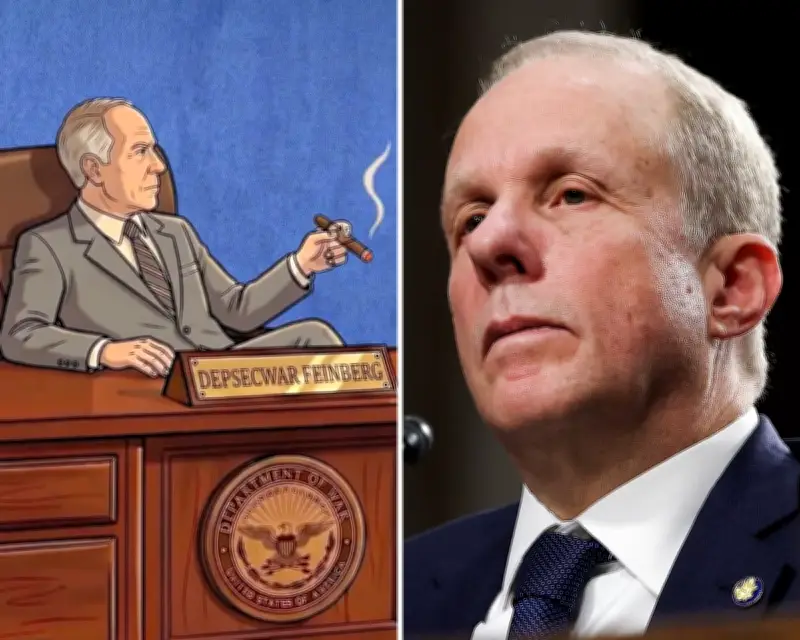
Stephen Feinberg, the billionaire founder of private equity giant Cerberus Capital Management, has quietly amassed extraordinary influence over US military spending as deputy secretary of defense, according to interviews with 10 people across Capitol Hill, the Pentagon, and the defense contracting community.
Feinberg's Rise to Power
Feinberg, 66, has served as deputy secretary of defense since March 2025. Unlike his boss, Defense Secretary Pete Hegseth, who frequently appears in media, Feinberg has been obsessively media-shy for decades. Since his confirmation hearing, he has not testified to any committee, held no press conferences, or given interviews. His press spokesperson left months into his tenure and has not been replaced.
Sources say Feinberg has far eclipsed Hegseth in actual influence. “Everything is centered around Feinberg,” one veteran Pentagon bureaucrat said. A financier familiar with his operations added, “I don’t think there’s anything that goes on that he doesn’t have a stake in.”

Unprecedented Control Over Procurement
Feinberg has unprecedented control over the Pentagon’s vast procurement network and a remarkable ability to invest in defense companies with taxpayer dollars. He has seeded the department with loyalists—current or former Cerberus executives—to remake the military-industrial complex.
A Pentagon official who worked with Feinberg said, “In his mind the most qualified people are the people who have been working for him for 10 years. Their whole thing is shaking up the way government works.”
Key Cerberus Alumni in Key Roles
- George Kollitides: Senior executive adviser to Feinberg, maintains his seat on an investment company’s board, and heads the Economic Defense Unit.
- Tomas Rakusan: Former CIA case officer, now senior adviser to Feinberg.
- David Lorch: Cerberus managing director running a multibillion-dollar office for critical minerals and strategic industries.
- John Gallagher: Cerberus managing director, described as Feinberg’s senior adviser and deputy chief of staff.
Conflicts of Interest Concerns
Critics, including Senator Elizabeth Warren, have raised serious concerns about conflicts of interest. Cerberus-owned companies have received Pentagon contracts, including for the “Golden Dome” missile defense system. Warren wrote to Feinberg in April, “The award of contracts to Cerberus-linked companies raises serious conflicts of interest concerns.”
Feinberg certified he divested his Cerberus stake in March 2025, but Warren and others argue the inherent conflict remains. The Pentagon disputes this, with spokesperson Sean Parnell stating, “The Deputy Secretary is a man of integrity who has conducted himself ethically throughout his entire career.”
The Economic Defense Unit
Feinberg installed Kollitides as director of the Economic Defense Unit (EDU), which reports directly to the deputy secretary. The EDU can spend billions on equity investments and loans in critical infrastructure and minerals. Last year, the office of strategic capital approved a $620 million loan to Vulcan Elements, partially owned by Donald Trump Jr., and another fund put $15 million into Kopin Corp, associated with Unusual Machines, also partially owned by Don Trump Jr.
In January, the DOD invested $1 billion in L3Harris through preferred shares, making the US a partial equity owner of a solid rocket motor firm. A former Pentagon official said, “It’s all subject to Feinberg’s whim.”
Feinberg's Background
Feinberg graduated from Princeton in 1982, where he was captain of the tennis team. He started at Drexel Burnham Lambert, then founded Cerberus in 1992. He became known as a vulture investor and made Fortune’s 40 richest under 40 in 1999.
Cerberus specialized in troubled assets, once lending $10 million to Penthouse magazine using Botticelli’s Birth of Venus as collateral. The company also bought gun manufacturers under Freedom Arms, including Bushmaster, whose weapons were used in the Sandy Hook shooting. Cerberus later sold its stake.

Secrecy and Scandals
Feinberg’s penchant for secrecy is legendary. In 2006, he joked, “If anyone at Cerberus has his picture in the paper and a picture of his apartment, we will do more than fire that person, we will kill him.” Despite this, Cerberus attracted top political talent like Dan Quayle and Brian Mulroney.
Cerberus also faced scandals, such as eviction practices in Memphis and the bankruptcy of Steward Health Care, which Cerberus previously owned.
National Security Investments
During the global war on terror, Cerberus entered national security contracting, setting up Tier 1 Global, a competitor to Blackwater. A source said Feinberg would sometimes visit to fire weapons, describing him as a “special-forces jockstrap sniffer.”
Under Biden, Cerberus bought Subic Bay port in the Philippines, aligning with US efforts to counter China. By the time Feinberg entered the Pentagon, Cerberus had substantial national security investments.
Lack of Transparency
Stacie Pettyjohn of the Center for New American Security noted, “It’s really hard to keep track of where the money’s going with the way they’re doing their budgeting process. I’d like to see where the money’s going and how it’s being used.”
Critics worry that the concentration of Cerberus influence at the Pentagon, combined with a lack of transparency, could lead to conflicts that undermine national security and waste taxpayer money.