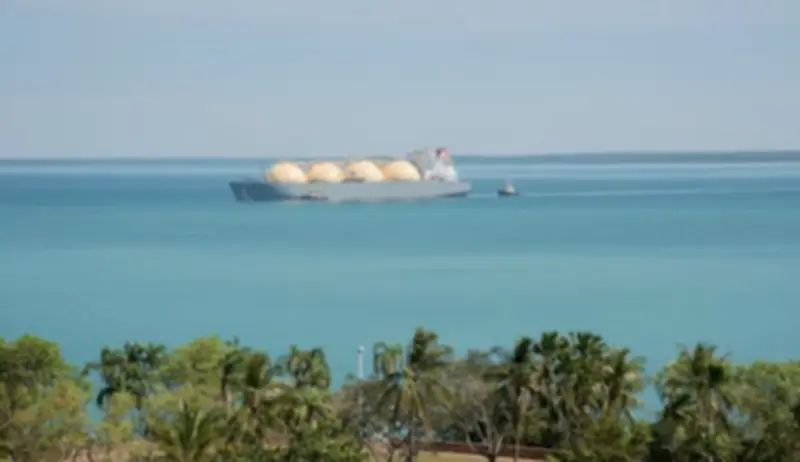
Darwin residents have long voiced concerns over toxic chemicals emitted by the city's two gas export facilities. Recently, locals formed a community group and launched a fundraiser to purchase a regulation-grade mobile monitoring device to continuously track airborne pollutants, particularly benzene. Just days later, the Northern Territory Environment Protection Authority (NTEPA) approved a permit extension allowing Santos to emit toxic gases and volatile organic compounds (VOCs) for an additional 26 days each year, on top of the existing 36-day allowance.
Health Risks of Benzene Exposure
Benzene is among the most hazardous gases released during gas and LNG production. Numerous studies link benzene exposure to cancers, childhood asthma, heart and respiratory diseases, hospitalisations, deaths, low birth weight, and risks to developing fetuses, even at low outdoor levels. Research indicates no safe level of benzene exposure exists. In 2004, the Australian government committed to setting a formal standard by 2012, but none has been established. Australia's benzene investigation trigger level is two to three times higher than standards in Europe, India, Japan, and New Zealand.
Community Action and Regulatory Response
Concerned residents formed Community Healthy Air Northern Territory (CHANT) on June 14, raising over $100,000 for a mobile BTEX monitoring device. The group is seeking expert advice for an independent air monitoring project. The day after CHANT's launch, NTEPA announced plans to establish an air-quality testing network. Yet two days later, it approved Santos' extension to hot vent waste gases from its Barossa gas supply for an extra 26 days. Hot venting releases waste gas directly into the atmosphere, bypassing pollution controls.

Industry Oversight and Underreporting
Residents see the extension as prioritising the gas industry over community health. In 2025, an ABC Darwin investigation revealed Santos failed to report a serious LNG storage tank leak for 20 years, and is not required to repair it. In 2024, Darwin residents learned Inpex LNG emitted VOCs up to 22 times higher than originally estimated. In 2025, Inpex admitted underestimating benzene emissions by 138 times in mandatory reporting since 2018, and acknowledged extended hot venting when pollution devices were offline. Inpex commissioned a desktop modelling study using its own data and monthly BTEX samples at four community sites and the plant boundary, but the report was not made public. A second consultancy found fundamental deficiencies in Inpex's emission calculations, with hot venting emissions underestimated by several orders of magnitude, along with poor documentation and incomplete coverage of emission sources.
Government Health Assessment Questioned
Following these revelations, the NT Chief Health Officer commissioned a preliminary human health risk assessment for hot venting and high benzene and toluene emissions. The assessment concluded health risks were low. However, the report's quality depends entirely on input data accuracy. Continuous air quality measurements, not just monthly sampling, are necessary. If benzene is systematically underreported, exposure estimates and health impacts may be substantially underestimated. Past exposures require urgent investigation. Air quality measurements ceased at their peak in October 2021, necessitating future health studies, especially for children.
Call for Stronger Standards and Oversight
Given the evidence, we urge the federal government's National Environment Protection Council to review recent population studies revealing serious risks at exposure levels below current 'safe' limits. Protective short and long-term standards for benzene and total BTEX exposure must be established and enforced. The NT EPA and government must ensure emissions are minimised to protect people and the environment. Clear limits, independent monitoring, and firm regulatory action are essential for Darwin and rapidly growing gas developments worldwide.