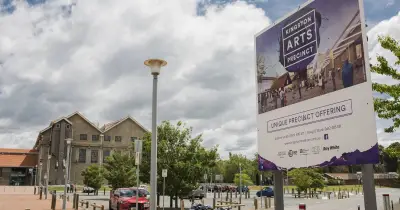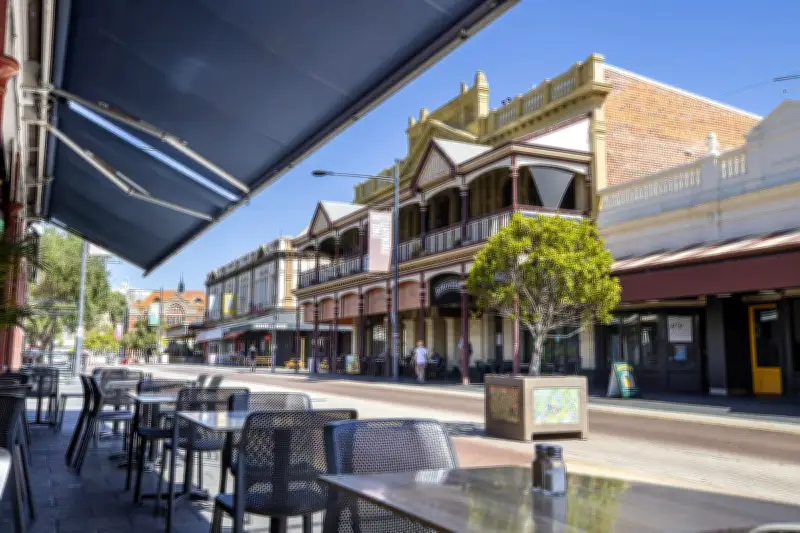
Fremantle councillors have unanimously adopted a new seasonal and temporary trading policy aimed at revitalising public spaces and providing opportunities for emerging small businesses and mobile food vendors. The decision, made at last week’s council meeting, combines the city’s seasonal trading and mobile food vendor programs into a single, consistent framework, with permits now available at several new sites across Fremantle.
Key Details of the New Policy
The new policy is designed to activate public areas and allow emerging businesses to test the Fremantle market. One notable change is the removal of saunas from the seasonal trading policy due to energy constraints and the need for longer-term certainty. However, city officers indicated that a long-term sauna opportunity could be developed at South Beach instead.
Cr Jemima Williamson-Wong emphasised the importance of balancing the interests of existing permanent businesses with temporary traders. “I think it could be a useful tool in terms of vacancy within our CBD or elsewhere in how we might activate the streetscape or public land that surrounds those spaces with some seasonal trading opportunities,” she said. “We need to make sure there’s a clear balance between the bricks and mortar businesses that put a lot of financial investment into having a fully-fledged brick and mortar business, in comparison to those who might be starting or seasonal traders.”

Community Support and Consultation
The city opened the proposal for public comment in April, receiving 102 formal submissions. Of the respondents, 59 per cent considered the previous seasonal trading program very effective or somewhat effective. There was strong community support for the proposed new policy, with 75 per cent stating they were very supportive and 81 per cent believing seasonal and temporary trading improves the experience of public spaces.
The most popular locations for seasonal and temporary trading were Bathers Beach (both south of Kidogo and in the hardstand area) and South Beach Dog Beach. Other approved locations include Port Beach north and south carparks, Booyeebmara Park mountain bike trail hardstand area, Samson Park verge, Gilbert Fraser Reserve verge, and Esplanade Park. Traders will also be able to propose their own trading locations to the city, subject to approval by chief executive officer Glen Dougall for a trial period of up to 12 months.
Trading Time Slots and Flexibility
Three trading time slots will be available: morning, lunchtime, and evening, designed to reduce competition saturation and increase fairness. Cr Williamson-Wong noted that this system could be used flexibly to allow for overlap or joint vendor applications. “I have brought this up with staff that perhaps having three different trading slots being morning, lunch and evening would make it potentially unviable for a business to be there for a shorter amount of time, or perhaps doesn’t suit some locations,” she said. “However… those three time slots don’t have to necessarily go to three different businesses. One business may apply and obtain two time slots for that season, or perhaps there are opportunities to be flexible in the sharing of that time slot which is to be worked out by applicants, or by a joint application for perhaps the lunch slot which might be the crossover period between two people who currently use that space.”
Cr Melanie Clark highlighted the potential for aspiring entrepreneurs to test their ideas. “This would allow people dreaming of businesses to ‘give it a go’ and see what works, which would benefit everyone,” she said. “The community is going to win. They’re going to get extra services or extra experiences and we’ll get extra income for the city and we’ll also have a way for succession planning. Hopefully some of those people who want to give it a try will be able to move into more permanent locations within the city’s more empty buildings.”

Requirements and Fees
Traders applying for a seasonal trading permit must ensure their business does not impede accessibility in the area and can be removed within 12 hours. The business must also be unique, ideally with tourist appeal, vibrant, high quality, environmentally sustainable, and suitable for the public. The winter season runs from May 1 to October 31, with expressions of interest (EOI) applications opening on February 1 and closing on March 1. The summer season runs from November 1 to April 30, with EOI applications opening on August 1 and closing September 1. Mobile food vendors can apply for an annual permit from November 1 to October 31, with applications opening on August 1 and closing September 1. The seasonal trader permit fee is $1,500, while mobile food vendors will pay up to $400 for a timeslot or up to $700 for an annual permit.