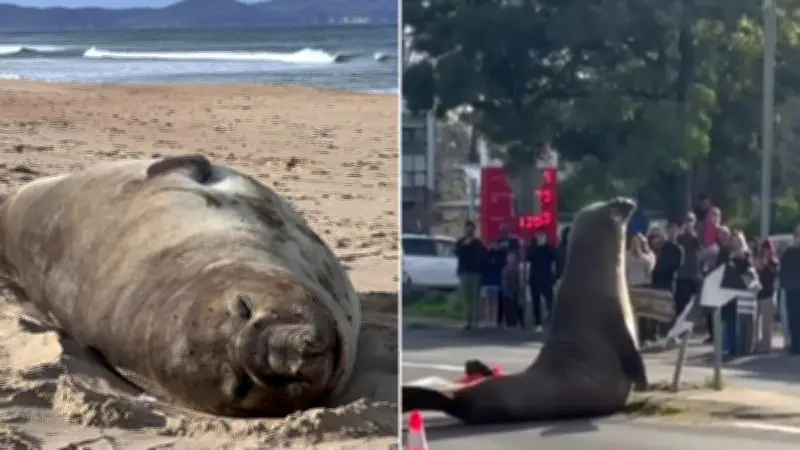
Neil the seal, the one-tonne marine mammal known for his antics across Tasmania, has once again made headlines. The 1,000-kilogram elephant seal was filmed climbing onto a parked ute at a Tasmanian petrol station, drawing amused onlookers and renewed attention from wildlife experts.
Neil's Latest Stunt: A Parked Ute as a Resting Spot
Footage shows Neil hauling his massive body onto the tray of a white utility vehicle at a service station. The seal appeared relaxed, using the ute as a makeshift resting place while bystanders watched and recorded. This is not Neil's first public appearance; he has previously been spotted lounging on roads, blocking traffic, and causing similar disruptions.
Wildlife Experts: Neil Is a Typical Teenage Elephant Seal
Despite the chaos, elephant seal scientist Sophia Volzke told Sunrise on Monday that Neil's behaviour is normal for a juvenile male. “He’s a teenager at the moment; he’s growing up,” Volzke said. “He’s definitely here to interact because he would normally be interacting with other juveniles.”

Volzke explained that Neil's actions—pumping up his chest, throwing his weight around, and bumping into cars and fences—are practice for adulthood. Adult male elephant seals compete fiercely for breeding territories, with dominant males known as “beachmasters” defending beaches and large groups of females from rivals. “He’s practising how to be a big boy,” Volzke added.
Breeding Season Still Years Away
Neil won't be ready for breeding for at least five years. During winter, juvenile males become increasingly active as they rehearse behaviours needed for mating. Volzke noted that Neil's presence on beaches and suburban streets draws thousands of spectators, but authorities urge the public to maintain a safe distance.
Safety Warnings for the Public
Authorities continue to advise people to stay at least 20 metres away from Neil. Volzke warned, “He’s very, very big. He could harm a human being if they come too close.” She also highlighted risks to the seal: “There’s harm to him if humans come too close. We carry diseases on us. We don’t want to be touching wildlife by any means possible.”
The scientist also urged people not to feed Neil, as he gets all necessary food from the ocean, and reminded dog owners to keep pets on a leash around the seal.
Neil's Future: Heading South for Breeding
Neil is expected to remain in the area for a few more weeks before heading back to sea for several months. While Tasmania is his favourite visiting spot, Volzke said it won't be where he starts a family, as there are no female elephant seals in Tasmania. When Neil reaches breeding age at around 10 to 12 years old, he will need to travel further south towards Antarctica, where elephant seal breeding colonies are found, and where he will finally compete for a beach of his own.