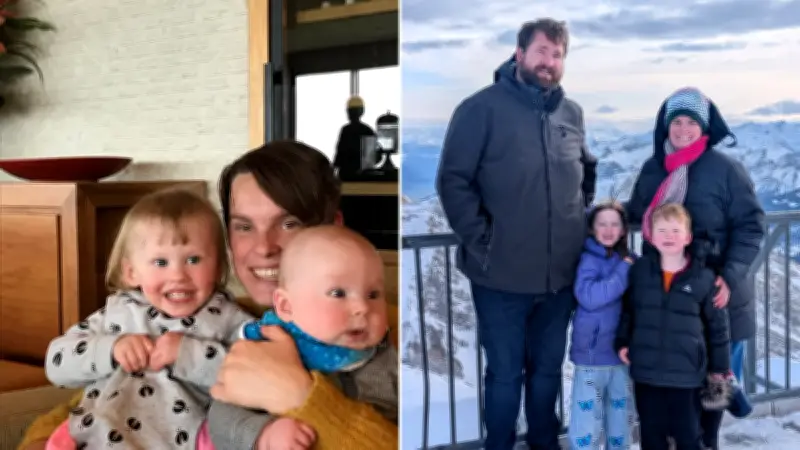
In 2019, Allana Crew, a healthy 32-year-old mother of two from Loch in Victoria's Gippsland region, was on the phone to her father when she felt 'something go' in her brain. Her youngest child was just four months old. Stroke was not a word she ever imagined hearing from a doctor.
'I can't even explain the feeling,' she said. 'I went to go to my husband to say something's wrong. He was changing my son's nappy at the time and I couldn't talk. He said, 'Are you joking? Talk to me.' And I couldn't. I could hear what he was saying, but nothing would come out.'
When Allana could finally speak, her words were slurred. At the local hospital, an hour and a half from Melbourne, doctors initially suspected Bell's palsy because she was young, didn't smoke, and didn't drink. However, help came quickly via a computer.

Telestroke: A Lifesaving Connection
Through a telehealth link called Telestroke, a stroke specialist in Melbourne was able to see Allana, speak to her husband, and guide the local team. The specialist noticed key signs: slurred speech, a drooping face, and strange changes in her vision. Although the first scan did not show the answer, the specialist pushed for more imaging.
Days later, an MRI confirmed Allana had suffered a stroke. Without the telehealth connection, the outcome could have been very different. Kelvin Hill, executive director of stroke programs in research and innovation for the Stroke Foundation, explained the significance of telemedicine.
'The last 15 years in particular, we've had great advances in stroke care. The telehealth system has been one of those and Victoria has been the sort of the leader nationally in setting that up,' he said. 'But 15 years ago, for example, you would have got to ED, the care there probably still would have been quite good, but just the specialty in picking up the signs and symptoms, which can be difficult. It's based on the history and the experience of the stroke doctors, which can provide unique clues, which the generalists or the ED physicians sometimes miss. And so that enables more rapid decision making, quicker treatment and better outcomes.'
Ongoing Benefits of Telehealth
For Allana, the benefit of telehealth continued long after her diagnosis. It meant she did not have to travel while seriously unwell, with two young children at home. 'It's so handy ... we're an hour-and-a-half from Melbourne,' she said. 'You don't have to travel, especially when you're really sick and you've got young kids.'
Today, Allana is doing well. She still gets tired more easily and has experienced panic attacks from surviving the stroke, but she is getting better each day. She also has a message for young stroke survivors: 'You will be OK in the end. Life does get better.'
Recognising Stroke: The FAST Test
Her story is a reminder of what rapid medical attention can mean in regional Australia. The Stroke Foundation urges Australians to remember the FAST test:

- F — Face: Check the person's face. Has their mouth drooped?
- A — Arms: Can they lift both arms?
- S — Speech: Is their speech slurred? Do they understand you?
- T — Time: Time is critical. Call Triple Zero immediately.