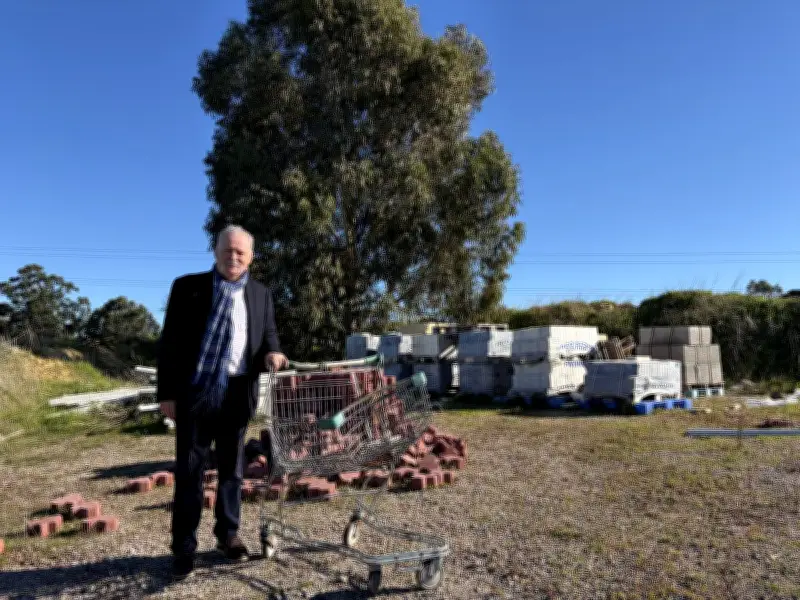
The former Dundee Road Landfill at John Connell Reserve in Leeming, which operated from 1974 to 2000 and was decommissioned in the early 2000s, has been marked as “contaminated — remediation required” by the Department of Water and Environmental Regulation (DWER) since 2013, but remediation work has not yet been completed. Leeming resident Con Abbott has criticized the City of Melville for what he calls “procrastination 101,” stating that the city has deferred the master plan for the 115-hectare reserve for 26 years, leading to issues such as an unremediated tip site and a cricket canopy extension.
Community Frustration Over Delayed Master Plan
Mr Abbott, who has lived in Leeming for 40 years, told PerthNow: “They’ve created this hot mess because you just can’t defer a major project like that for 26 years. The first step is to get the master plan approved and going. The master plan has been kicked down the road, and now you’ve got all these issues occurring - the cricket canopy and the un-remediated tip site. This is what happens when you don’t do something for a quarter of a century.”
Several plans for the reserve were discussed before the council formally voted to prepare a master plan in 2021, which received largely positive community feedback during the advertising process in 2023. According to the city’s website, the master plan aimed to increase “usable public open space” while protecting natural areas and exploring remediation opportunities for the former landfill area. However, the plan was paused in 2024 as the city considered other land use opportunities.

Cricket Pitch Extension Without Remediation
In April 2026, councillors approved a cricket pitch extension for the local Leeming Spartans Cricket Club, which involves clearing up to 0.68 hectares of native vegetation at the reserve. The extension does not include plans for landfill remediation. Mr Abbott described this as “farcical,” noting that the tip site has not been fully remediated and the city still does not know how it will proceed with remediation.
The city appointed a specialist consultant in April to complete environmental testing and work with relevant State Government stakeholders to assess estimated costs and requirements to remediate the site. City of Melville chief executive officer Gail Bowman told PerthNow that remediation is not expected to be required to accommodate the extension and that the risk to public health is “negligible.” She added: “Broader financial provisioning exists for landfill remediation and related works, and future funding requirements will be considered through the city’s long-term financial planning once investigation outcomes and proposed land uses are confirmed.”
Ongoing Site Management and Monitoring
Ms Bowman stated that the city has been working with DWER and the Department of Health to implement a site management plan. Key actions include monitoring of asbestos, groundwater and landfill gas, targeted asbestos removal (known as emu picks), application of mulch to garden beds, maintenance of grassed and vegetated areas to stabilise surfaces, and inspections of public areas. Inspections undertaken in April and May 2026 by the city’s contaminated sites specialist and an accredited auditor identified no visible asbestos or waste materials in public areas.
A DWER spokesperson confirmed that DWER has been liaising with the city regarding the site. “We understand that landfill waste has been covered and the city carries out periodic monitoring of groundwater and maintains fencing and vegetation cover as required,” the spokesperson said. “DWER is satisfied that the City of Melville is taking appropriate action to manage the site, complete remediation and manage any associated risks.” Despite this, the site still contains dumped rubbish and is not yet completely remediated.

Disparity in Infrastructure Investment
Mr Abbott accused the city of prioritizing expensive projects in suburbs north of Leach Highway over the Leeming reserve. “Council can say ‘this will be expensive’, but then why are you doing a $60 million cultural centre? Why are we doing Heathcote? You’re quite happy to do all these projects north of Leach Highway, but when it comes to this thing, it’s out of sight, out of mind,” he said. “There’s obviously no ribbon-cutting opportunity for the mayor and the CEO in remediating a tip site. John Connell is a classic case of what happens when you don’t have an equitable distribution of infrastructure across the city.”
He also warned that failing to implement the master plan would hurt local sporting clubs. “The opportunity cost of not developing John Connell Reserve is all the lost opportunities for sporting clubs. If we don’t start getting to this, three or four years down the track the soccer people are going to say they need to expand, then the football people at Beasley, and you’re going to get this hotchpotch of ideas coming into the system rather than, as the city has quite correctly thought, we need a master plan.”
Financial Reserves and Future Plans
Director corporate services Gary Tuffin stated at a recent meeting that a refuge facility reserve has been developed, estimated to reach just over $14 million. Ms Bowman said this reserve supports the city’s long-term obligations with waste management infrastructure and former landfill sites across the city, including John Connell Reserve. “This includes landfill closure and post-closure management, environmental monitoring and compliance activities, remediation and rehabilitation for a number of former landfill sites and future waste-related infrastructure requirements,” she said. However, she added: “At this stage, there is no reserve specifically allocated solely for delivery of the master plan itself.”
The city currently uses a small area of the site for storage of materials such as bricks, drainage pipes, logs and rocks, but Ms Bowman said it is not causing environmental harm. Instances of illegal waste dumping and fly tipping at the reserve have reportedly been managed by the city, and it has also stored clean materials such as sand, aggregate and turf cuttings in consultation with DWER.