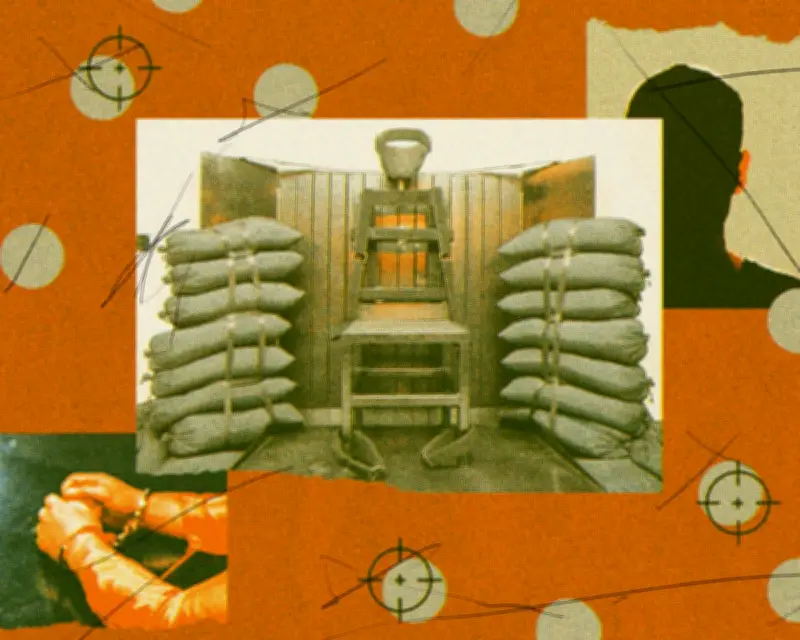
Idaho has become the first US state to adopt the firing squad as its primary method of execution, with a new death chamber at a maximum security prison south of Boise set to open by July 1. The state's department of corrections has spent over $1 million on the venture, including $24,000 on a rack of AR-style, .308-caliber, scoped rifles to be used by volunteer marksmen.
Rise of a Controversial Method
The firing squad, long considered archaic and bloody, is gaining traction across the US as states seek alternatives to lethal injection. Idaho joins six other states—Mississippi, Oklahoma, South Carolina, Utah, Florida, and Tennessee—in allowing the method, marking the highest number of jurisdictions permitting judicial killing by gunfire in US history.
Supporters argue the method is foolproof: the condemned is strapped into a chair, a black hood placed over their head, and a target pinned over the left ventricle of the heart. When bullets hit the left ventricle, blood flow stops and the brain shuts down within seconds, resulting in instantaneous death.

Botched Executions Raise Concerns
However, forensic experts and abolitionists warn that the method can go grotesquely wrong. Of the four firing squad executions carried out in the US since 2010, two appear to have been botched, with bullets missing the intended target and causing prolonged, agonizing deaths.
In 2010, Utah executed Ronnie Lee Gardner by firing squad. Witnesses reported that after the bullets struck his chest, Gardner clenched his fist several times and moved his jaw, leading to what one reporter described as an “excruciating wait for Gardner to die.” Dr. Jonathan Groner, an emeritus professor of surgery at Ohio State University, reviewed autopsy photographs and found that the bullet holes were not over the heart but further to the left, raising questions about the marksmen's aim.
Allegations of Intentional Misfiring
More troubling are allegations that botched executions may be intentional. In a filing to the US Supreme Court, attorneys for Stephen Stanko, a South Carolina death row inmate, claimed that the marksmen in the 2025 execution of Mikal Mahdi “intended to miss the direct target,” causing him to endure “the most extreme pain a human can experience until his death.” Mahdi, a Black man convicted of killing a white police officer, was executed in April 2025. Autopsy results showed only two wounds despite three shooters, and bullets entered below the left ventricle, damaging his liver. Dr. Jonathan Arden, a forensic pathologist, concluded that the shooters missed the intended target, causing “excruciating conscious pain and suffering” for up to 60 seconds.
In his upcoming book The Hippocratic Paradox, Dr. Groner suggests that the firing squad may have aimed away from the left ventricle in what he calls a “quasi-lynching,” noting that “would corrections officers in a southern state intentionally torture a Black man who murdered a police officer? The historical record suggests this is far from out of the question.”
Secrecy and Legal Challenges
The identities of the shooters are kept secret, known only to the state prisons director and deputy. This opacity fuels concerns about accountability. The South Carolina Department of Corrections denied the allegations, pointing to a state supreme court ruling that the Mahdi execution was not botched. However, the ruling acknowledged that the marksmen struck only the pericardial sac and right ventricle, not the left ventricle.
Deborah Denno, an authority on execution protocols at Fordham Law School, expressed unease about the trend. “We tend to forget that human beings are conducting this, and human beings have emotions and feelings. Such as wanting to set things right, an eye for an eye, and revenge.”
Idaho's New Protocol
Idaho switched to the firing squad after a botched lethal injection in February 2024, when the execution of Thomas Creech was called off due to difficulties establishing an IV line. The state now has eight death row inmates, one of whom is female. The department of corrections stated it will be prepared to carry out executions after July 1, with procedures designed to ensure “a secure, orderly, and dignified manner.”

As the firing squad gains popularity, the debate over its humanity and reliability intensifies. With two of the last four executions raising serious concerns, the method's future remains uncertain.