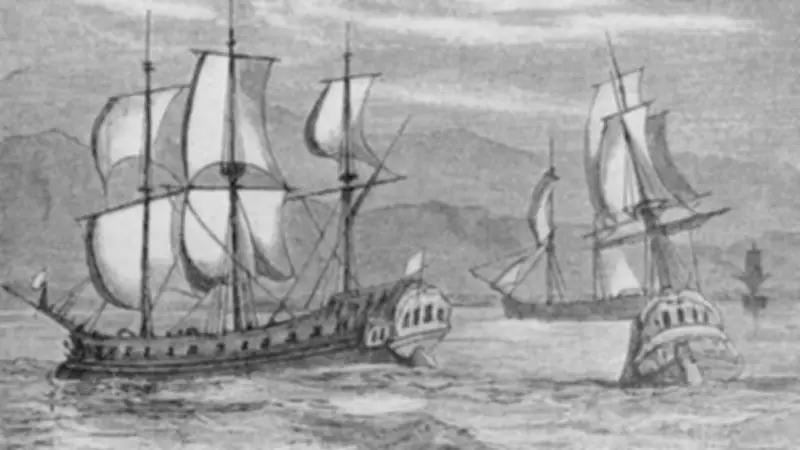
In April 1789, just 16 months after the arrival of the British First Fleet, a devastating smallpox epidemic erupted among Aboriginal people in the Sydney region. Historians have long debated its origins, but new research published in Nature Human Behaviour provides compelling evidence that the disease came from the British outpost. Using transmission modelling and reconstructions of Indigenous social networks, the study suggests the epidemic may have killed as many as 220,000 Aboriginal people and spread thousands of kilometres north and west over decades.
Smallpox: A Historical Destroyer
Smallpox, caused by the variola virus, has been one of history's most lethal infectious diseases. Evidence dates back to Egyptian mummies from 1500 BCE. In 18th-century Europe, smallpox killed an average of 400,000 people annually. During the 20th century, an estimated 300 million people died from the disease—roughly double the total deaths from all wars in that period. For Indigenous populations worldwide, smallpox was particularly catastrophic. The introduction of smallpox to the Americas by Spanish and Portuguese colonisers in the 16th century decimated Native American communities from Canada to Tierra del Fuego.
Debunking the Makassan Theory
A persistent narrative in Australian colonial history has argued that smallpox did not originate from the First Fleet but was introduced earlier by Makassan traders in northern Australia. Proponents suggested the disease travelled south to Sydney by the time the British colony was established. However, the new research refutes this theory. The modelling shows no plausible pathway for smallpox to travel from northern Australia to Sydney in time to cause the 1789 outbreak. Instead, the evidence strongly supports a Sydney origin linked to the British colony.

How the Disease Spread
The study combined knowledge of smallpox transmission with detailed reconstructions of Indigenous movement patterns. Before colonisation, Aboriginal people traversed the continent along established routes for water, ceremony, food, trade, and family connections. The model accounted for realistic walking distances, rest periods, and recovery times. Results indicate that the disease spread along coastlines and major rivers, potentially reaching as far north as Townsville and as far west as Adelaide. The outbreak could have persisted in the Indigenous population for up to 21 years.
Devastating Death Toll
Using recent reconstructions of the pre-colonial Indigenous population, the model estimates that the epidemic killed up to 220,000 Aboriginal people. This figure is far higher than previous estimates and underscores the catastrophic impact of introduced diseases on First Nations peoples. The study also highlights that elders, children, and pregnant women were especially vulnerable, leading to profound losses of knowledge, language, and cultural practices.
Uncertain Origins of the Outbreak
Exactly how the outbreak started remains unclear. The colonists had brought “variola matter”—biological samples infected with the smallpox virus—for use in inoculations. The study notes that this material could have been accidentally or intentionally released, but does not assign blame. The research does not speak over Aboriginal knowledge, memory, or oral history. Aboriginal histories describe Dharawal people returning to Sydney Harbour within weeks of the outbreak’s peak. Despite enormous demographic and cultural tolls, communities regrouped and continued living in and around the harbour, maintaining cultural practices and languages until forced relocation in the 1880s.
Lasting Impact and Healing
The new evidence outlines the catastrophic impact of smallpox on Indigenous communities, including enduring effects passed down through generations. Families, knowledge systems, and ways of caring for Country were badly damaged, and the effects are still felt today. The authors state: “Although it is important for Australians to come to terms with the traumatic legacy of smallpox to inform the national process of healing, we must acknowledge that Indigenous connections to Country were disrupted, but never broken.”