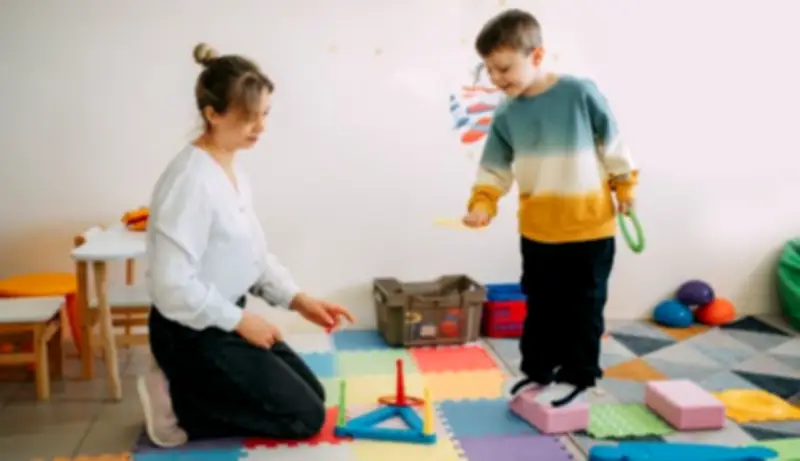
Svetlana Repnitskaya/Getty Images
Screening all 3- and 4-year-olds for developmental delay makes sense. But diagnosing autism is different.
Published: June 17, 2026 6.08am AEST

Every child in Victoria will be offered free screening for developmental delay under a plan the state government announced last week. But while some media outlets have reported children will be screened for autism, it's actually much broader. They will focus on how children are developing, rather than whether or not they have a particular diagnosis such as autism or attention-deficit hyperactivity disorder (ADHD). Identifying children with developmental delay has many possible benefits. But the system needs to be able to follow through and offer support to families when delays are identified.
What's Been Announced?
Screening will be offered to all families before a child starts kindergarten and before they start prep. The screenings will be part of the new Thriving Kids program, which will replace the National Disability Insurance Scheme (NDIS) for children with mild to moderate developmental delay. Allied health professionals, such as occupational therapists and speech pathologists, will perform the checks. The government's announcement mentions involving “trained clinicians”, but it's unclear if this means doctors, nurses or both.
Under Thriving Kids, much of the responsibility for these children will now fall on the state and territory governments, so we can expect to see more announcements like this in the coming months across the country.
Early Screening Is Very Common
What's being proposed is an extension of the type of screening that already happens. Maternal and child health services play an important role in identifying children who are falling behind developmentally. Starting with babies, maternal and child health nurses look for signs that children are – or aren't – meeting their developmental milestones such as with social, communication and motor skills. They use screening tools such as brief checklists which give an indication of where a child is at compared with other kids their age.
If there are any concerns, the nurse encourages the parent to talk to their GP and make them aware of community hubs, playgroups and other supports available in their area and online. Take, for example, a two-year-old who is not yet talking. A routine check with a maternal child health nurse can identify that the child has a developmental delay and help parents get the support they need, such as access to a speech pathologist.
So What Can the New Screenings Add?
The new screenings should increase the likelihood of picking up children who look like they are developing typically in the first couple of years, but then start to fall behind. This is still a time in which some extra support can make a big difference before they start school. In 2024, only 52.9% of children started school developmentally on track. This means they had age-expected skills across physical, social, emotional, language and communication domains. There is no simple solution to the challenge, but a good starting point is to identify and address needs early.
Let's say a four-year-old has been moved from one childcare centre to another due to “behaviour”. A developmental screen reveals they have a language delay, which causes them to become frustrated and “lash out”. By understanding the root cause, we are best able to change the behaviour. This sets the child up for a successful transition to school.
What Has to Happen for This to Work?
1) Ensure Access
Parents can face numerous challenges accessing early childhood education and health services. These can include language, literacy, transport, and juggling work, caring responsibilities and other commitments. It's promising the Victorian plan includes reference to “community hubs”, which bring services for children and families to one place. They are often based at a school or community centre and have good evidence for connecting parents, including from marginalised communities. However, systems will need to be in place to reach all children and families.

2) Focus on Developmental Delay, Not Diagnosis
This type of screening must focus on identifying children showing signs of delay and connecting them to support. The question should be: does this child have the social, communication, emotional and motor skills they need to start school? The question should not be: does this child have autism, ADHD, or another diagnosis. This may come later – for some children, and help explain why they are struggling – but it shouldn't be the focus of a statewide screening program like this.
3) Know What Happens Next
A screening program can only work if there is an obvious and available “next step”. But there are big service gaps. A 2025 survey found long-term shortages of allied health workers. This includes occupational therapists, speech pathologists, psychologists and physiotherapists, with some families waiting up to two years. Being told there may be a problem, but not having a solution, will be hard on families. Imagine you're a parent of a three-year-old and have been told he has a moderate delay in motor skills, relative to his peers. But there is no physiotherapist in your area, or there is a long waiting list, or you cannot afford to pay for appointments. What do you do? This type of scenario is likely to be common, unless there are clear pathways from screening to support.
The government says that where a child has needs, families will be connected with support. This is essential for children and families, and will determine whether or not Thriving Kids works. There are countless children and families depending on Thriving Kids to deliver what the NDIS can no longer provide. The new screenings are a step in the right direction. Now we need a plan for what comes next.