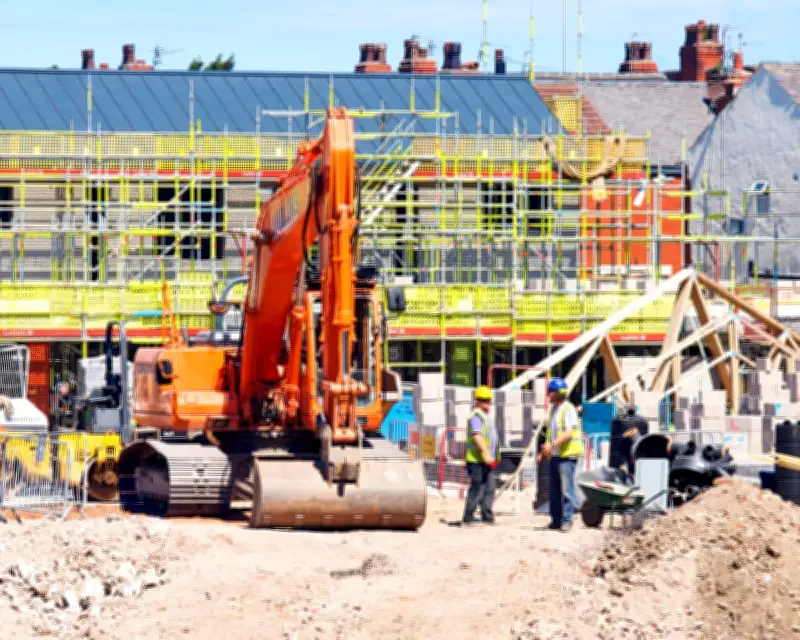
A social housing development in Blackpool. There are an average of 110 households waiting for every new social home that is built. Photograph: Kevin Walsh/Alamy
It would take more than a century to clear the social housing waiting lists in England at the government's current speed of delivering new social homes, research by Shelter has shown.
The housing charity found that more than 1.3 million households are on a waiting list for a social home, but only 12,198 were built by councils, housing associations or private developers across England last year. This equates to an average of 110 households waiting for every new social home delivered, and it would take 119 years to clear the waiting lists if building continued at the same rate.

Sarah Elliott, the chief executive of Shelter, said that if the government "continued to deliver social homes at a snail's pace then none of us alive today will live to see the end of the housing emergency."
"Unless the scarcity of new social homes is addressed, communities will continue to be ripped apart, and children will be trapped in homelessness for generations to come," she said.
"While the number of new social homes has fallen off a cliff, homelessness has climbed to record levels, with families worrying their wait for a safe and secure home will exceed their lifetime."
Shelter's research found that in the last 15 years, the number of new social rent homes built annually decreased by 64%, while the number of homeless households in temporary accommodation increased by 155%.
In 20% of council areas across England not a single social home was built in the last two years, and in 30% of areas fewer than 10 were built. At the peak of social home delivery, in 1967, 46% of all new homes built in England were for social rent and councils provided almost all of them (97%).
Suzanne Muna, the secretary and co-founder of the Social Housing Action Campaign, said the figures "expose a deluded government that blindly parrots horribly simplistic 'build, baby, build' targets as if this offers a universal cure – it doesn't."
"This is a systemic failure of successive governments and is now actively exploited by private landlords and housing associations who are converting traditional family homes into temporary accommodation to lease to councils at extortionate rents," she said. "We need a fundamentally different approach to the provision of public housing. This demands massive, sustained investment in council housing."
Shelter argued that local authorities were struggling to build social homes because of the stranglehold of a 29 billion pound housing debt that was passed on to them by the central government in 2012 as part of a council house financing agreement.
Servicing the interest on this debt was paralysing councils and forcing them to sell off more homes through heavily discounted right-to-buy sales than they could afford to replace, the charity said.
"It is absurd councils cannot build the homes we need because of a housing debt that was passed on to them by the government, which it has made almost impossible to pay off," said Elliott.
"The government can, and must, fulfil its promise of a council housing revolution. Removing barriers like the unfair housing debt would help councils to get shovels in the ground and build at scale again. Social rent homes are the only long-lasting solution to the housing emergency, and we need 90,000 a year for 10 years."
Councils argue that increased right-to-buy discounts, which have drastically reduced council housing stock, and restrictions on social rent rates, has led to the debt becoming unsustainable. Shelter and a coalition of councils are calling for the debt to be forgiven or reduced.
The government has promised a "council housing revolution" with 300,000 new social and affordable homes, 60% of which will be designated for social rent. This equates to 180,000 homes, roughly six times the number built in the decade leading up to 2024.
A spokesperson for the Ministry of Housing, Communities and Local Government said: "We need more social homes, which is why our Social Housing Bill tackles the decades of sell-off that has left over a million families on waiting lists with nowhere to turn.

"Our reforms will change the landscape for councils, give them confidence to once again build at scale, and is backed by the 39 billion pound Social and Affordable Homes Programme."