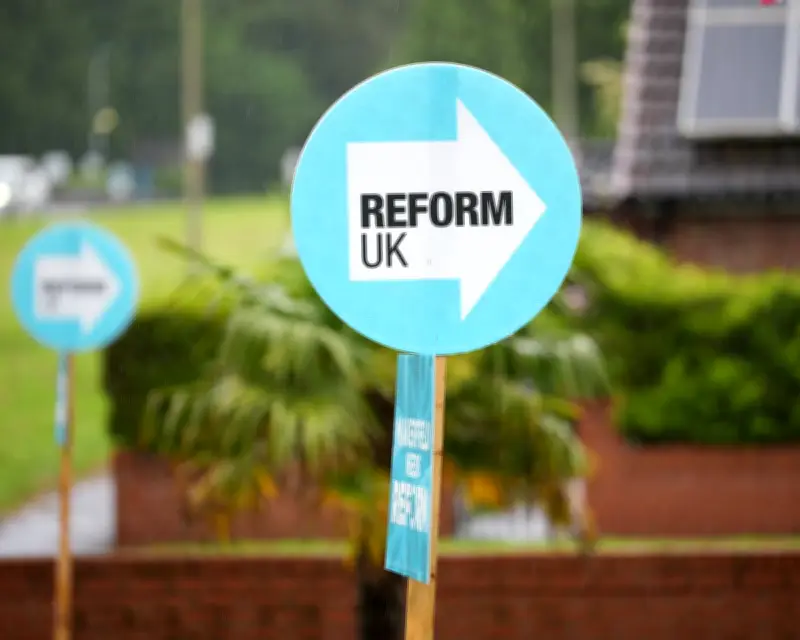
The Makerfield byelection on 18 June will be another huge test for Labour as it tries to hold on to a once safe seat in the north of England.
Reform UK's Billionaire Donors Spark Panic in Westminster
While huge donations are nothing new in UK politics, some fear electoral finance is distorting democracy itself. Keir Starmer may be relaxed about allowing millions from cryptocurrency billionaires to flow into Reform UK's coffers, but Labour MPs are tearing their hair out every time the quarterly data on electoral finance drops.
“I look at it through my fingers,” says one MP, as the latest figures show a further £7 million went to Reform UK from just two men – Christopher Harborne and Ben Delo. To put that in context, Labour managed to raise £6 million from all private donors in the first quarter of 2024 – just before the last election when their fundraising power was at its peak.

Harborne, a crypto and aviation fuel investor who is based in Thailand, has given £15 million to Reform and £5 million to Farage personally – a sum that is now under investigation. He recently estimated his wealth at about £18 billion, meaning his donations to Reform are about 0.08% of his wealth. Delo, who has been based in Hong Kong, is also in the crypto world, and became the UK's youngest self-made billionaire in 2018 after making his fortune by co-founding the BitMEX trading platform. He received a pardon from Donald Trump last year after being convicted in the US in 2022 for failing to implement adequate anti-money-laundering controls in his cryptocurrency business.
Despite having lived abroad for many years, both men may avoid the government's new £100,000 annual cap on overseas electors. Delo is moving back to the UK, while Harborne has suggested to the Telegraph he could challenge the cap in court and has not ruled out returning to the UK to get around it.
Big donors have long been around in politics, from the Sainsbury dynasty's contributions on the left to the string of substantial donors to the Tories who have ended up in the House of Lords. But the advent of mega-donors has advanced only in years after the EU referendum, starting with Harborne's £9 million to the Brexit party, Sainsbury's £8 million to the Lib Dems, and the health data tycoon Frank Hester's £20 million to the Conservatives before the last election.
Harborne's string of donations to Reform UK in the last year, outside a national election period, has really upped the pace. The power of his cash is already showing up in Farage's glitzy big events full of pyrotechnics, bold wraparound adverts in newspapers, massive mailshots and a vastly expanding party HQ.
The mood among many backbenchers about Reform's riches is panicked. “It is unsustainable,” says another Labour MP, who said they will back any amendment to the government's new electoral finance bill to broaden the cap on overseas donors to all donors regardless of location.
Yet the sense of alarm and urgency does not seem to have reached No 10 or Steve Reed, the communities secretary whose brief covers electoral finance. One government source explains that the “philosophy” behind the overseas cap is making sure that the source of the money is transparent, but not to prevent private individuals being free to give as much as they want. There is a nervousness that Reform would cast them as rigging the system, and also apparently an ethical belief that people have a right to fund politics if they wish, while voters and journalists have the ability to scrutinise them as long as it is transparent.
Labour MPs suspect there are deeper anxieties at play about the possible impact on how much money trade unions can give to their party in years to come – with a future government potentially asking union members to explicitly opt in to giving money to Labour. With many union members now supportive of Reform, even while the organisations donate to Labour, there is a worry that bringing in a donor cap could open a can of worms.

For many civil society and democracy campaigners, however, a donor cap is a point of principle rather than a political problem to solve. As a new campaign called Clean Up Westminster, run by Olly Buston of the communications agency Future Advocacy, put it: “We need to end the VIP culture at the heart of Westminster. When a tiny number of wealthy donors can spend millions promoting the politicians and causes they favour, it's no surprise people feel politics is rigged against them. The rich and powerful shouldn't be able to buy themselves a louder voice in our democracy.”
His view is echoed by Susan Hawley, the executive director of Spotlight on Corruption, who says the system needs to work for everyone “not just for those with the deepest pockets”. Despite the opportunity of the new electoral finance bill, there is very little optimism among campaigners that the government will change its mind about a cap, or even an annual spending limit.
But there is a glimmer of hope in the form of Andy Burnham. Some believe a man who backs electoral reform and a more consensual politics will be more sympathetic to the idea of getting big money out of Westminster once and for all.