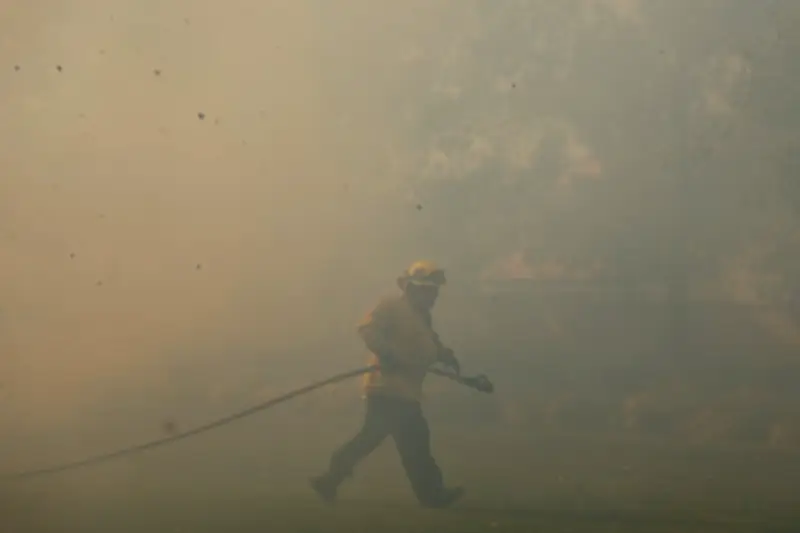
Wildfire smoke has significantly reversed US progress toward meeting ozone air quality standards, according to a new study published in Science on Thursday. Since 2015, the worsening pollution caused by wildfire smoke has undone years of efforts to reduce emissions, leading to a plateau in ground-level ozone levels despite reduced anthropogenic emissions.
Key Findings
Ground-level ozone (O3) is formed when pollutants from cars, refineries, and industrial sources react with sunlight. Wildfires contribute to ozone formation by emitting carbon monoxide and other gases, with smoke spreading hundreds of miles from the fire source. The study found that O3 levels, which had been decreasing by 0.65 parts per billion (ppb) per year before 2015, have since risen by 0.13 ppb annually.
Researchers used deep learning models to analyze data from satellites, the Environmental Protection Agency (EPA), and meteorological sources, as the EPA's monitoring stations cover only 2% of land in the continental US.

Health Impacts
The rise in O3 emissions is correlated with premature deaths, with an estimated 318 additional deaths each year since 2013. Wildfire smoke contains PM2.5, microscopic particles that can penetrate deep into the lungs and enter the bloodstream, linked to numerous health conditions.
A 2024 study found that over 50,000 people in California died prematurely over a decade due to wildfire smoke exposure. Another study projected that by 2050, wildfire smoke could cause over 70,000 deaths annually in the US at current heating rates.
Wildfire Trends
Wildfires are worsening globally due to climate change. In California, 2018 was the deadliest fire season with 100 deaths, while 2020 saw the most land burned at 4.3 million acres. In 2025, Los Angeles fires killed 31 people and destroyed over 16,000 structures.
Call to Action
The study emphasizes that mitigating climate change and implementing fire prevention measures can improve air quality and public health. These findings add to growing research on wildfires' environmental and health impacts.