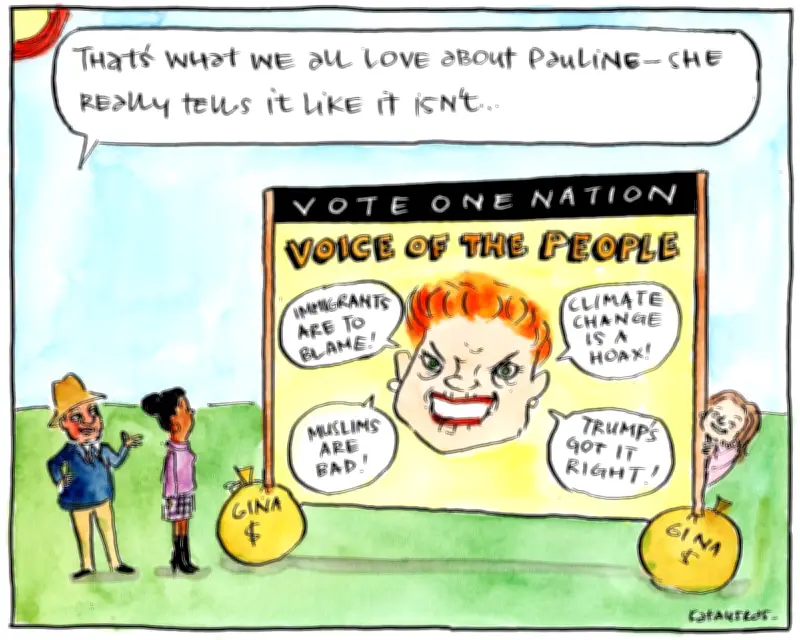
Pauline Hanson, the polarizing leader of One Nation, has long been a fixture in Australian politics, known for her provocative statements and policies. Despite numerous controversies, she continues to maintain a significant following. This article examines the factors that allow Hanson to persist in the political arena, from her populist appeal to the fragmentation of the political landscape.
The Populist Appeal
Hanson's rhetoric taps into the frustrations of voters who feel left behind by globalization and economic change. Her straightforward, often blunt language resonates with those disillusioned with mainstream parties. She positions herself as an outsider fighting against the political elite, a message that has proven effective in garnering support.
Media Savvy and Controversy
Hanson's ability to generate media coverage is unparalleled. Controversial statements ensure she remains in the public eye, and she skillfully uses social media to bypass traditional gatekeepers. This constant visibility keeps her relevant, even when other political figures might fade away.

The Political Landscape
The rise of populism globally has created an environment where Hanson's brand of politics can thrive. The major parties' failure to address key issues like immigration and economic insecurity has left a vacuum that Hanson fills. Additionally, the preferential voting system in Australia sometimes works in her favor, allowing her to influence election outcomes.
Why Doesn't She Face Consequences?
Despite numerous investigations and legal challenges, Hanson has often emerged unscathed. Some attribute this to the difficulty of proving intent in hate speech cases, while others point to the political calculation of not prosecuting a figure with significant support. The lack of a strong backlash from mainstream parties also plays a role, as they sometimes adopt her rhetoric to win back voters.
In conclusion, Pauline Hanson's enduring presence in Australian politics is a complex phenomenon driven by populist appeal, media strategies, and a favorable political environment. Her ability to avoid serious repercussions raises questions about accountability and the state of democracy in Australia.