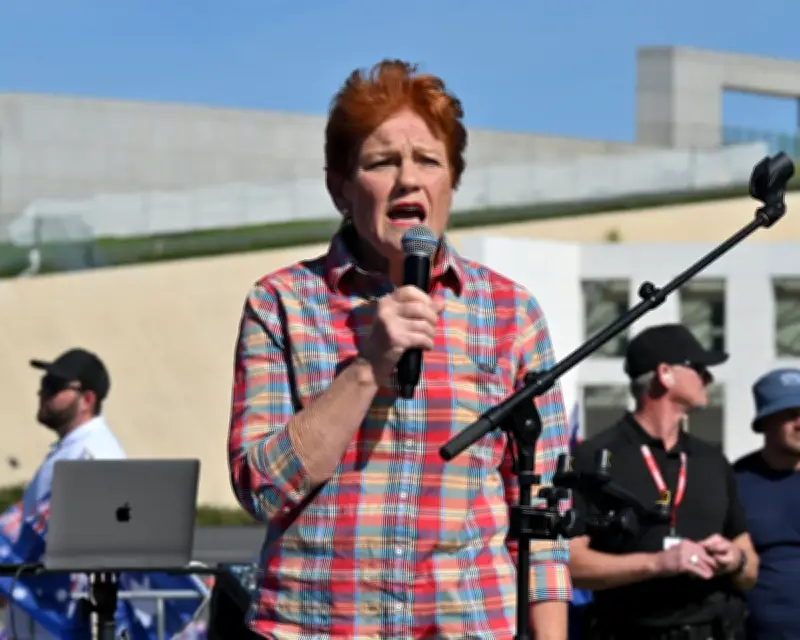
Former Queensland premier Peter Beattie has warned that confusing One Nation with its supporters would be a fatal political mistake for both the federal government and the opposition. Writing in an opinion piece, Beattie argues that many One Nation supporters are hardworking, decent Australians disillusioned with major parties and worried about financial uncertainty, the high cost of living, and the impact of artificial intelligence on jobs. Their core concern is a deep-seated worry that Australia is heading in the wrong direction and that they are not being listened to or included in the nation's journey.
One Nation's Scare Campaign
Beattie notes that One Nation has run a successful scare campaign blaming current immigration policies for rising house prices, electricity costs, and other societal ills. However, he describes One Nation as a party of complaint, and therein lies its weakness. The party's recent high electoral support in polls is largely due to the poor performance of major parties in addressing issues affecting the electorate. This mirrors the situation in 1998 in Queensland when One Nation stormed onto the political stage, winning seats from both the ALP and the Coalition with 23% of the primary vote.
Queensland's Successful Strategy
In office, Queensland Labor turned back the One Nation tide by addressing the concerns of its voters. This involved meeting with as many supporters as possible face-to-face at community cabinet meetings across Queensland and listening to them. The subsequent policy focus and initiatives dealt with their concerns. Beattie argues that this strategy worked in Queensland, the original home of One Nation, and can work federally.

Policy Recommendations for Federal Labor
Beattie outlines several policy measures the federal government should implement to tackle the daily challenges facing One Nation voters. These include setting out a clear and explainable immigration policy based on skills and an annual cap, explaining the economic and social benefits of Australian multiculturalism, and presenting a vision of what Australia will look like in 2050. He also recommends a visionary policy to skill the nation for future jobs, addressing the impact of AI on the workforce, encouraging key industries through job-creating innovation, and outlining capital investment in the regions to provide infrastructure and job security. Additionally, ongoing cost-of-living measures are needed to help families survive financially, as one-off handouts do not resonate with One Nation supporters.
Challenges for One Nation
Beattie points out that One Nation faces many challenges that could erode its strong support in current polls. The party has a history of self-destructing and selecting ill-disciplined, poor-quality candidates. Except for Barnaby Joyce, One Nation has no executive government experience. While Pauline Hanson is tenacious and determined, Beattie asserts she is no prime minister, despite her claims. Many of her supporters want to see her criticize Labor and the Liberals, but deep down they know she is not up to being prime minister. If Joyce were to become the One Nation leader, that could be a game-changer.
Electoral Disadvantages
Australia's preferential voting system disadvantages One Nation. While the Liberals have moved away from preferencing One Nation last, a significant number of Liberal voters will still not preference One Nation, particularly in urban areas. This will cost One Nation seats. Moreover, in the 1998 state election, One Nation largely escaped major media scrutiny of its policies due to the novelty of Hanson's emerging party, which contributed to its success. That will not happen at the next federal election. The more popular One Nation becomes, the more national media will scrutinize all its policies. No major party can win the next federal election on just an immigration policy.
Conclusion
Beattie concludes that Labor and the opposition can reduce One Nation's electoral support by offering sound futuristic policies and engaging face-to-face with One Nation supporters in the regions and outer suburbs of major cities. The question is whether they have the strategy and policy commitment to do so.
Peter Beattie is a former Labor Queensland premier.