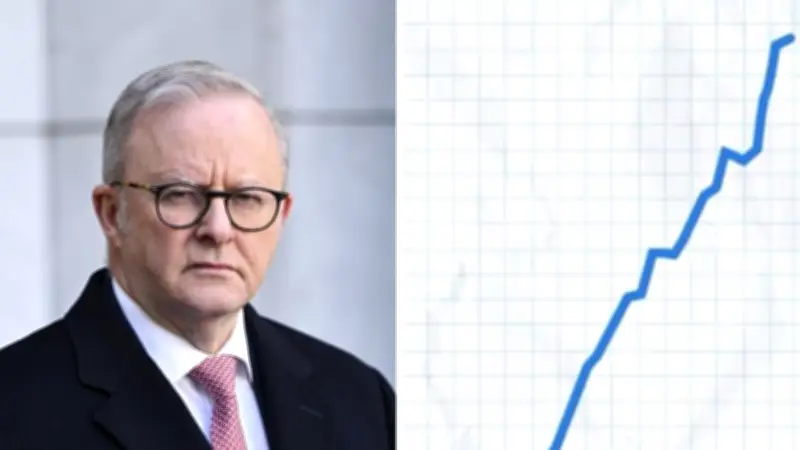
Prime Minister Anthony Albanese has openly declared that the 400 per cent growth in house prices over the last 20 years cannot continue and that his reforms are designed to slow the pace. In a passionate defence of the government’s changes to negative gearing and capital gains tax, the Prime Minister insisted that the current trajectory has put the Australian dream of home ownership out of reach.
“Since 1999 house prices have risen by more than 400 per cent, more than two times as fast as average incomes in the same period,” he said. “The changes that the Howard government made to capital gains tax in 1999 were meant to boost investment in the share market. Instead, they turbocharged property investment year after year, more and more young Australians being locked out of the market by tax breaks that favored property investors, widening a gap between the generations and eating away at aspiration.”
Mr Albanese noted that the rate of home ownership among Australians aged 25 to 34 has fallen by 7 per cent since 1999. “Now we owe the next generation better than this, and that’s what these reforms are about,” he said. He emphasised that the changes are for young people who are working hard and making sacrifices. “They’re doing everything right, but they’ve spent years missing out at auctions. These changes are for young Australians who are this close to just giving up on buying a home altogether. We say to those young Australians, my government has got your back, we are on your side and we’re going to bring the great Australian dream back in reach.”

Housing Minister Grilled on Sunrise
Housing Minister Clare O’Neil was grilled on Sunrise this morning about whether she wanted house prices to go up or down. Host Natalie Barr repeatedly pressed the minister for a clear answer. Ms O’Neil initially said the government wants “sustainable growth,” but when asked directly whether she wanted prices to rise or fall, she said, “I don’t think we want to see 400 per cent increases in house price over the last 20 years.”
Liberal MP Andrew Bragg criticised Ms O’Neil’s evasiveness, saying she should have told the truth: “House prices for young people in this country are too high. I think Australians are looking for authentic leadership. They’re over the bulls**t. What they want to hear from their politicians are honest answers. And the honest truth is that house prices in this country are too high for young people and they should go down.”
Market Forecasts and Economic Impact
While Morgan Stanley has predicted house prices could fall by up to 9 per cent, AMP chief economist Dr Shane Oliver says he expects house prices to fall around 5 per cent over 2026-27. “Units and lower end property are likely to hold up better due to the expanded First Home Buyers 5 per cent low deposit scheme,” he said. Dr Oliver attributed the slowdown to a combination of rate hikes, poor affordability, depressed buyer confidence, and the Budget changes to negative gearing and capital gains tax.
The RBA has raised rates three times back to their prior 2023 cycle high, and Dr Oliver expects another hike in August. “Rate hikes have usually been associated with some softening in property prices or slower growth. This is because they cut how much buyers can borrow, hit confidence and can boost distressed sales. Poor housing affordability – the ratio of home prices to wages and incomes is at record levels. It’s a bit of a perfect storm for the property market. After 8.9 per cent growth in 2025, we now anticipate a fall in national average home prices of around 1 per cent this year and 5 per cent over 2026-27.”

Historical Context of Housing Booms
Dr Oliver notes that the first long-term boom in the 1920s was followed by a collapse during the Depression. The second long-term boom from the end of WW2 into the early 1970s saw real property prices rise from 50 per cent below trend to 50 per cent above trend by 1973. The mid-1990s were a golden period to get into property, with real prices more than 20 per cent below trend. “This set the scene for the start of the current long-term boom in property prices in the second half of the 1990s, that has taken real property prices from well below trend to around 20 per cent above trend. Some would say the shift to taxing 50 per cent of capital gains in 1999 combined with negative gearing and high marginal tax rates to boost investor demand for property. This goes a long way to explain how Australian housing went from cheap in the mid-1990s to expensive in the early 2000s and has stayed there ever since.”