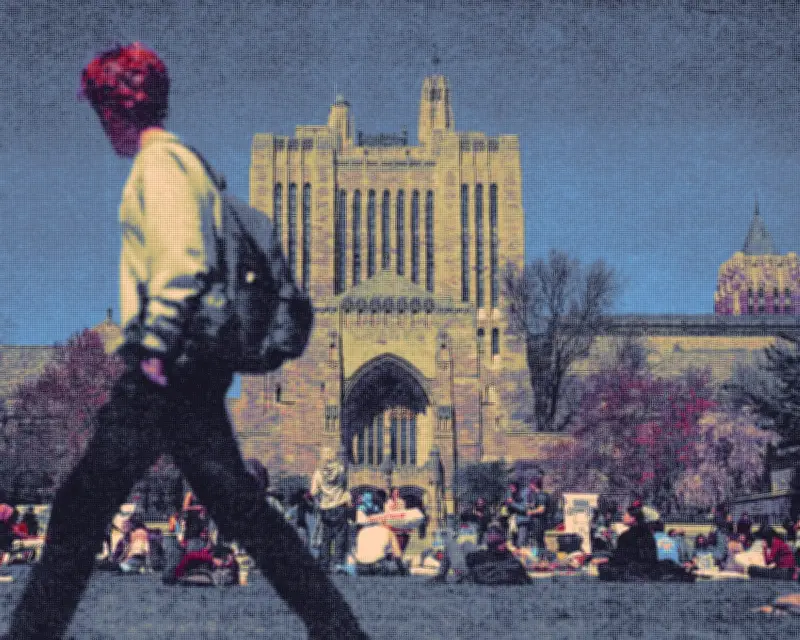
American universities are increasingly investing in a new industry: teaching civic dialogue. Amid rising political polarization on campuses, institutions are establishing dedicated centers, hiring specialized faculty, and developing curricula focused on fostering constructive conversations across ideological divides.
Dedicated Centers and Programs Emerge
At least 30 universities have launched or expanded civic dialogue initiatives since 2020, according to a report by the Constructive Dialogue Institute. These programs often include workshops, credit-bearing courses, and public events designed to equip students with skills in active listening, perspective-taking, and conflict resolution.
For example, the University of Chicago’s Forum for Free Inquiry and Expression offers training for student leaders, while Arizona State University’s Civil Discourse Lab provides facilitated dialogues on contentious topics. “We’re seeing a shift from simply lamenting polarization to actively building infrastructure to address it,” said Dr. Lara Schwartz, director of the Civil Discourse Project at American University.

Funding and Institutional Support
Philanthropic organizations, including the Charles Koch Foundation and the Hewlett Foundation, have poured millions into these efforts. The Bridging Divides Initiative at Princeton University has received over $5 million in grants since 2021 to support campus dialogue programs nationwide.
Universities are also integrating dialogue training into orientation and general education requirements. At the University of Texas at Austin, all incoming freshmen must complete a module on civil discourse as part of their first-year experience. “This is not about making everyone agree,” said Dr. Peniel Joseph, founding director of the Center for the Study of Race and Democracy at UT Austin. “It’s about creating a culture where disagreement doesn’t become dehumanization.”
Challenges and Criticisms
Despite the growth, critics argue that some programs risk imposing a false equivalence between opposing views or avoiding necessary confrontations over systemic injustice. Others worry that dialogue initiatives may be used to suppress protest or dissent.
“There’s a tension between promoting dialogue and protecting the right to protest,” said Dr. Jeffrey Sachs, a professor of politics at Acadia University. “Universities need to ensure that civic dialogue programs don’t become a tool to silence marginalized voices.”
Impact on Campus Climate
Proponents point to early evidence that such programs can reduce hostility and increase willingness to engage across differences. A 2025 study from Stanford University found that students who participated in a structured dialogue program were 25% more likely to report having a respectful conversation with someone holding opposing political views.
As the industry matures, universities are also developing metrics to assess effectiveness. The Constructive Dialogue Institute is piloting a standardized survey to measure changes in students’ attitudes toward political opponents.
“We’re building a new field,” said Schwartz. “It’s still early, but the demand is clear. Students want to know how to talk to each other again. We’re giving them the tools.”