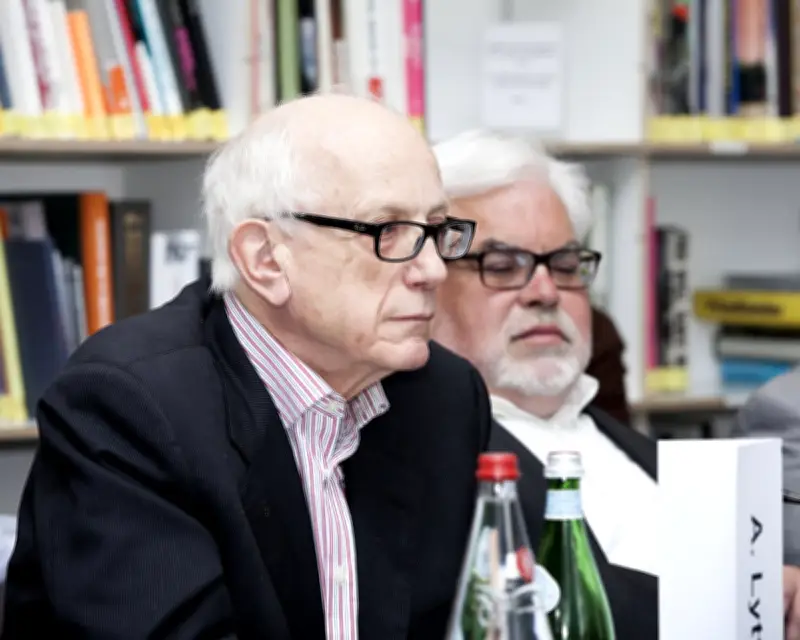
Adrian Lyttelton, the distinguished historian of modern Italy whose seminal work 'The Seizure of Power: Fascism in Italy, 1919–1929' reshaped scholarly understanding of Mussolini's rise, has died aged 89. His family confirmed he passed away peacefully at his home in Oxford on 5 July 2026.
Early life and academic formation
Born in London on 12 January 1937, Lyttelton was educated at Winchester College and New College, Oxford, where he read Modern History. His interest in Italy was sparked by a year spent in Florence after graduation, studying at the European University Institute. He later recalled being 'mesmerised by the complexity of Italian political culture'.
Lyttelton completed his DPhil at Oxford under the supervision of Sir John Plumb, with a thesis on the origins of Italian Fascism. This formed the basis of his magnum opus, 'The Seizure of Power', published in 1973 by Weidenfeld & Nicolson. The book was praised for its meticulous archival research and its argument that Fascism was not a historical aberration but a product of deep structural weaknesses in liberal Italy.

Key contributions to Italian historiography
Lyttelton's work challenged the then-dominant interpretation that Fascism was primarily a product of World War I and its aftermath. Instead, he emphasised the role of agrarian elites, the Catholic Church, and the monarchy in enabling Mussolini's ascent. According to Professor Lucy Riall of Birkbeck, University of London, 'Lyttelton's book remains the single most important English-language study of Fascism's seizure of power. It forced historians to look at the complicity of traditional institutions.'
In 1985, Lyttelton published 'The Society of the Fascist State', which examined everyday life under Mussolini. He argued that Fascism's popular support was not merely the result of coercion but also of genuine consensus, particularly among the middle classes. This sparked considerable debate, with some critics accusing him of downplaying the regime's violence. Lyttelton responded that 'understanding consent is not the same as excusing it'.
Teaching and legacy
Lyttelton spent most of his career at the University of Oxford, where he was a fellow of All Souls College from 1965 until his retirement in 2002. He supervised dozens of doctoral students, many of whom became leading scholars in their own right. Professor John Foot of the University of Bristol, a former student, said: 'Adrian was a demanding but inspiring supervisor. He taught us to read documents against the grain and to never accept received wisdom.'
He also served as editor of the 'Journal of Modern Italian Studies' from 1990 to 2000, helping to establish it as a leading forum for scholarship. His own later work included a biography of the Italian liberal politician Giovanni Giolitti, published in 2005, which was shortlisted for the Wolfson History Prize.
Personal life and honours
Lyttelton married the art historian Caroline Elam in 1968; she survives him, along with their two children. He was appointed Commander of the Order of the British Empire (CBE) in 2003 for services to historical scholarship. In 2010, he received the prestigious Viareggio Prize for his lifetime contribution to Italian studies.
His former colleague, Professor Richard Bellamy of University College London, noted: 'Adrian was a gentle giant of the field. His intellectual rigour was matched only by his personal kindness. He will be greatly missed.'