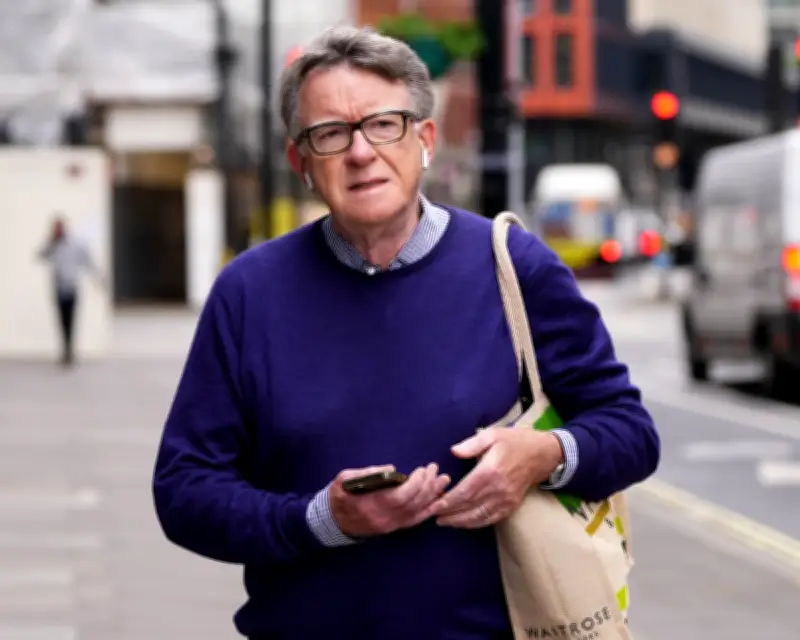
Documents concerning Peter Mandelson's appointment as ambassador to Washington are being withheld because of an ongoing police investigation, prompting renewed cross-party pressure in parliament. Despite the release of over 1,500 pages of papers on Monday, crucial documents were kept back at the request of the Metropolitan Police, citing potential prejudice to an investigation.
Missing Vetting Summary
Among the withheld documents is a summary of the vetting process that concluded officials recommended Mandelson not be granted security clearance. Ministers have not disclosed when police deemed this summary relevant to their probe. The document had already been reviewed and redacted by members of Parliament's Intelligence and Security Committee.
During a general debate on the government's document publication, MPs expressed surprise at the absence of any documents detailing security mitigations. These would have been necessary to address concerns identified by vetting officials, whose recommendation was overruled by the Foreign Office.

Concerns Over Links
Sources told the Guardian that the vetting summary raised concerns about Mandelson’s connections to China’s finance minister Lan Fo’an, sanctioned Russian oligarch Oleg Deripaska, and former Israeli military intelligence general Tamir Hayman.
Emily Thornberry, Labour chair of the Commons Foreign Affairs Committee, said she expected to see records of mitigations addressing these risks. “How do we bridge that gap? The only way that gap is bridged is by mitigations. And so, I spend my time looking for mitigations. And I can’t find any,” she stated.
Thornberry noted the absence of an “aide memoire” drafted by Foreign Office security chief Ian Collard when he reviewed the vetting file in September 2025, after Mandelson was dismissed. Documents show the Foreign Office security team requested access to the vetting file four days after Collard sent an outline of the process to Downing Street, without mentioning the recommendation against clearance.
Prime Minister's Role Questioned
Thornberry suggested the released documents indicate Prime Minister Keir Starmer “subcontracted” the decision to appoint Mandelson. “The mistake and criticism one can level at the prime minister is that he delegated and did not watch sufficiently what was going on. Essentially giving power to others who then abused it,” she said.
MPs also noted the omission of Mandelson’s declaration of interest form, withheld by police along with photos, videos, voice memos, and email attachments. Conservative frontbencher Alex Burghart demanded clarity, suggesting the attachments might have “accidentally fallen out of the full disclosure.”
Members of the Intelligence and Security Committee emphasized that a parliamentary motion required the release of “all papers” relevant to Mandelson’s appointment.
Government Response
Paymaster General Nick Thomas-Symonds said the government had fully complied with parliament’s motion through an “official-led process,” subject to precedents, data protection principles, and ministerial guidelines.
The debate also featured an intervention from Alex Davies-Jones, who resigned as justice minister in May. She called on the prime minister to meet survivors of Jeffrey Epstein, reading a statement from Lisa Phillips: “As a survivor I struggle to understand why prime minister Keir Starmer appointed Peter Mandelson when his association with Jeffrey Epstein had long been publicly known. For survivors, this raises serious questions about whether the lessons of the Epstein scandal have truly been learned.”