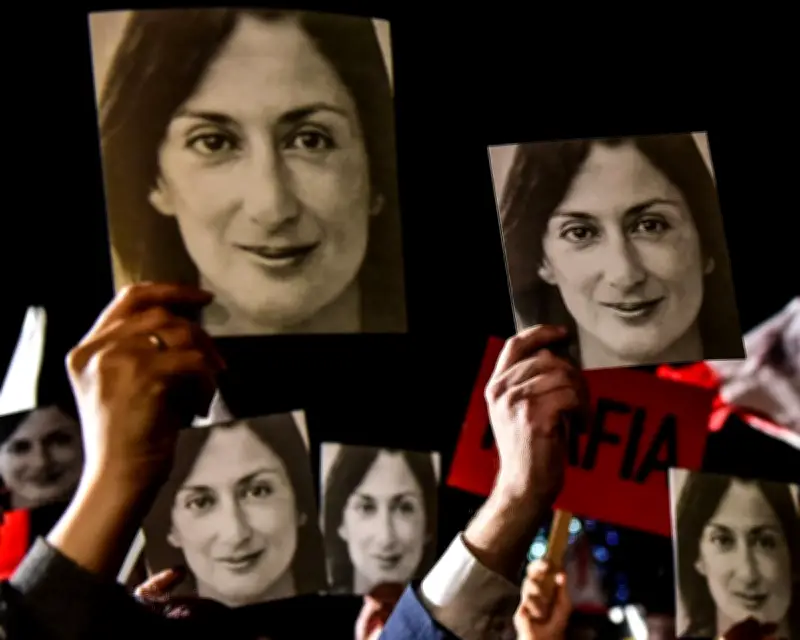
The trial of three men accused of murdering investigative journalist Daphne Caruana Galizia has commenced in Malta, more than eight years after her death in a car bomb attack that drew international condemnation and highlighted concerns over corruption and press freedom in the Mediterranean island nation.
Charges and Defendants
The three defendants, brothers Alfred and George Degiorgio, and Vincent Muscat, are charged with planting and detonating the bomb that killed Caruana Galizia on October 16, 2017, outside her home in Bidnija. All three have pleaded not guilty. Prosecutors allege they acted as hitmen, receiving payment from unknown masterminds still at large. The trial, held at the Criminal Court in Valletta, is expected to last several months, with over 100 witnesses scheduled to testify.
The Murder and Its Aftermath
Caruana Galizia, a renowned blogger and anti-corruption campaigner, was killed instantly when a bomb exploded under her rented car. Her work had exposed high-level corruption in Malta, including allegations involving the then-prime minister Joseph Muscat and his associates. Her death sparked widespread protests and calls for justice, with the European Union and human rights organizations demanding a thorough investigation. In 2021, a public inquiry concluded that the state had failed to protect Caruana Galizia and that there had been a "culture of impunity" in Malta.

Masterminds Still at Large
While the three accused are alleged to be the direct perpetrators, the identities of those who ordered the killing remain unknown. In 2020, businessman Yorgen Fenech was arrested on suspicion of being the mastermind, but his case is proceeding separately. Fenech, who denies involvement, was charged with complicity in the murder. The trial of the three hitmen is seen as a critical step, but justice advocates stress that the full truth requires uncovering the chain of command. "Without identifying and prosecuting those who ordered the murder, justice remains incomplete," said a spokesperson for the Daphne Caruana Galizia Foundation.
International Scrutiny and Legal Proceedings
The trial is being closely watched by international observers, including representatives from the Council of Europe and Reporters Without Borders. Malta has faced repeated criticism over its handling of the case and broader rule-of-law issues. The European Parliament has passed resolutions urging a full and transparent investigation. In a statement, the Maltese attorney general said the trial would be conducted fairly and in accordance with the law. The defendants face life imprisonment if convicted, with the possibility of a minimum 18-year sentence.