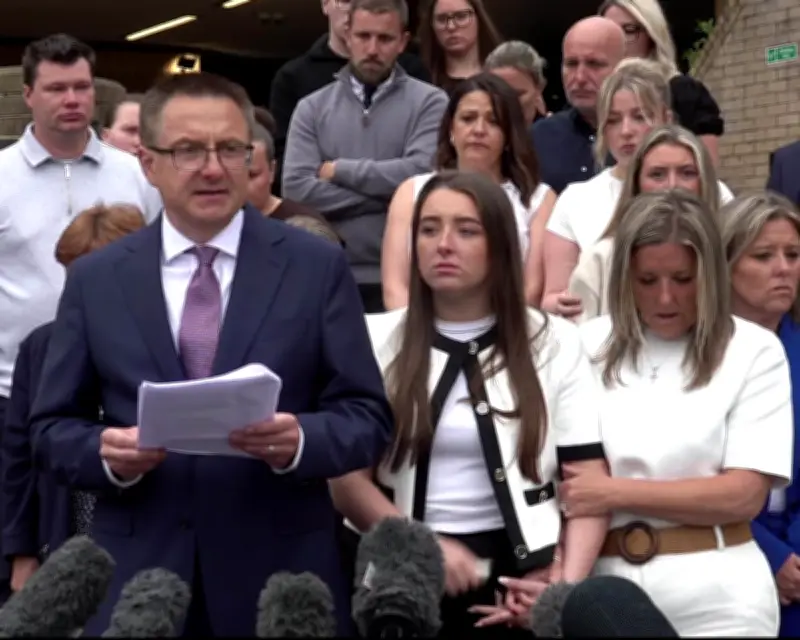
Henry Nowak’s father, Mark, spoke to the media outside Southampton Crown Court on 1 June 2026, his grief palpable as he described his son as 'one of the kindest, friendliest and most inclusive people you could ever hope to meet.' The 18-year-old university student died in December after being stabbed repeatedly by Vickrum Digwa, who then lied to police claiming Nowak had racially abused him. As Nowak lay handcuffed and dying, he told officers nine times that he could not breathe. One officer dismissed him, saying, 'I don’t think you have, mate,' while another simply stated, 'he hasn’t been stabbed.' The bodycam footage captures the harrowing moments when police pulled Nowak across gravel, forced his hands behind his back, and read him his rights instead of providing medical aid. Mark Nowak lamented that his son 'did not die with dignity' and that the last thing he heard was his arrest.
Police Failures and Broader Context
The Nowak family rightly described the police treatment as 'inhumane and degrading.' Even if Nowak had committed an offence, police are mandated by College of Policing guidance under the European Convention on Human Rights to prioritise protecting life. His innocence deepens the tragedy, but the injustice lies in the police’s failure to save him. This case is not isolated; it is part of a long history of deaths following police contact. The United Families and Friends Campaign (UFFC) works with families from all backgrounds to prevent such deaths. Nowak is not the first white man to die in police custody, and the majority of such deaths involve white people, reflecting their majority population.
Exploitation by Reform UK
Despite the family’s plea that Henry’s death 'not be used to create further division,' Reform UK has exploited the case to revive the lie of 'two-tier policing,' claiming ethnic minorities receive preferential treatment. In the Commons, Robert Jenrick asked why officers behaved as they did, suggesting they had been taught to 'elevate perceptions of ethnic minority communities over the safety of white British people.' Nigel Farage called it a 'two-tier Britain' and urged 'pure cold rage.' This rhetoric sparked riots in Southampton, complete with Nazi salutes and neo-fascists, directly contradicting the family’s wishes.

Inequality in policing is real: Black people in Britain are seven times more likely to die after police restraint, and Black children are nearly eight times more likely to be strip-searched. Yet, campaigners have long recognised that bad policing makes everyone unsafe. Nowak’s case could have highlighted these systemic failures, but instead it has been twisted into a nativist narrative.
Political Leaders’ Inaction
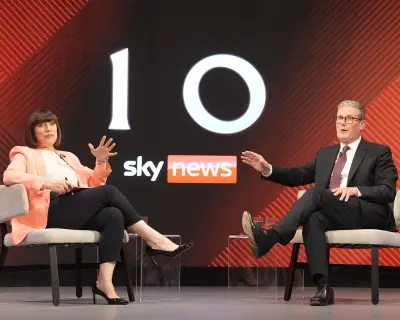
The government’s response has been weak. Policing minister Sarah Jones criticised anti-discrimination guidance, and Home Secretary Shabana Mahmood stated that police must act 'without fear or favour.' Prime Minister Starmer asked how accusations of racism inform decision-making. None have explicitly stated that two-tier policing is a myth or that racism persists in the institution. Like the family of Lee Rigby, the Nowaks are seeing their son’s death exploited for political gain. Nowak died unheard by those meant to protect him; the least we can do is refuse to let his death fuel further division.