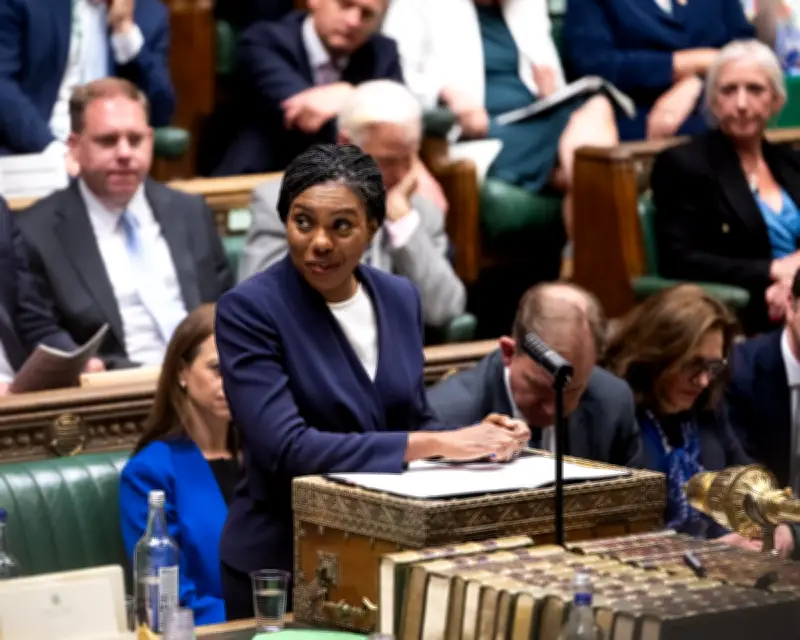
Kemi Badenoch, the Conservative leader, has long been known for her combative style, particularly on culture war issues. However, during Prime Minister's Questions (PMQs) following the murder of Henry Nowak, she adopted a more conciliatory tone, earning praise from Prime Minister Keir Starmer. But does this signal a genuine change in her political approach? Not entirely.
Context Shapes Response
The circumstances surrounding Nowak's death—a student who was handcuffed and bled to death after being falsely accused of racism—prompted widespread outrage and riots. Badenoch's call for unity was partly a response to the need to avoid inflaming tensions. She also sought to distinguish herself from Nigel Farage, whose rhetoric on the case was widely condemned. Badenoch stated, "It is the responsibility of everyone in this house to bring people together, not divide them." Starmer thanked her for her "approach and tone."
Underlying Views Unchanged
Despite the measured tone, Badenoch's core analysis remains consistent. In a Daily Mail article, she attributed the police's actions to identity politics and the influence of the Black Lives Matter movement, calling for the removal of "all identity politics from state institutions." This aligns with her previous work as equalities minister, where she oversaw a controversial report on racial disparities that downplayed institutional racism.

Critics, including academics and the British Medical Association, dismissed the report as simplistic and misleading. Badenoch's spokesperson defended her stance, citing her experience during the BLM era and her emotional reaction as a mother to the bodycam footage of Nowak's arrest.
Assessing Leadership Improvement
Whether Badenoch is improving as a leader is debatable. While the Conservatives trail Reform UK in some polls, supporters point to her rising personal approval ratings. However, critics like Lee Cain, former communications chief for Boris Johnson, compare her to William Hague—popular personally but unable to unite the party. Cain wrote, "The country doesn’t elect leaders on the basis of PMQs, and personal approval ratings only take you so far when the party itself has nothing to say."
Ultimately, Badenoch's response to the Nowak case demonstrates tactical restraint, but her ideological convictions remain intact. The long-term impact on her leadership will depend on whether she can translate personal appeal into party coherence and electoral success.