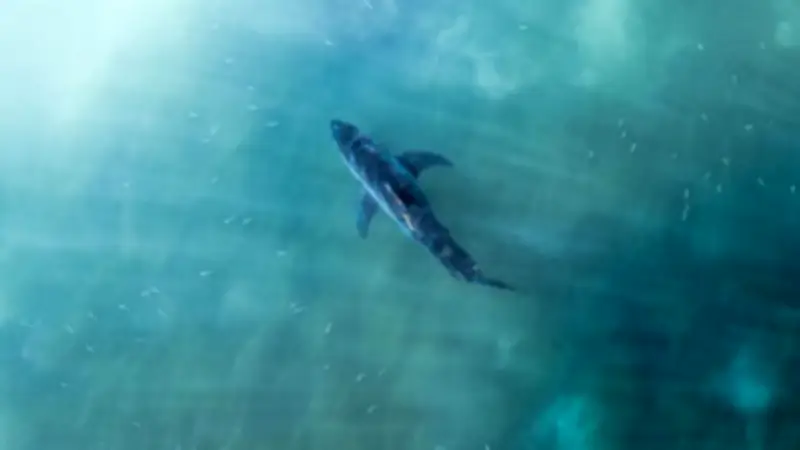
A young mother remains in hospital after being bitten by a shark at Coogee beach in Sydney on Saturday morning. Leah Stewart, 35, was swimming about 30 metres offshore when a shark – believed to be a three to four metre great white shark – struck. This tragic incident has renewed calls for a shark cull.
Federal Liberal Party president Tony Abbott said: “It’s so wrong that we don’t cull sharks after attacks. It’s so wrong that we don’t have a commercial shark fishery given the explosion of shark numbers, and it’s so wrong that we don’t put people before sharks.” New South Wales Premier Chris Minns has since said his government is actively considering a cull of bull sharks, in response to a surge in bull shark bites over summer.
Are Shark Bites Really Increasing?
Shark bites have increased in Australia and globally over the past four decades, though they remain very rare. The “exploding number of sharks” is often cited to explain this trend. However, many shark species are threatened globally. Australia has protections in place and well-managed fisheries that support the recovery of vulnerable species like the great white shark and prevent decline of species like the bull shark.

But it’s unlikely that the recovery of the great white shark or reduced fishing pressure alone can explain the rise in bites. Last year, my colleagues and I published a study on factors influencing shark-bite risk. We found 40 factors, including human population growth, habitat modification, declining water quality, climate change, and changes to the distribution of sharks and their prey. However, the infrequent occurrence of bites reduces our ability to determine which factors matter most. It is likely a combination of factors.
Do Shark Culls Work?
Shark culls are the most controversial method to reduce risk. Some research suggests culling has reduced interactions with humans in certain locations. However, other studies show no changes in bite rates after large culling programs. The efficacy varies between species and regions, and the number of sharks needed to be culled is unknown but likely high before affecting bite risk.
While you could argue that even culling one shark reduces risk, that shark might never have bitten humans. This is best illustrated by Hawaii’s shark control program in the 1960s and 1970s, during which 4,668 tiger sharks were killed but there were no resulting changes in the rate of shark bites.
What About Other Measures?
Shark nets aim to catch dangerous sharks near popular swimming areas, but they also kill non-dangerous sharks and marine animals like rays, turtles, and dolphins. There is little evidence that nets keep people safe. Other area-based measures minimise ecosystem impact: drones to observe sharks, SMART drumlines (which intercept sharks close to shore and allow tagging and relocation), and shark listening stations that detect tagged sharks. Many studies show drones can detect sharks and enable beach evacuations, while SMART drumlines lead to sharks leaving the area upon release.
So, What Now?
The question of what to use should be considered from both efficacy and ethical perspectives. Culling might theoretically reduce risk, but we have no idea how many sharks need to be culled. As Hawaii showed, culling may kill thousands without improving public safety and would harm marine ecosystems. It makes far more sense to invest in non-lethal measures like drone surveillance, as evidence shows they reduce risk and are preferred by the public.
All measures discussed are only part of the arsenal. They can be complemented with personal deterrents (which can reduce bite risk by 60% even when sharks are predatory), bite-resistant materials to reduce serious injury, and improved first aid training and education. There is no silver bullet to eliminate risk (aside from well-maintained swimming enclosures), but as shark numbers recover, bites could increase without adequate mitigation. A combination of area-based measures, personal deterrents, injury-reduction materials, and education would be most efficient at reducing risk and consequences, so people can continue to enjoy Australia’s coastal lifestyle.