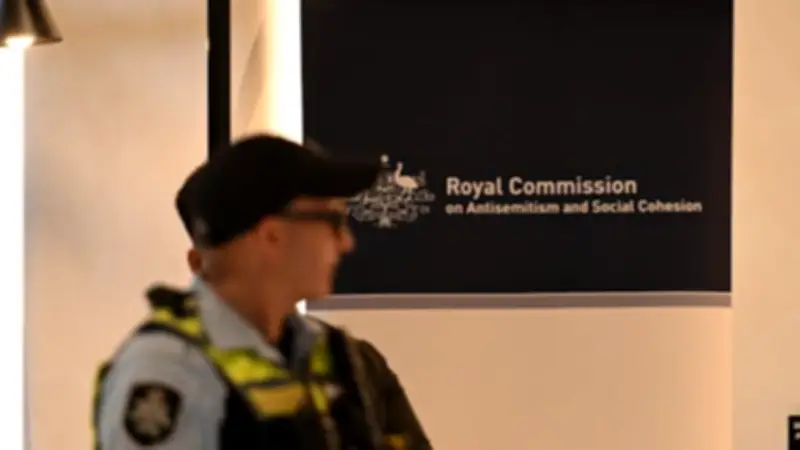
The Royal Commission on Antisemitism and Social Cohesion is set to hold its remaining public hearings between late June and the end of August, raising expectations of awkward questions and divisive debates. The commission will scrutinize social media, universities, legacy media, and the arts—areas where notable failures in combating antisemitism have occurred, alongside critical issues of freedom of speech and other rights.
Background and Context
Established after initial resistance from Prime Minister Anthony Albanese, the royal commission was deemed imperative following the Bondi terrorist attack. However, the upcoming evidence may not only highlight but also exacerbate societal fractures. Albanese had previously objected to the commission due to concerns about social cohesion, and there is a risk that it could inadvertently increase antisemitism, as seen when Jewish witnesses faced online abuse after earlier hearings. A man has been charged over offensive emails sent to a witness.
Since the commission was formed, the Middle East conflict has widened with the US-Israeli war against Iran, intensifying local criticisms of Israel and blurring the line between criticism of Israeli government policy and denial of Israel's legitimacy. The conflict, hate speech, pro-Palestinian demonstrations, and the December 14 Bondi terrorist attack have shifted the goalposts for free speech and protest rights, placing institutions like universities under new scrutiny.

Education Sector
Antisemitism in education is being addressed by a taskforce chaired by David Gonski, appointed in December as part of the government's response to Special Envoy Jillian Segal's plan. The taskforce aims to help the education system prevent, tackle, and respond to antisemitism from preschool to university. While universities have faced direct criticism, antisemitic attitudes in schools also require attention. Teaching tolerance has become harder in the age of social media and identity politics, but the taskforce is focusing on the Australian curriculum, teacher information, and teacher education.
The taskforce has also established a Commonwealth Research Grants Working Group led by Peter Shergold to align grant decisions with anti-hate and anti-discrimination laws. This raises challenges at the margins. The Group of Eight universities, anticipating sharp questioning at the commission, set up an expert panel chaired by Alan Finkel after Bondi. Its report is complete and due for imminent release.
Arts and Media
Dealing with antisemitism in the arts is fraught, as the line between offensive and antisemitic is not always clear-cut. Comedy and satire present shades of grey, and context matters—Shakespeare's Merchant of Venice, for example, is now viewed differently. In the media, Jewish and other critics have targeted the publicly-funded ABC and SBS for alleged bias in Middle East coverage, while pro-Palestinians have their own complaints. Bias is often subjective, and media outlets can become over-reliant on narrow sources. However, publicly-funded media must ensure accuracy, fair-mindedness, and a range of viewpoints. The Australian Press Council recently found that a cartoon in Nine papers encoded antisemitic tropes, which might have escaped censure in less sensitive times.
Social Media
Social media will be a key focus in the upcoming hearings. It has become a major channel for promoting antisemitism. Tech companies claim they do what they can, but critics argue they understate their capacity to remove hate speech automatically. Companies have a commercial interest in resisting measures that reduce traffic, even if content is socially harmful. Free speech advocates oppose serious restrictions, making social media perhaps the toughest battleground against this centuries-old scourge.